
 E-Paper



The Putin visit and the global context
This article is authored by Yogendra Kumar, former ambassador, New Delhi.

 Prefer HTon Google


Russian President Vladimir Putin was in India last week for the 23rd regular annual summit, a practice since the assumption of presidentship in 2000 but paused until 2024 due to the Ukraine conflict, to impart significant impetus to bilateral relations. He was accompanied by a strong ministerial and business delegation to energise the existing and explore new avenues. Earlier, the external affairs minister visited Moscow for discussions on economic, technological and cultural cooperation. India-Russia relations are propelled by multi-layered communication channels and the two national leaders are in regular contact on telephone and personal meetings.
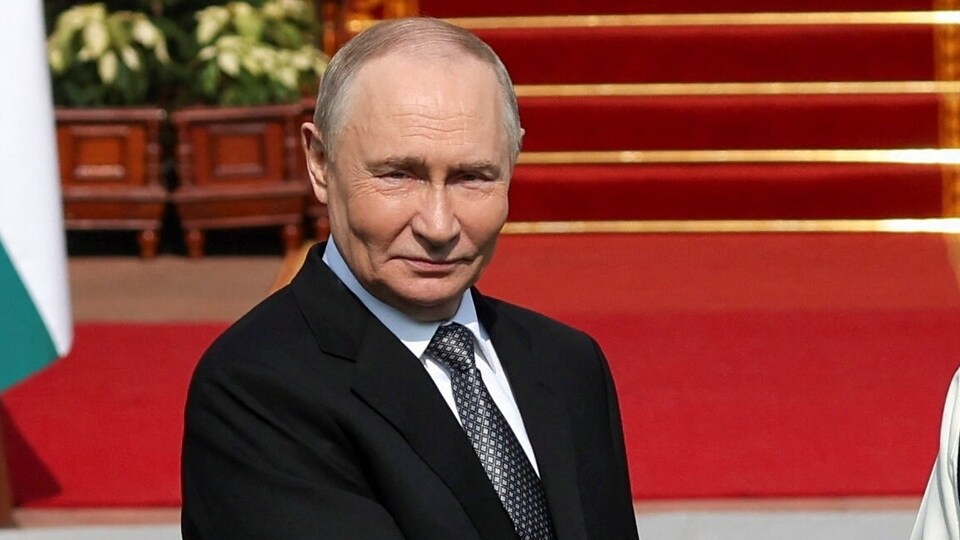
These relations have a strategic defence and energy core whose criticality has not diminished in the post-cold war years although their scale is not comparable to during the Soviet period when the foundations of defence, technology, space, industry and energy were laid. In this wide-ranging relationship, in the current visit areas like migration and mobility, (North) polar and Far Eastern trade and investment cooperation and media collaboration are additional even as no new contracts were signed; two additional Indian consulates were announced. Both sides were confident to achieve a target of $ 100 billion in the next five years with the current trade being nearly $ 70 billion. Defence deals are not counted in these figures.
Enduring structural problems are exemplified by a highly skewed trade relationship with Indian exports being $ 4.9 billion against imports of $ 63.8 billion. The Indian side has attributed this to tariffs and non-tariff barriers, regulatory issues, logistics and connectivity and payment mechanisms; with rupee depreciating and rouble appreciating this is likely to impede balancing since accounting is done in US dollars. The imbalance is to be addressed through reinvigorated efforts in all spheres and also further Russian investments in India, fintech, banking collaboration including third country channels, long-term contracts and offset deals and early conclusion of FTA between India and the Eurasian Economic Union. The Russian side also committed to India oil and gas requirements and offered Small Modular Reactors and another nuclear power plant on the scale of Kudankulam. Both sides acknowledged the adverse impact of Western sanctions on Russia, including secondary sanctions, due to the Ukraine crisis and the unsettling global effect on a weakening global trade system.
Per the existing practice, defence contracts are not announced during summit level meetings but parallel ministerial discussions covered these issues. Spare parts issues and delays and supply of the remaining two S-400 batteries are regularly raised by Indian side. Media reported about agreement on mutual port facilities for naval ships similar to agreements with other countries like the US, Russian offer for local production of the fifth-generation Sukhoi-57 aircraft and leasing of a nuclear attack submarine (Chakra III) which was signed in 2019.
Whilst the celebratory atmosphere accompanies such visits due to be the abiding quality of India-Russia relations and of public goodwill towards Russia, Prime Minister Modi’s exceptional gesture of receiving him at the airport was for signalling for the West. The singling out of India for “fuelling” the Ukraine conflict through its oil and gas purchases through US tariffs and other types of secondary sanctions from the West, including dual-use items, was further manifest in the diplomatic demarches by western countries in their own capitals and New Delhi about Ukraine because Putin “listens” to Modi; three western ambassadors, from friendly countries, wrote in the Indian media, in a complete departure from diplomatic practice, in a similar vein.
The Indian messaging was calibrated. Western interlocutors were listened to and Modi raised the issue at length on two public occasions stating that India is not neutral on the issue. Putin’s response was that he discussed with him the steps being taken with several other partners, including US, for a “possible peaceful settlement”. The Leaders’ Statement omits any mention of Ukraine, probably without Indian objection. Except in general terms, there was no official Russian criticism on the impact on India of the western sanctions and his official spokesman pointedly did not condemn the US punitive tariffs. It is most likely that most of the leaders’ private dinner conversation was on Ukraine with the Russian presidential adviser Ushakov, the point person for direct negotiations with the Americans, at hand. There are no media reports about the US diplomats issuing demarches like the Europeans who are anxious about being marginalised in the direct US-Russia talks over Ukraine which cover the larger Eurasian power equilibrium where Ukraine needs to be settled early. Major Indian defence purchases from the US are continuing as also the trade negotiations and senior Indian officials feel optimistic about these negotiations both with US and EU.
The Russian President’s visit was projected as refutation of the western narrative of his isolation and also signifies his overall global approach towards a multipolar order. It is also assertive of his international status especially now as the West is faltering over Ukraine. It represents a serious effort to enhance trade, all-round cooperation and nurturing a traditional relationship which have acquired greater value given the worsening geopolitical distrust. India is major market for Russian oil, other forms of nuclear energy production and military hardware. Given wider Indian public disappointment with the western stance, including US, over the blame for the Ukraine crisis, an opportunity was seized for launch of the Russian TV channel for alternative global perspectives bolstered also through participation in the non-West organisations like SCO and BRICS.
As an increasingly globalised country in the current global volatility, India has equities in relationships with several major and middle powers. Even as the Ukraine crisis, among others, threatens to upend the Eurasian power equilibrium, India’s stakes in relationships with all the stakeholders couldn’t be higher. The global volatility dictates such calibration on every stakeholder’s part, India included, to find openings to sustain it and to maintain this resilience through sound domestic policy and deft diplomacy. This diplomacy needs buttressing through a robust external media policy to shape narratives on the India story and, hopefully, the opening of Russian TV office will be followed suit by India in Russia and other countries.
This article is authored by Yogendra Kumar, former ambassador, New Delhi.


