
 E-Paper



Tracing the informal: Analysing labour legislation in China
The piece has been authored by Reeja Nair.

 Prefer HTon Google


On December 12, 2018, hundreds of temporary workers at Foxconn’s Zhengzhou plant protested over non-payment of wages by the recruitment agencies that employed them. The workers were promised cash bonuses amounting to 6,000 yuan per person if they worked 55 days and were recruited on temporary contracts by the agencies (South China Morning Post). They took to the streets when recruitment agencies failed to pay their bonuses. In January, the same year, the factory had come under fire when one of the dispatch workers jumped to his death from a building, raising concerns about poor working conditions of dispatch workers in the electronics industry (The Telegraph). Dispatch workers, a form of informal labour, are employed by labour dispatch agencies for a short-term under the promise of regular pay for work and bonus. According to a report by China Labour Watch (2018), dispatch workers in Foxconn’s Zhengzhou plant accounted for more than half of its total workforce in 2018, throwing light on a rampant violation of labour laws. Many are employed on a temporary contract or even lack a formal labour contract. Unpaid wages, poor working conditions, long work hours, lack of employment contract, social insurance, training or rest days etc. are commonplace among informal workers. Instances such as these have only aggravated in the wake of an economic slowdown with employers trying to save labour costs by employing dispatch workers.
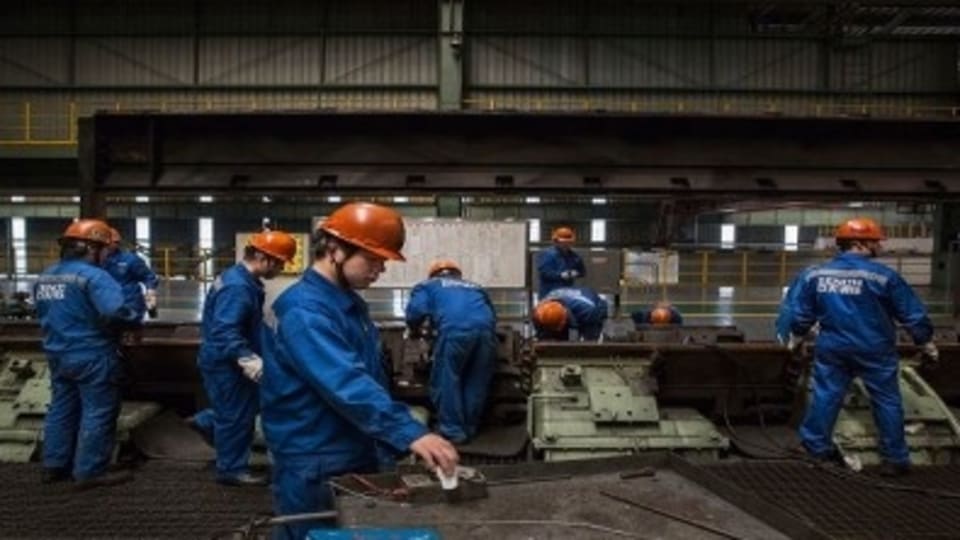
Informality has become the defining feature of urban employment in China since the implementation of economic reforms. The International Labor Organization (ILO) estimate for informal employment in China today is around 54.4%, of which informal employment in urban areas accounts for 36.2%. A definition of informal economy is absent in the Chinese context despite the fact that more than half of the urban employment in China is informal (ILO). This is significant as it implies a lack of recognition of informality by the government and thereby, a lack of formal mechanism to determine the nature and scale of informality in China. Explaining the rationale behind such an approach, some scholars argue that the government recognition of informality would testify to its “failure in assisting the vulnerable and the limits of government control” (Song, Appleton and Liang). Given the absence of a standard and official definition of informal economy or informal employment, the rights of informal workers still remain a neglected terrain in the government idiom. This further precludes any possible formulation of policies targeting this vast sector of China’s economy that contributes to approximately one-third of China’s Gross Domestic Product (GDP).
The opening up of China’s economy and the subsequent reform process after the Third Plenary Session of the 11th Central Committee in December 1978 spelled a massive transformation of China’s social, economic and political contours. Restructuring of enterprises constituted a crucial element of the modernisation of industries, one of the “Four Modernisations” envisaged for developing China’s economy. It began with the aim to improve the production efficiency of the industries by a ‘smashing the iron-rice bowl’ system of employment and creating a labour market. Management was to be given full autonomy over decision-making in the enterprises. But most importantly, it sought to introduce labour flexibility by allowing the employers the freedom to hire and fire workers. The industrial restructuring process was intensified when many state-owned enterprises began registering losses. There was also a simultaneous shift in the organisation of production which led to a transformation of the production workforce. There was a shift to assembly production techniques or Fordist/Taylorist production techniques as seen in the automobile industry, which required unskilled or semi-skilled workers for peripheral work and skilled workers for the core work, thus creating a segmentation of the labour force (Zhang). Informal workers formed the majority of the periphery workers, who could be hired and fired easily. The introduction of the labour contract system in 1986, thus was an important step towards informalisation of work.
This article analyses the various institutional and legislative changes that occurred during the economic reforms to explain the rise of informality in China. It examines the enactment of the 1994 Labour Law and the 2008 Labour Contract Law to determine the legislative underpinnings behind the emergence of informal labour in China to show how state played an important role in the creation of the informal sector in China.
The study can be accessed by clicking here
(The piece has been authored by Reeja Nair)


