
 E-Paper



US: Weaponising education and its implications
This article is authored by Mehdi Hussain, research associate, Indian Council of World Affairs, New Delhi.

 Prefer HTon Google


While US President Donald Trump’s shifts in the education sector are deeply entwined with his broader foreign policy vision, his administration’s policies toward foreign students in American educational institutions carry profound and enduring implications, not only for the domestic education system but also for the foundational values the US espouses. These education-related changes form part of a broader suite of policy actions, including in trade, technology, and immigration, which directly or indirectly impact foreign students.
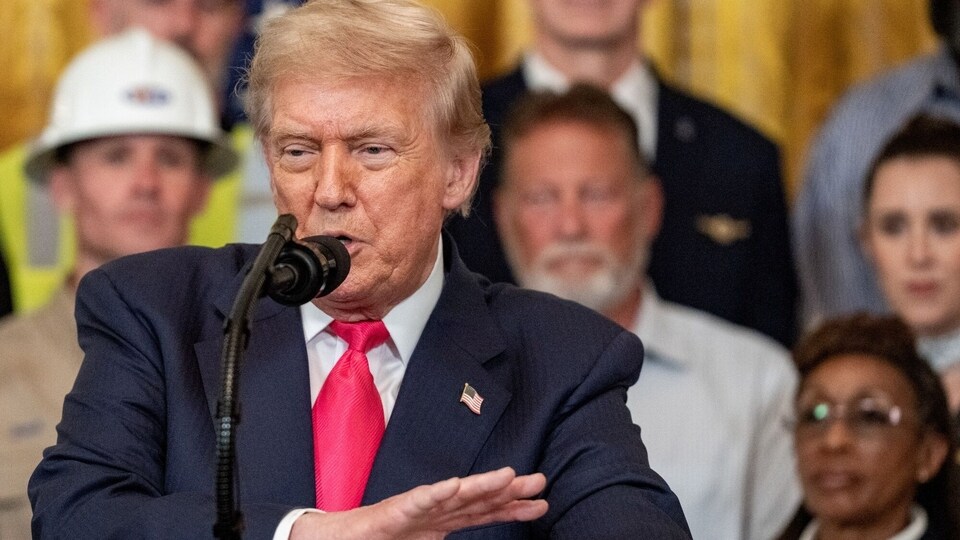
By tightening student visa policies, withdrawing institutional certifications, and conditioning research funding on political alignment, the US is signalling that education is no longer a neutral or universally accessible domain. It is now a battleground for asserting national interests. This approach undermines long-standing diplomatic bridges built through academic exchange, cultural diplomacy, and collaborative research. Educational sanctions, whether against perceived ideological opponents or foreign nationals, risk entrenching hostility and eroding US soft power.
These measures represent Trump’s revisionist agenda under the banner of Making America Great Again. He has repeatedly argued that the world has exploited the US at the expense of American interests. On March 20, 2025, he signed an executive order directing the secretary of education to begin dismantling the department of education. This decision aimed to reinforce conservative ideals regarding family, gender norms, and to reduce financial burdens on the public exchequer—costs which include $10 million annually in employee expenses, apart from the student loan debt exceeding $1.6 trillion. The federal government’s jurisdiction over education has been transferred to the states, a move Trump asserts will increase educational freedom and enable families to choose between public, private, or faith-based schooling.
The administration also rolled out measures to counter so-called radical indoctrination, which it identifies as including gender ideology and anti-American narratives—arguing these infringe upon parental rights and foster societal division. Social transition within K–12 education has been narrowly defined to include use of preferred names or pronouns, accessing opposite-sex facilities, and participation in gender-diverse sports—excluding medical or surgical transition. Patriotic education measures have also been expanded, with requirements for compliance among federally funded institutions such as the department of defense’s National Education Programme and the state department’s Bureau of Educational and Cultural Affairs, including the Fulbright Programme.
Whether these education reforms will foster patriotism remains uncertain, especially as the federal government withdraws from multicultural and inclusive curricula. This ideological narrowing may diminish the appeal of US education for international students, particularly as it steers away from themes of diversity, critical race theory, and gender inclusivity. Students from non-western cultures or LGBTQ+ backgrounds may increasingly feel alienated. The Executive Order of January 29, 2025, further underscored this shift by categorically limiting access to public facilities, such as bathrooms and lockers, and sports participation to individuals of the designated biological sex.
Another key area of concern for international students is the intensifying legal scrutiny in public schools over these issues. Non-compliance may jeopardise academic partnerships and international collaboration. The ideological rigidity imposed by these education changes marks a departure from global norms of diversity, openness, and tolerance.
In higher education, Trump’s reforms explicitly target international students under the pretext of curbing ideological radicalism and anti-Semitism on university campuses. In May 2025, the administration abruptly cancelled all F-1, J-1, and M-1 visa interviews worldwide. New, stringent vetting and screening measures have been introduced, requiring all applicants, including undergraduates, to disclose social media accounts, travel history, and organisational affiliations. As a result, around tens of thousands of prospective students missed application deadlines.
Additional policies expanded grounds for termination and deportation to include relatively minor infractions such as unpaid fines, peaceful campus protests, or data alerts in the Student and Exchange Visitor Information System (SEVIS), as well as alleged links to foreign intelligence services.
Elite institutions have also faced serious consequences. On May 28, 2025, Harvard University’s SEVP (Student and Exchange Visitor Programme) certification was revoked, halting new international student admissions. The University of California and Columbia University received warnings of similar action. In June, 18 other educational institutions were flagged for possible decertification.
Moreover, the administration froze over $2.1 billion in federal research funding, particularly targeting institutions deemed non-cooperative on issues such as faculty hiring, student protests, or campus speech. Harvard alone lost access to $734 million in pending research contracts. UMass Amherst and MIT had defence-related AI and semiconductor contracts suspended. Executive Order 14188 explicitly targeted foreign nationals involved in campus protests deemed anti-Israel or supportive of the Gaza cause.
The enforcement of these policies has been described as severe and unprocedural. Reports have emerged of plainclothes agents detaining students without warning or due process. Indian students have also been affected. In March 2025, India’s ministry of external affairs advised Indian nationals to comply with US laws. According to the American Immigration Lawyers Association, Indians accounted for 50per cent of SEVIS terminations. International admissions overall saw an 11per cent decline year-over-year by March 2025, leading to an estimated loss of $4 billion in revenue. Visa denials emerged as the primary reason for declining enrollments in master’s programmes.
A rare reprieve came from a Massachusetts federal court, which blocked Harvard’s decertification, calling it “arbitrary and retaliatory.”
In response to these growing uncertainties, students are actively seeking alternatives to the US Countries like Canada, the UK, and Germany have seen a significant rise in international applications, particularly from India and Southeast Asia. Canada experienced a 28% surge in visa applications from Indian and Chinese students. The UK’s reintroduction of the Graduate Route visa allows eligible students to remain for two years post-study, with expedited visa processing for STEM graduates. These measures are expected to attract Chinese students deterred by hostile rhetoric from the US Indian students, too, are likely to favour nations with stable, inclusive education policies such as the UK, Germany, and Ireland.
The erosion of multicultural curricula, increased surveillance, and shrinking institutional autonomy may serve domestic political objectives, but they undermine the long-standing openness and diversity that have made US universities global leaders. For many, this signals a retreat from liberal democratic ideals toward a more insular, controlled, and ideologically rigid educational system.
Thus, for international education and students seeking inclusive academic environments, these developments are far more a curse than a blessing. They not only jeopardise America’s soft power and global leadership in higher education but also risk alienating the very talent pool that once viewed the US as a beacon of opportunity, innovation, and academic freedom.
This article is authored by Mehdi Hussain, research associate, Indian Council of World Affairs, New Delhi.


