
 E-Paper



Safeguarding human agency in the age of neurotechnology
This article is authored by Tim Curtis, director and UNESCO Representative, UNESCO Regional Office, New Delhi.

 Prefer HTon Google


Neurotechnology is not new. What is new is the speed, scale and direction of its expansion. Advances in Artificial Intelligence have transformed neurotechnology’s capabilities, making it possible to process and interpret vast amounts of data — including, increasingly, neural signals themselves.
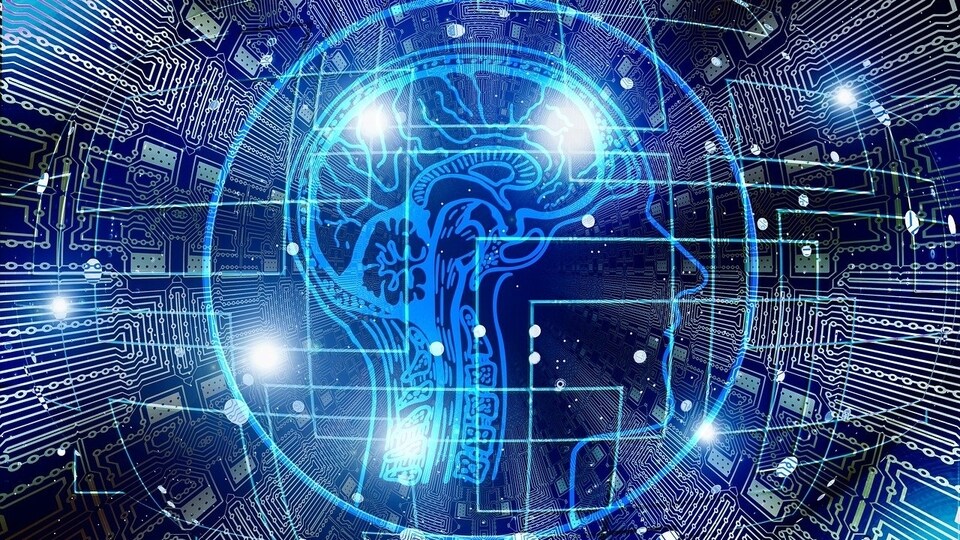
Today, brain-monitoring devices, cognitive wearables and neurological tools are being developed and marketed for use well outside clinical contexts. These technologies interact directly with the human mind, detecting signals associated with attention, emotion and cognitive patterns.
In 2022 Nature magazine reported cases in which patients with implanted brain devices were left in limbo when companies shut down or withdrew support. For those dependent on such technologies, the loss of maintenance or updates revealed serious ethical and regulatory gaps in a rapidly commercialising field.
Without doubt, advances in neuroscience are opening new horizons, offering life-changing possibilities to people living with conditions that were once considered untreatable. But this progress also raises urgent questions about ethics, identity and freedom.
That is why, in November 2025, UNESCO’s 194 member States adopted by acclamation the Recommendation on the Ethics of Neurotechnology, the world’s first global standard in this emerging field. Drawing on more than 8,000 contributions from 120 countries, the agreement brought together member States around a simple but powerful principle: the human mind must be protected.
The decision was not abstract or theoretical. It reflected a shared recognition that existing governance frameworks were struggling to keep pace with technologies that interact directly with cognition.
UNESCO was tasked to convene a multidisciplinary, geographically and gender-balanced Ad Hoc Expert Group of 24 high-level specialists to articulate shared ethical principles for this emerging field. Grounded in international human rights law, their work culminated in a Recommendation affirming respect for human dignity, protection of mental privacy and cognitive liberty, transparency, accountability and meaningful human oversight. It emphasises inclusion and cooperation, recognising that no country can govern neurotechnology alone.
The recommendation is forward-looking in three important ways. It is technology-neutral, recognising that governance must remain relevant as innovation evolves. It extends ethical oversight beyond the medical sphere, reflecting neurotechnology’s growing presence in everyday life.
This urgency is grounded in scale. Mental and neurological conditions already affect around one in eight people globally, making brain health one of the most pressing public health challenges of our time. Investment in neurotechnology has surged by more than 700% between 2014 and 2021, reaching over $33 billion. Yet nearly 85% of neurotechnology companies are based in the United States and Europe, raising concerns among governments about concentration of power, access and accountability.
As neurotechnology evolves, the nature of risk changes. Many emerging tools are consumer technologies — wearables, headsets and monitoring tools marketed for focus, stress management and productivity.
Neural data is not just another category of personal information. It can reveal emotions, impulses and patterns of thought that individuals may never have chosen to share. During discussions leading to the adoption of the recommendation, member States repeatedly expressed concern that data-protection laws were designed for clicks, searches and biometrics — not for signals originating in the brain. If neural data can be harvested, processed or monetised without strict limits, the issue is no longer privacy alone. It is autonomy.
Government experts and representatives also grappled with deeper questions. How can human agency be preserved when technologies are designed to predict or subtly influence behaviour? How can consent remain meaningful when influence operates below conscious awareness? And how do societies ensure that neurotechnology reduces inequality rather than amplifying it?
These concerns are not speculative. Across regions and political systems, countries point to a broader erosion of trust — in science, institutions and evidence itself — driven by disinformation, politicisation and unequal access to knowledge. The fear is not innovation, but imbalance: power accumulating faster than accountability.
Some countries have already begun to respond. Chile, for example, became the first nation to pursue constitutional protections for so-called “neurorights”, including mental privacy, cognitive liberty and protection against neural manipulation.
What matters is not only the content of the recommendation, but what its adoption signals. When technology reaches into the human mind, ethics cannot be retrofitted after harm occurs. Governance must evolve alongside innovation.
Neural data does not respect borders, and neither do the markets that trade in it. Effective governance, therefore, depends on science diplomacy. Shared standards, built on shared evidence, are the only durable answer.
Neurotechnology holds immense potential: advancing medical discovery, supporting people with disabilities, personalising learning and transforming mental-health care. But progress without protection is not progress at all.
Five years ago, UNESCO’s member States adopted the first global standard on Artificial Intelligence — the recommendation on the Ethics of AI — establishing ethical guardrails for a technology reshaping economies and societies. That instrument affirmed that AI systems must respect human rights, promote fairness and remain subject to human oversight. The new recommendation on the Ethics of Neurotechnology builds on that foundation. If AI requires guardrails because it can influence decisions, neurotechnology demands them because it can interact directly with the source of decision-making itself - the human mind.
In a world where data and markets transcend borders, multilateralism is essential., The future of emerging technologies lies not only in their capabilities, but in the values that shape them as was reiterated at the India AI Impact Summit 2026 in New Delhi last month. The Recommendation on the Ethics of Neurotechnology marks a decisive step in global science governance. As innovation accelerates, protecting human dignity and the human mind must remain a democratic imperative.
The Draft Recommendation on the Ethics of Neurotechnology can be accessed here.
(The views expressed are personal)
This article is authored by Tim Curtis, director and UNESCO Representative, UNESCO Regional Office, New Delhi.


