
 E-Paper



Chetna Keer brings forgotten ‘queen of Lahore’ to life in her latest novel
Chetna Keer's historical novel Maharaja's Moran reclaims the story of Moran, the beloved consort of Maharaja Ranjit Singh, highlighting her strength and wisdom

 Prefer HTon Google


There are some women whom history remembers only in whispers — their names surviving in fragments of folklore, fading monuments and passing references buried deep in chronicles.
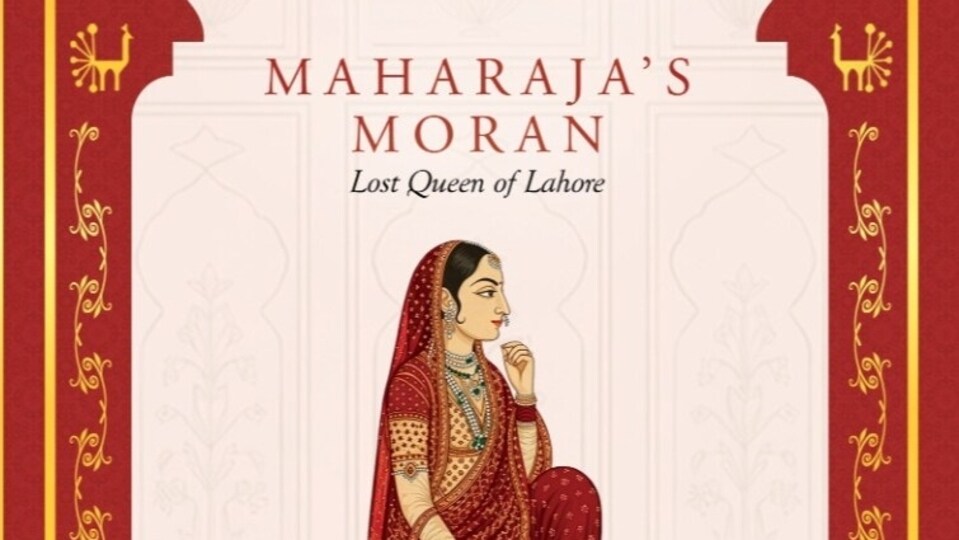
Moran, the beloved consort of Maharaja Ranjit Singh, is one such figure.
Somewhere between legend and silence, between Lahore’s royal corridors and the dust of forgotten memory, her story lingered for centuries, waiting to be told anew.
In her historical novel Maharaja’s Moran, author Chetna Keer attempts precisely that — not merely retelling a love legend, but reclaiming the voice of a woman long obscured by patriarchal history. The novel revisits the lesser-known romance between Maharaja Ranjit Singh and Moran, the woman who won the Sher-e-Punjab’s heart with her wit, wisdom and quiet strength. Yet, beyond the romance, the book unfolds as a layered socio-cultural critique of the era and its silences.
“There were random references here and there in historical chronicles that Moran was a favourite queen of the Maharaja. Yet, there was hardly any clear portrait of Moran; she was like a lost voice, a lost queen of the Lahore Durbar,” Keer says.
For the author, the novel — which involved extensive research, oral histories from descendants of the Fakir clan, and a deep dive into archives — became a search for “the real woman of substance”, someone who rose above social stigma and patriarchal prejudice to journey from the marginalised kanjar community to becoming the consort of the ‘Lion of Lahore’.
The narrative digs into what Keer calls the “amnesic archives of memory and history” to reconstruct the forgotten story of a people’s queen and philanthropist, whose legacy survives in Pul Moran near Amritsar.

Keer says she approached the story through a multi-layered lens, particularly questioning how history and popular culture have treated courtesans and nautch girls.
“Most patriarchal narratives present nautch girls as a tainted tribe. First and foremost, the novel strives to lend a lens of respectability to this refined artiste of tehzeeb and taleem. Most patriarchal narratives stereotype or taint these accomplished artistes,” she says.
The author also distances her narrative from the “over-glamourised” portrayals of courtesans often seen in films and OTT series.
“Courtesans are often cinematically consigned to the extremes of the spectrum — either as vamps or victims. The novel strives to step away from skewed screen portrayals and the blatant Bollywood-isation of courtesan culture,” she adds.
Interestingly, while rooted in history, Maharaja’s Moran also seeks to speak to the present. The retelling is approached through the lens of contemporary life, drawing parallels that underline the continuing relevance of the Moran Sarkar saga.
This is Keer’s sixth book. Earlier, she authored the Gulmohar Trilogy, which explored themes ranging from climate concerns to war and peace.
The third instalment of the trilogy, Geisha in the Gota Patti, was long-listed for the Oxford Book Cover Prize 2026.
Maharaja’s Moran was launched in Amritsar at Majha House on Saturday. It is also available at major e-commerce platforms and local bookstores.


