
 E-Paper



Hrithik Roshan reacts as VFX of Ranbir Kapoor's Ramayana criticised: Makers' intention deserves applause; debate with…
Hrithik Roshan, in an Instagram post, has advised audiences to assess whether VFX serves the story's intent, rather than critiquing it for lacking realism.

 Prefer HTon Google


Ramayana is inarguably one of the biggest upcoming titles for the Indian film industry. And the teaser, which dropped recently to introduce actor Ranbir Kapoor as Rama, didn't exactly garner the unanimous love which the makers must have been expecting. The VFX, especially, promoted as the best ever in the country until the teaser arrived, was caught in the middle of the storm. It has even been dubbed as ‘video game like’ by a section of social media.
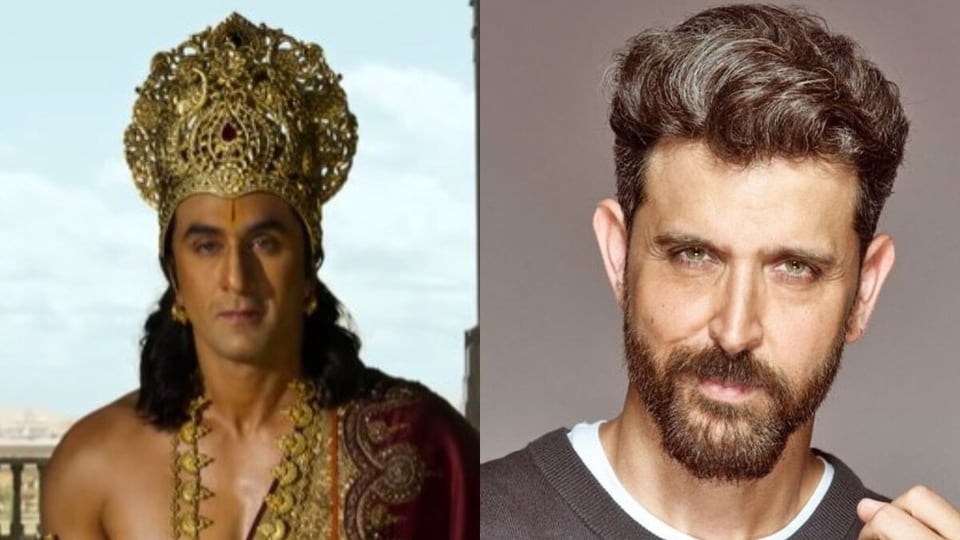
Interestingly, the film has now found an ally in actor Hrithik Roshan. He took to Instagram late on Saturday, and penned, a long, heartfelt post, even going on to name Ramayana.
“Yes bad VFX exists. It's sometimes so bad it's painful to watch. Especially for me... and especially when it's a film I'm part of," he began his note.
From there, he took readers back to his childhood, recalling how watching Back to the Future as an 11-year-old in London changed his life. “I became obsessed. I would sit with my dads VHS player studying the frames pause -play pause-play until I broke the player. I ordered a book "industrial light and Magic" The Art of Special Effects" from Reader's Digest with my pocket money...and waited months for it to arrive at the Juhu post office. Happiest day of my life. I can still smell the book as I unwrapped it. Many others followed."
The heart of his post lay in his defense of filmmakers attempting ambitious, VFX-heavy cinema, “Today some special humans among us, like the makers of films like Kalki, Bahubali, Ramayana (also my dad for koi mil gaya n krrish ofcourse) are my heroes, they have the guts and vision to do what's never been done all for the love of cinema so that we the audience get to experience something never watched before. From mv point of view they risked all that money, and years and years of effort just so another 11yr old kid could feel what I felt."
Hrithik broke down VFX into different styles. He explained the distinction between photorealistic VFX and stylised storytelling, pointing out not all visual effects are meant to look “real” in the traditional sense. “Bad vfx is if the movie promises say 'photorealism' but is unable to inhabit it fully. Even a small lapse in physics/gravity can then destroy the entire illusion. Or the promise is of storybook style but they fail in making it beautiful enough or artistic enough or divine enough and so fails to engage. But to say that the storybook style is not looking photorealistic - isn't fair. Cause it's not meant to be."
The post concluded with an appeal to audiences, “AND you can't criticize the maker just cause he has chosen one stvle while vou prefer another style. Thats not fair. So sometimes when you say "bad VFX." Maybe it's just a style you didn't expect? So next time don't just ask, "Is it real?" First ask, "Is it right for the story?" “is it making me feel what the maker intended?” Debate it. But debate it with awareness."


