
 E-Paper



This Mango Day, explore how the mango became a cultural icon & inspiration for Indian artists & poets
This Mango Day, explore books and films that hero in on the “King of Fruits” along with the artistic legacy that this iconic fruit has left behind

 Prefer HTon Google


Beyond savouring the mango's delightful taste or indulging in its delicately flavoured desserts during the summer, the fruit's rich history and significance are deeply embedded in historical art and literature. This Mango Day, we invite you to delve into some of the most prominent pieces of mango-related art and literature as well as the intended symbolism that accompanies it.
In South Asian literature
"He visits my town once a year.
He fills my mouth with kisses and nectar. I spend all my money on him.
Who, girl, your man? No, a mango."
Amir Khusrow was a Sufi singer, poet, and scholar under the Delhi Sultanate. The Riddles of Amir Khusrow was developed by Khusrow in the 14th century and riddles like these showcased the narrative pictography of the Indian culture, not one lived by the royals who had primary access to the written word, but that of the common people. After all, is there anything more Indian than the inimitable yearning for a fresh, juicy mango?
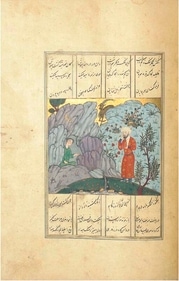
This sentiment is showcased throughout time, with mangos emerging as a literary device encompassing myriad metaphorical meanings: luxury, yearning/seduction, the turn of age, time, youth and beauty. Kalidasa’s Sakuntala and the Ring of Recollection as translated by Barbara Stoler Miller has these lines,
"Mango-blossom bud,
I offer you to Love
As he lifts
his bow of passion.
Be the first
of his flower arrows
aimed at lonely girls
with lovers far away!"
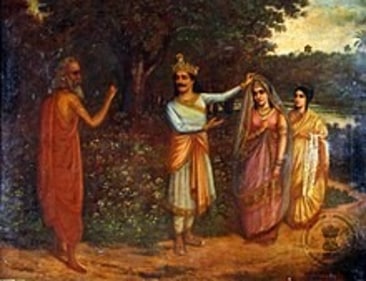
In Jhumpa Lahiri's 1999 short story,When Mr. Pirzada Came to Dine, she highlights the protagonist's dissonance with her own cultural history through a few, poignant lines, “It made no sense to me. Mr. Pirzada and my parents spoke the same language, laughed at the same jokes, looked more or less the same. They ate pickled mangoes with their meals, ate rice every night for supper with their hands.”
In Bollywood films and music
The essence of the mango and its use as a metaphor for various situational shifts extend far beyond literature. This fruit makes memorable appearances in numerous Bollywood films, transforming scenes from a simplistic sharing of fruit to sequences integral to the foundation of the film, brimming with meaning.
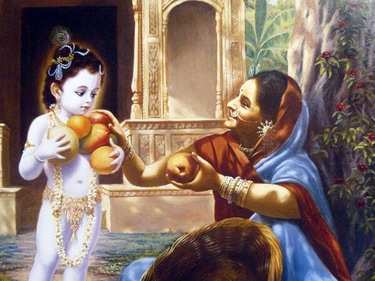
In Dadasaheb Phalke’s Kaliya Mardan, Krishna giving away mangoes before defeating Kāliya is an allegory for his benevolent nature despite ruthlessly defeating the giant, multi-headed snake.
In Cocktail (2012), Diana Penty's character Meera, arrives in London along with a box of mangoes for her husband showcasing her roots and the helplessness of an Indian woman in a foreign country as she sits by the road with a box full of mangoes for a man who does not love her — it could be said that the unopened box is resemblant to her one-sided relationship.

Similarly, Mango by Himesh Reshammiya for the movie Damadamm (2011) can only be termed as an obscure cultural moment rooted in the minds of those who have watched it — it's seductive, strange and allegorises mango to mean anything the writers wanted it to.
In art
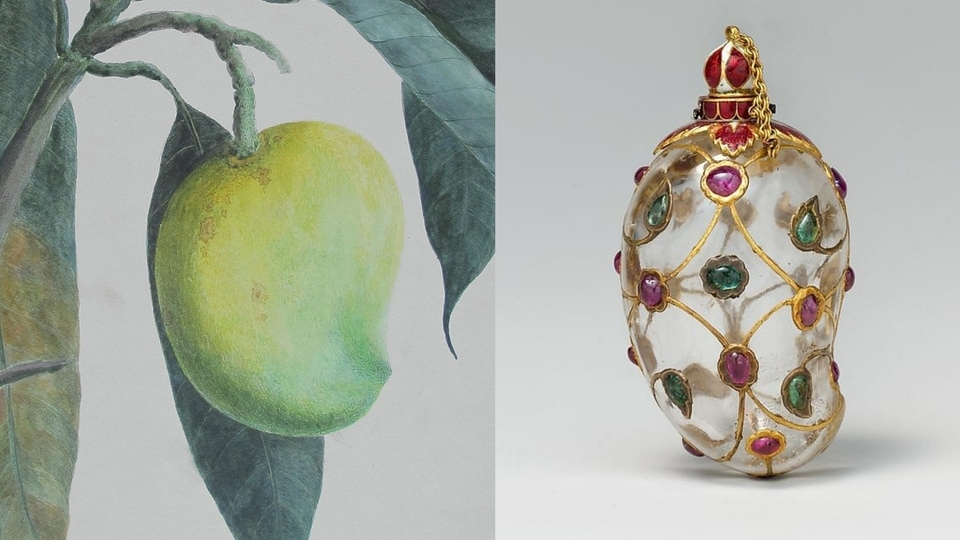
While the mango allegory is omnipresent, there are a lot of literal representations in art as well. From the archives of Arts of Hindostan, we can see how traditional painters and jewelers made the fruit their muse.
For example, this mango-style snuffbox was created by Mughal artists in the 19th century. While the connection might be absurd, it showcases the affability of the fruit amongst royalty, even at that time.
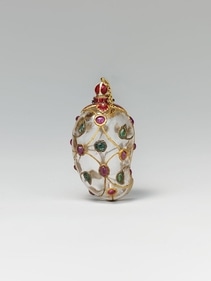
Similarly, this gem-encased mango flask is another relic from 17th century India, currently housed in The Met. It was likely created during the reign of Shah Jahan who built the Taj Mahal.
Miniature paintings from the 1700s also prominently featured the mango. This painting, in the style of Hunhar II from 1765, is just one of many examples of the serene portrayal of the King of Fruits. The ripe mangoes here are a sign of fertility and surplus.
The fruit's exquisite taste and impact on Indian culture are profound. These examples showcase how the mango defies mere culinary delight and continues to be a symbol of luxury, longing, and cultural identity.


