
 E-Paper



What are Ming vases, and why are they so expensive?
During the Ming dynasty, China's porcelain production flourished, creating vases and cups that symbolised status and artistry, being extremely expensive.

 Prefer HTon Google


Centuries-old porcelain originated in China during the Ming dynasty (1368 to 1644), and it was during that reign that Ming vases became an artistic and status symbol.
During the Ming dynasty rule, China's economy was booming, and it saw prosperity, growth and advancement. The Great Wall of China was also built, and the publishing of books and the widespread practice of reading even among the poor.
Now, with its population and economic growth, there was a demand for artistry, especially finely-made objects. Even the global trade saw days of light with demand for porcelain reaching its peak worldwide. It was being sold to European countries like Portugal, then Holland (part of modern-day Netherlands), and England. In the modern day, their price can be estimated at around $21.6 million ( ₹180 crores approx).
What are Ming vases?
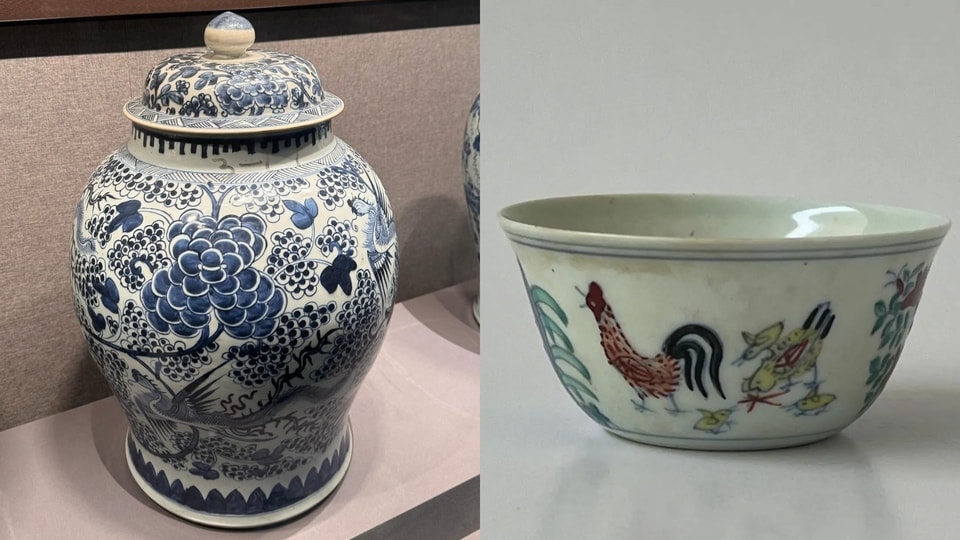
Jingdezhen kiln workers perfected porcelain making, achieving pure white, translucent porcelain combined with vibrant cobalt-blue designs. They introduced complex techniques like underglaze blue, enamel glazes, and doucai—many craftspeople, up to 70 hands, touched each piece.
Later, Chinese pottery became a status symbol, with Ming vases gaining popularity as opposed to the duller versions of European pottery. With more intricate details and crafting techniques, many of them made for emperors, bearing official reign marks (“Da Ming Chenghua nian zhi” etc.), increasing their value even further.
Items like Chenghua Chicken cups were imperial commissions and are extremely rare and highly sought after. These doucai chicken cups are small, exquisite porcelain cups which produced during the Chenghua period of the Ming dynasty (1465-1487) in China. They are highly valued for their intricate decoration featuring depictions of chickens, hens, and chicks, often with contrasting colours and underglaze blue washes.
Later, during the Qing dynasty, the last imperial dynasty of China, spanning from 1644 to 1911/12, produced more pottery with an advancement in technology and an amplified global trade.
Impact on the world
Ming porcelain played a literary and artistic milestone, adopted across China and globally—Europeans, Japanese, and Islamic cultures all admired and copied them. They symbolise a time of economic prosperity, cultural exchange, and technological innovation in China.


