E-Paper



Book Review | A rich inheritance of South’s storytelling traditions
In his tenth book, author Nitin Kushalappa presents 11 stories from Bayaluseeme, Kodagu, Tulunad, Kongu Nadu, and beyond. He does not approach folklore with academic heaviness or dense mythological interpretation, but presents these in a lucid, approachable style.

 Prefer HTon Google


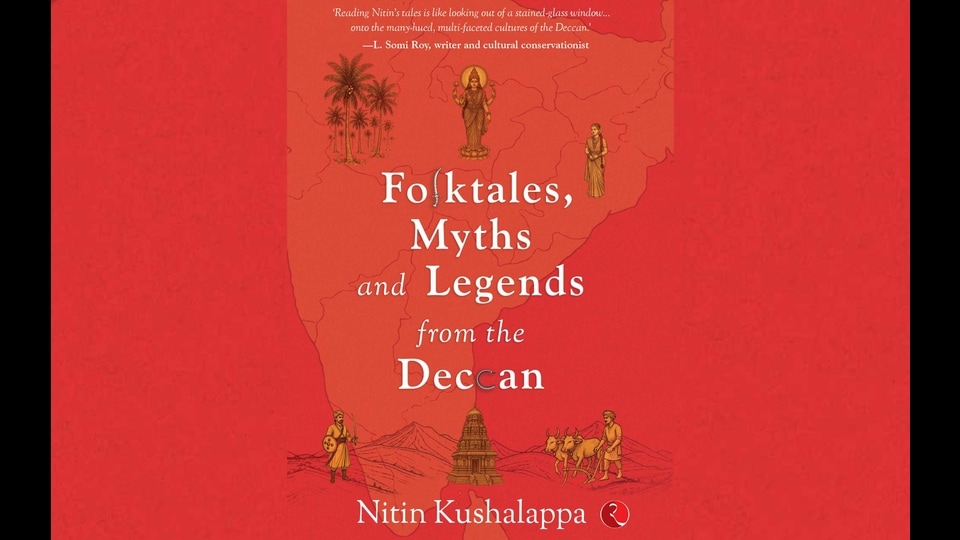
For readers looking to begin exploring Indian folklore beyond the more familiar epics and pantheons, an absorbing place to start is Nitin Kushalappa’s book Folktales, Myths and Legends from the Deccan. Rooted in oral storytelling traditions, it feels less like a conventional anthology and more like an inheritance passed quietly across generations. The collection brings together legends, myths, and folktales from across the vast region of Deccan while spanning across landscapes, dialects, communities, and belief systems that are as layered as the stories.
Though the 11 narratives, this collection travels Bayaluseeme, Kodagu, Tulunad, Kongu Nadu, and beyond. Thus, it introduces readers to warrior-sorcerers, folk deities, wandering philosophers and goddesses who walk the Earth in human form and become protagonists of stories as local heroes get immortalised through worshipping in forests that carry memory. It’s here that divinity feels deeply woven into everyday life rather than existing at a distance. This also makes evident how much research has gone behind the book. Drawing from multiple linguistic and cultural traditions — including Kannada, Tamil, Telugu, Tulu, Kodava and Malayalam — the author creates a textured portrait of a region, which has folklore that often remained underrepresented in mainstream mythology publishing.
What makes the book immediately engaging is its accessibility is a glossary and contextual notes that further help readers unfamiliar with regional references. Also, Kushalappa does not approach folklore with academic heaviness or dense mythological interpretation. Instead, he presents these stories in a lucid, approachable style that allows even younger readers or first-time mythology enthusiasts to enter the world of Deccan legends without feeling overwhelmed.
Some of the strongest tales emerge from this interplay between the spiritual and the human. The story of Junjappa, a humble cattle herder who returns as a revered spirit after an unjust death, lingers long after it ends. The tale of the Saptamatrkah, the seven mother-goddesses believed to protect communities from famine, disease and calamity, captures the deeply rooted goddess traditions of the Deccan with striking clarity. Equally compelling is the narrative around Yogi Vemana, whose transformation from indulgence to enlightenment gives the collection one of its more introspective moments. In fact, the author’s strength lies in the way he preserves the atmosphere surrounding these tales. The stories do not feel polished into modern fantasy and they retain the rough edges, ambiguities as well as quiet mysteries that oral traditions often carry. Gods appear without spectacle, rituals are treated with sincerity, and landscapes become characters in here.
That said, readers already deeply immersed in Indian mythology or folklore studies may occasionally find this literary archive somewhat simplified. Those familiar with the mythologies and legends of southern and central India may also feel that some stories lean more towards verisimilitude and literary reconstruction than folklore preserved organically through oral traditions. Certain parallels between narratives feel familiar, and some stories end just when one wishes they would delve deeper into the philosophical or ritualistic layers behind them. But perhaps that restraint is intentional. These tales were never meant to be dissected academically! These are meant to be heard, remembered, and retold.
Title: Folktales, Myths and Legends from the Deccan
Author: Nitin Kushalappa
Publisher: Rupa Publications
Price: ₹295
For more, follow @htcity.delhijunction