E-Paper



Fat Dogs of Delhi competition: When does ‘chonky’ stop being cute and becomes unhealthy? Veterinarians, dog feeders, and trainers weigh in
As Delhi cheers for its Insta-famous fat dogs, experts say loving community canines means more than feeding. Here’s how to care without compromising health.

 Prefer HTon Google


Delhi’s fat community dogs have found an unlikely fan following with the legit viral Fat Dogs of Delhi competition. It has put the Capital’s portly pooches in the spotlight by inviting people to vote for their favourites. With the results set to be announced tomorrow (October 1) at 2pm, the contest celebrates some of the city’s much-loved community dogs but has also sparked a conversation about more serious issues, such as their health.
READ | Delhi’s heavyweight election gets ruff: Intense polling on for Capital’s fat dogs
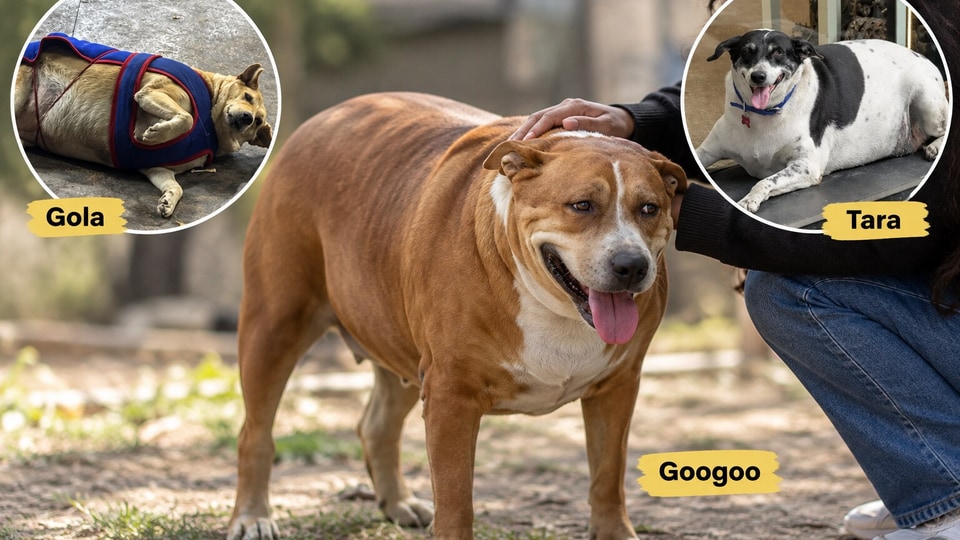
What added to this concern is the recent death of two dogs featured in the competition, namely Tara Khan aka Khan Saheb from Khan Market and Gola aka Kebab aka Rajpal Singh, from SDA Market. Then there are contestants such as Googoo, who reportedly weighs 46kg and until a few days ago was struggling to climb even a single step. Googoo is now undergoing supervised weight loss at Jeevashram's hospital.
But, the larger question is: does a visibly overweight community dog necessarily mean it's being overfed?
‘Lack of management, training’
One dog may have several well-meaning sources of food. Listing some of these, Dr Ashish Jhajharia, owner of Ashish Pet Clinic in Dwarka, says, “In areas such as Khan Market, New Friends Colony and markets with chicken or meat shops, shopkeepers may feed dogs meat, while regular feeders also give them food. Multiple people feeding the same dog can sometimes lead to overfeeding and excessive weight gain. Also, there is nobody to train them, take them for walks, or work out their natural drive for action. Then there are complications from sterilisation, such as thyroid, inflammation, heart enlargement, calcium deficiency and low bone density, etc. These can cause also weight gain.”
Adding to this, city-based dog trainer Shalini Mukerji says management is the key. “With community dogs, the biggest issue is the lack of management. Responsible feeding, while recognising that dogs are scavengers by nature, is the most practical way to care for them,” she adds.
‘Not just an overfeeding issue’
“But feeding may sometimes play only a small role in weight gain among community dogs. We also see dogs with underlying health issues and complications following sterilisation and inadequate aftercare. When a community dog appears obese, it's important to assess its health rather than simply assume it is being overfed,” says Noida-based veterinarian Dr Tanya Bansal, adding, “Limited access to consistent healthcare remains a challenge. There is only so much individual feeders or even NGOs can do for community dogs.”
Feeders, however, say that organised neighbourhood networks are already doing precisely this. “Overfeeding is not something we commonly see among community dogs. Feeders are usually in constant touch with one another,” says Epsita Agastya, a dog feeder and advocate based in Mayur Vihar Extension.
Agastya's neighbourhood WhatsApp group coordinates portions, veterinary visits and medicines while maintaining rabies vaccination records and using a common corpus for food and medical expenses.
'A healthy lifestyle is crucial'
For pets, meanwhile, Dr Adil Jain says overfeeding and inadequate exercise are major contributors to obesity, particularly among food-motivated breeds such as beagles, golden retrievers and labradors. “These breeds are known to eat excessively and a check must be kept on their food habits. Often, first-time owners overfeed their dogs and don’t take them out for regular runs. These are major contributing factors to the dogs’ obesity and ill health. A healthy lifestyle, regular exercise and a balanced diet are as important for animals as they are for humans,” she says.
- Get a health checkRule out underlying medical problems before assuming food is the only cause.
- Know who feeds whomRegular feeders can coordinate meals through a WhatsApp group or feeding roster.
- Keep portions in checkFactor in food the dog may receive from shops, residents and other feeders.
- Coordinate careKeep track of vaccinations, medicines and veterinary visits.
- Think beyond the weighing scaleMobility and overall health matter alongside weight.
- Keep them moving safelyExercise should suit the dog’s health and mobility; severely overweight dogs need veterinary guidance rather than sudden strenuous activity.
For more, follow @htcity.delhijunction