
 E-Paper



Homemade sushi 101: Mastering the basics on Int’l Sushi Day
Learn to craft authentic sushi at home, from choosing the best fish to mastering nori rolling techniques, in celebration of International Sushi Day today.

 Prefer HTon Google


Japanese cuisine has soared in popularity in India, with dishes like sushi, tempura and ramen becoming favourites even in non-Japanese restaurants. Among these, the demand for sushi has skyrocketed. According to Swiggy, sushi restaurants have increased from 100 to 500, with market growth rising from 15% to 45% from 2018 to 2023. Sushi orders surged from 5,000 to 35,000. While sushi is often enjoyed in restaurants or as takeaway, making it at home is easier than you might think. To celebrate International Sushi Day today, we spoke to chefs and experts on how to master sushi at home.
Choosing the right cuts
The freshness and quality of the fish are crucial in sushi making. “For the best results, go for high-quality, sushi-grade fish. Salmon (sake) should be firm and fresh-smelling. Tuna is best in deep red colour. Cooked and butterflied shrimp (often used in nigiri) can also be a good choice,” says chef Supreet Ghai, director of culinary at ibis & ibis Styles India. For rolls like California rolls, imitation crab sticks are a good option. Wong Chin Sheong, senior chef de cuisine at JW Marriott, Kolkata, suggests “non-meat alternatives like kappa maki (cucumber rolls), ninjin maki (carrot rolls), and kakiyagi rolls (vegetable tempura rolls)”.
Types of sushi suitable for home prep
There are several types of sushi you can easily make at home. “Maki sushi, or rolled sushi, includes thin rolls (hosomaki) and thick rolls (futomaki) with various fillings like vegetables or fish. Nigiri sushi is hand-formed sushi topped with a slice of fish and is simpler to make than it appears,” says Krishna Tiwari, executive chef at Kyma restaurant, Mumbai. “Temaki sushi, or hand rolls, are conical-shaped and perfect for a more casual experience. Uramaki, or inside-out rolls, are rolls with rice on the outside and nori on the inside, like the popular California roll.”
Sushi etiquette
Sushi is traditionally eaten with the hands, especially nigiri. When dipping sushi into soy sauce, dip the fish side, not the rice side, to avoid breaking the rice. Serve sushi with pickled ginger to cleanse the palate, wasabi for a spicy kick, and soy sauce. Sushi should be eaten fresh. If you must store it, cover it with a damp cloth and keep it in the fridge, but consume it within a day to ensure safety and quality.
Essential ingredients and where to find them
Niriksha Reddy, sous chef, ITC Grand Central, Mumbai shares a comprehensive list:
Sushi rice (Shari): Essential short-grain Japanese rice. Brands like Koshihikari or Nishiki are recommended.
Rice vinegar: For seasoning the rice. Look for brands like Mizkan or Marukan.
Nori: Seaweed sheets for rolling sushi. Available at most Asian grocery stores or online.
Soy sauce: For dipping. Kikkoman is a well-known brand.
Wasabi: Available in paste or powder form.
Pickled ginger (Gari): For cleansing the palate between sushi pieces.
Vegetables: Such as cucumber, avocado, and radish.
Bamboo mat (Makisu): For rolling sushi, though alternative tools can be used.
In India, these ingredients can be found at speciality stores in major cities or ordered online from retailers like Amazon, BigBasket, or specialised Asian grocery stores.
Beginner-friendly recipe
Maki (Makizushi): Rolled sushi with ingredients inside seaweed (nori) and rice, sliced into bite-sized pieces.
Prepare the rice and nori: Lay a sheet of nori on a bamboo sushi mat (makisu). Spread a thin, even layer of sushi rice over the nori, leaving a 1-inch border at the top.
Add fillings: Place desired fillings (e.g., fish, vegetables) in a line about 1 inch from the bottom edge of the nori.
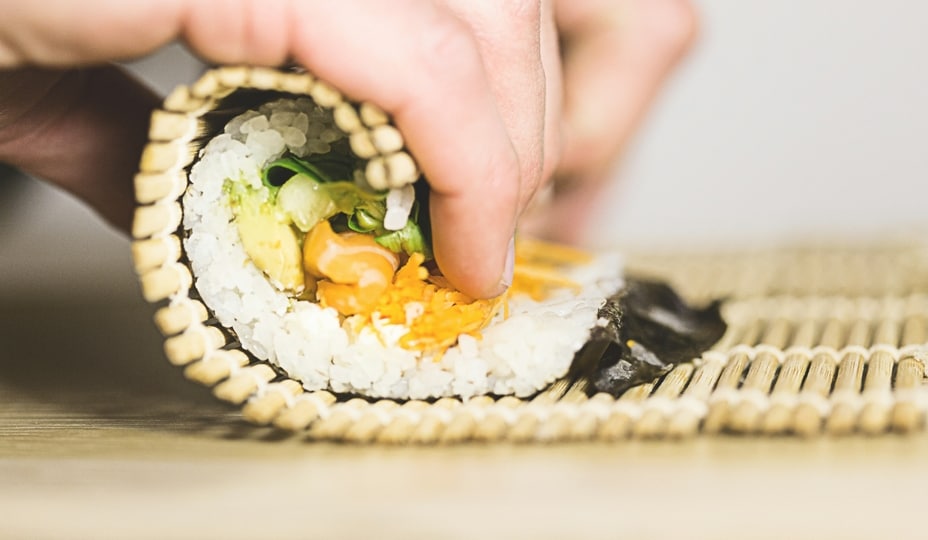
Roll the sushi: Use the bamboo mat to tightly roll the sushi, starting from the bottom edge. Press firmly as you roll to shape and seal the roll.
Cut the roll: Use a sharp knife to slice the roll into bite-sized pieces. Clean the knife with a damp cloth between cuts to ensure clean slices.
Recipe by Krishna Tiwari, executive chef at Kyma restaurant, Mumbai


