
 E-Paper



Inside Kris Jenner and Khloe Kardashian’s ‘hair growth secret’: Why dermatologists aren’t sold on peptide hair gummies
At 72, Kris Jenner says her luscious hair is all natural thanks to peptide gummies. But dermatologists caution that not all hair gummies live up to the hype

 Prefer HTon Google


At 72, Kris Jenner has declared that her glossy hair is all natural thanks to peptide gummies. The reality star and momager has been known to laud peptides as her secret weapon for hair growth. But Jenner’s love for peptides is also good business. She and daughter Khloé Kardashian became stakeholders last year in the US based beauty biotechnology brand Omi WellBeauty. “Over the past several years I tried anything and everything, and nothing showed results as quickly as Omi,” Khloé told Page Six Style. “My hair feels so much stronger, thicker, and just healthier overall.”
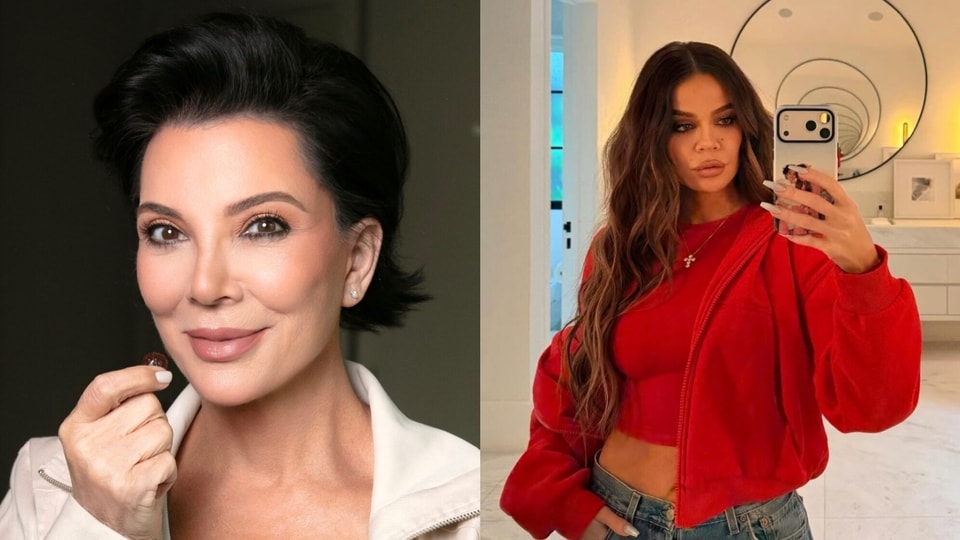
But while the Kardashians and other celebrities like Jennifer Aniston, Nicole Kidman swear by their peptide routine, dermatologists say it’s worth looking past the marketing, because not all gummies deliver on their promise.
What science says about peptides
Dr. Sonali Kohli, Senior Consultant, Dermatology at Sir H.N. Reliance Foundation Hospital, explains, “Peptides are short chains of amino acids that are literally the blueprints of proteins. Since keratin — a structural protein — makes up most of the hair shaft, supplementation with targeted amino acids (peptides) could theoretically make hair stronger and less prone to breakage.”
However, she says the logic doesn’t always translate to results. “It is essential to note that oral peptides in gummies do not ‘build hair’ by directly targeting the scalp. Once ingested, they are transformed into amino acids and absorbed systemically. Their effectiveness depends on gut absorption, overall nutrition, and the underlying cause of hair thinning.”
Expert verdict: supplements help, but only sometimes
Dr. Gitika Sanodia, Consultant Dermatologist at Dr L H Hiranandani Hospital, further explains that hairfall cannot just be improved by peptide use. “In my clinical practice, I emphasise that hair fall has many causes — nutritional deficiencies, hormonal imbalances, stress, and scalp conditions all play a role,” she says. “Gummies may help as supportive therapy if they contain essential nutrients like biotin, iron, zinc, and amino acids, but they should not be seen as a standalone treatment, especially for androgenetic alopecia or telogen effluvium.”
Dr. Saurabh Shah, Consultant Dermatologist at Saifee Hospital, echoes that view. “Hair gummies are not a magic pill for everyone. They usually work only for patients with established nutritional deficiencies,” he says. “However, for those with genetic or hormonal causes of hair loss, such as male or female pattern baldness, gummies will not play any role.”
Proceed with caution
Dr. Shah also points out that not all hair gummies are safe for everyone. “A lot of them contain sugar, so diabetic patients should opt for sugar-free versions. Heart and thyroid patients should also avoid gummies because the high biotin content can interfere with lab test results. Vitamin A cannot be taken by pregnant or lactating women, so hair gummies containing it are unsuitable for them,” he adds. “Even patients with kidney or liver issues must be careful, as vitamins A, D, E, and K are fat-soluble and get metabolised in the liver,” he warns.
The bottom line
While Kris Jenner’s glossy hair might owe something to good genes and expert styling, dermatologists say peptide gummies are no miracle fix. They can help only when a true nutritional deficiency exists, not as a universal cure for hair loss. So before you reach for those celebrity-endorsed gummies, experts say: get your health checked first, not your cart.


