E-Paper



1 of 3 leopards trapped in park for African cheetahs caught after 3 weeks
The leopards inside the special enclosure, 12 sq. km long and 9 metres high to save cheetahs from predators, could delay the translocation in Kuno

 Prefer HTon Google


Bhopal: After constant efforts for three weeks, Madhya Pradesh foresters were successful in catching one of the three leopards trapped inside the enclosure made for the safe translocation of cheetahs from Africa in Kuno National park in Sheopur, officials said.
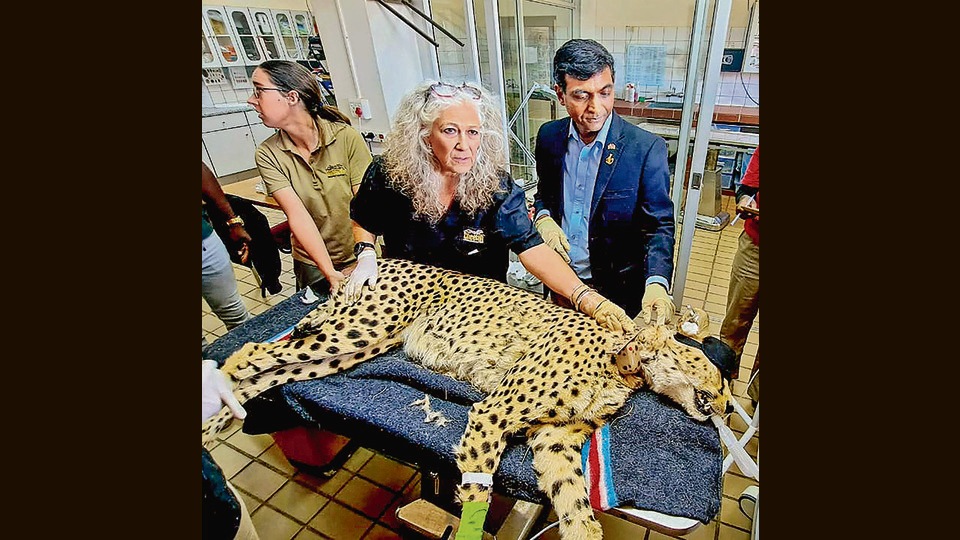
Scores of forest officials and experts of Wildlife Institute of India (WII) are trying to catch the three leopards. A big cage trap, foot traps and even elephants have been called in from Satpura Tiger reserves to catch the leopards.
“On Friday evening, the leopard was trapped inside a cage. It was tranquillized and relocated by forest officials,” said JS Chauhan, principal chief conservator of forest, wildlife. “We are happy with the success and will relocate two more soon.”
The leopards inside the special enclosure, 12 sq. km long and 9 metres high to save cheetahs from predators, could delay the translocation in Kuno. The cheetahs will reach India by mid September, Union environment minister Bhupendra Singh said last week.
Meanwhile, Namibia environment officials have refused to replace the three cheetahs rejected, because they were bred in captivity.
“The cheetahs were selected by Indian officials and Cheetah Conservation Fund (CCF), Namibia. But after a recent visit, Indian government officials rejected three cheetahs,” said Romeo Muyunda, chief public relations officer at Namibia’s ministry of environment, forestry and tourism. “Now, we will provide five cheetahs to India as we don’t have enough of the population of cheetahs.”
The African nation was supposed to send 17 cheetahs to India.
“The replacement is not possible now because after vaccination and medical check up, the cheetahs are in quarantine,” said an expert from Africa, who didn’t wish to be named. “A long procedure has been followed before quarantine, so only five cheetahs will be flown to India.”
Meanwhile, South Africa is yet to sign a memorandum of understanding with India with regard to translocation of 12 cheetahs. South African officials will visit India to check the risk management plan before signing the agreement.
The risk management plan prepared by the cheetah metapopulation project has detailed information about the steps to be taken to prevent disease transmission, mortality in transit, low post release survival rate, human wildlife conflict and long-term genetic and demography viability of wild cheetahs.
In Kuno, two helipads are being prepared by the public works department in Palpur, a core area of the forest, as the cheetahs will arrive through special helicopters of the Indian Air Force from Jaipur.