
 E-Paper



10% EWS quota will not impact others, Supreme Court told
The 10% reservation for EWS in central educational institutions will not impact students from other reserved or open categories, as an additional two lakh seats will be created at an earmarked budget of ₹4,315 crore, the central government told the Supreme Court on Tuesday.

 Prefer HTon Google


The 10% reservation for economically weaker sections (EWS) in central educational institutions will not impact students from other reserved or open categories, as an additional two lakh seats will be created at an earmarked budget of ₹4,315 crore, the central government told the Supreme Court on Tuesday.
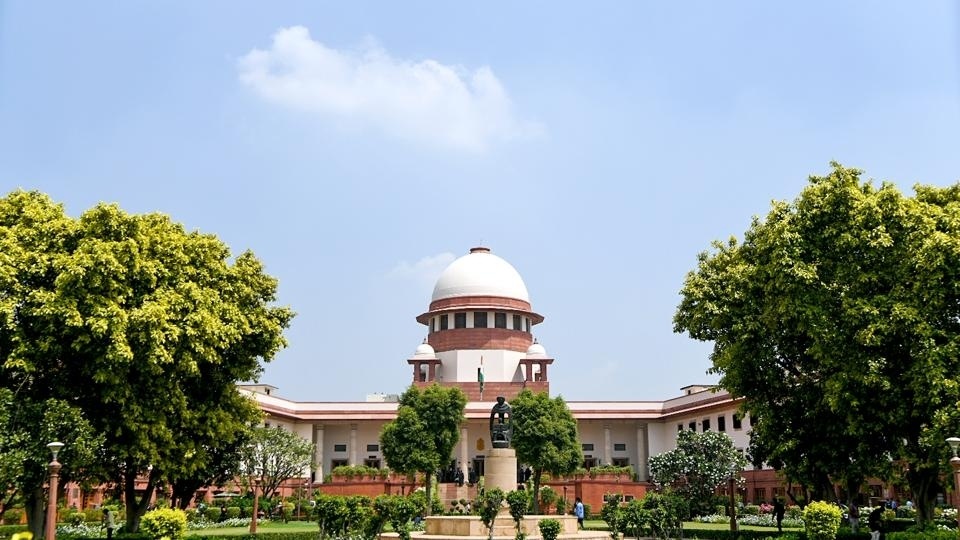
Submitting a two-page affidavit before a five-judge constitution bench that reserved its verdict on the validity of the 10% quota, solicitor general Tushar Mehta said, “The government as a sovereign is responding to the wishes and aspirations of several persons with this 103rd Constitution Amendment Act, 2019. The decision was taken to ensure that the seats for the reserved and open category are not disturbed.”
“As per the calculations done in this regard, in order to provide 10% reservation for the EWS, without adversely impacting the proportionate reservations to the SC/ST and OBC categories and not reducing the seat availability for the general category in absolute numbers as compared to admissions made in 2018-19, the total increase in intake has to be increased by approximately 25% (over and above the intake in 2018-19),” said the affidavit filed by NS Venkateshwaran, deputy secretary, law and justice ministry.
A total of 214,766 additional seats are to be created in central educational institutions and ₹4,315.15 crore will be spent to do this, the affidavit added.
By the 103rd Constitution Amendment Act, Articles 15(6) and 16(6) were introduced in the Constitution, providing 10% reservation in jobs and college admissions to those belonging to EWS, persons other than scheduled castes or tribes and other backward classes (essentially economically backward forward castes), whose annual family income was below ₹8 lakh.
The bench headed by Chief Justice of India Uday Umesh Lalit asked the Centre to provide details about other forms of economic assistance by way of scholarships aimed at EWS beneficiaries across all sections of society.
The bench, also comprising justices Dinesh Maheshwari, S Ravindra Bhat, Bela M Trivedi and JB Pardiwala, said: “We want data on the number of scholarships available at central educational institutions for medical, engineering and professional courses. That is also an important component of affirmative action.”
Mehta agreed to provide the data within two days, but added that while the data may have been helpful for Parliament to arrive at a decision to provide the 10% quota, it may not assist the court in determining the constitutional validity of the 103rd amendment.
The bench said that it was aware of the information it was seeking and disclosed that upon an independent enquiry, it had gathered information about some 82,000 scholarship schemes provided in central educational institutions.
“It may be a policy decision of the government to provide reservation to those who are benefitting from scholarships. Ultimately, the poorest of the poor are getting reservation,” Mehta said. “That may not be a constitutional issue.”
Including SCs, STs and OBCs in the 10% quota for EWS would amount to double reservation that was never envisaged by the Constitution, he pointed out.
This was the seventh day of arguments when both sides concluded their submissions. The petitioners led by advocate Ravi Verma Kumar told the court that at the conclusion of the hearing, the government has not been able to establish a rationale for the reservation.
“There seems to be a notion that reservation is the only panacea for poverty alleviation. For this, reservations are sought to be made for entry into IITs, IIMs and in administration and police services,” Kumar said. “This is popularly termed as reverse discrimination that you are so obsessed with reservation that you apply it everywhere.”
He presented a list of all welfare schemes of the Centre and states, and noted a striking similarity that in all such schemes for the poor, SCs, STs and OBCs were not excluded. “These two provisions, 15(6) and 16(6), have destroyed the equality code by allowing race and caste to be grounds of discrimination and convert the reservation of EWS as a communal one,” he said.
Advocates Meenakshi Arora, Sanjay Parikh, Gopal Shankarnaraynan, P Wilson, and academician and lawyer G Mohan Gopal also made submissions on behalf of the petitioners during the three-hour long hearing.
The petitions have opposed reservation for EWS on the ground that any affirmative action is meant for the marginalised and any benefit for the poor cannot exclude those among the SC, ST and OBC categories. They further urged that any quota by way of 10% would breach the 50% mark held to be a ceiling on reservation imposed by the Supreme Court in the 1992 Indira Sawhney judgment.
Over the course of the past two weeks, the bench heard arguments by the petitioners, who were supported by the state of Tamil Nadu. The Centre led by attorney general KK Venugopal and Mehta defended the 10% reservation, claiming that it was a shift from caste- and class-based reservation. They were supported by the states of Madhya Pradesh, Assam and Andhra Pradesh.


