
 E-Paper



100 days after the AI-171 jet crash, questions persist
In the aftermath of the catastrophic Air India crash , the affected are seeking answers — and accountability

 Prefer HTon Google


Can 260 lives be lost in the blink of an eye, in what is globally acknowledged as one of the safest modes of transport, and nobody be to blame? That’s the question that is increasingly being asked, now of the courts — both in the US and in India — by those who directly feel the pain of this tragedy but have found themselves stone-walled and unable to obtain any answers from those who ought to be answering them.
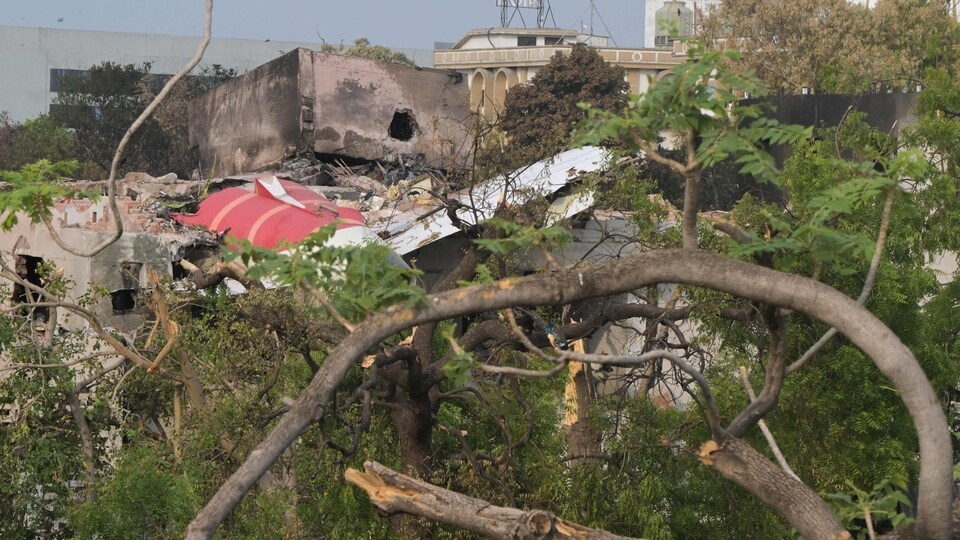
Time and again after the June 12 crash, the Air India brass has publicly absolved itself and reiterated that there were no mechanical or maintenance issues with the aircraft or engine. In statements issued to the media, the Air India CEO has said : “I suggest we note that the Preliminary Report found no mechanical or maintenance issues with the aircraft or engines, and that all mandatory maintenance tasks had been completed. There was no issue with the quality of fuel and no abnormality with the take-off roll. The pilots had passed their mandatory pre-flight breathalyser and there were no observations pertaining to their medical status”. In other words, nobody can point a finger towards his airline and its role in the accident. Queries to Boeing and other stakeholders have also been redirected to India’s Aircraft Accident Investigation Body, which released the preliminary report on July 12.
On September 16, just over three months after the AI171 crash that killed 260, the families of four victims of the accident filed a lawsuit against American manufacturer Boeing And Honeywell, accusing the companies of negligence. The lawsuit, filed in Delaware Superior Court, claims the accident was caused by a defective design of the aircraft’s fuel switches, which were manufactured by Honeywell and installed by Boeing. The suit alleges that the switches’ location in the cockpit, just below the thrust levers, made it likely for them to be inadvertently moved during normal flight operations. Further, as per the suit filed, a locking mechanism meant to secure the switches was either prone to disengaging or was missing altogether. It further argued that prior warnings were repeatedly ignored and refers to the 2018 US Federal Aviation Administration (FAA) advisory that warned operators of certain Boeing aircraft, including the 787-8, to inspect the locking feature on fuel control switches. This warning was a recommendation, not a requirement, one Air India chose to ignore.
Meanwhile a day later on September 17, a writ petition (a copy is with this writer) filed by a NGO Safety Matters Foundation made its way to the Supreme Court in India, seeking two actions. One, the writ asks for disclosure of all basic factual data pertaining to the accident, including the complete Digital Flight Data Recorder (DFDR) output and the full Cockpit Voice Recorder (CVR) transcript with timestamps and it seeks the appointment of an independent investigator of appropriate qualification and standing, under the supervision and control of the courts to oversee and monitor the ongoing investigation into the accident.
The writ takes apart and strongly condemns the preliminary report released by the AAIB in July and raises several inadequacies, some of which have been highlighted by experts and media and some which it highlights for the first time.
The strongest indictment of the report by the petition is with regard to its “selective disclosures” and paraphrased references to cockpit voice recordings “without timestamps or corroborative context”. This selective presentation, it is argued, creates a misleading impression and undermines transparency. Moreover, it has the effect of “shaping a biased public perception”, one that tends to attribute the cause of the accident to pilot error while absolving the manufacturer and the airline of potential responsibility. The report further argues that “by releasing incomplete and unverified extracts of the cockpit voice recording, the Respondent has created an information environment that unfairly tilts the narrative in favour of the operator and manufacturer”.
But perhaps what is even more worrying is that the writ points out several technical aspects of the investigation that seem lacking and appear to have been overlooked or not examined in as much detail as would befit an accident of this nature and magnitude.
As is well known, aircraft depart with a minimum equipment list and deferred maintenance items that are acceptable to the Captain in charge but the report highlights the role of BPCUs (Bus Power Control Unit), which are central to the 787’s electrical and data distribution network, and which, in this case, were defective. This can lead to an inability to correctly transmit or receive control signals, including the “RUN” command to the Full Authority Digital Engine Control (FADEC). The writ argues that these findings strongly support the “electrical disturbance theory,” whereby signal anomalies rather than pilot actions triggered the dual engine shutdown.
It goes on to highlight the much discussed RAT (Ram Air Turbine, a sort of a back-up) deployment, pointing out that the preliminary report itself records that the RAT deployed during the initial climb and arguing that this activation, corroborated by CCTV footage, is “incontrovertible evidence that the aircraft was experiencing a severe electrical or propulsion emergency well beyond ordinary operational anomalies”. The writ therefore questions the reports failure to analyse the technical implications of RAT deployment, including how it does not establish the exact moment when the deployment command was issued by onboard computers or the sequence of events leading to RAT activation. It also discusses the transitioning of fuel switches from “cut off” to “run” within seconds of initial shutdown and argues that these sequences occurred without any manual intervention by the pilots, indicating that the system itself was attempting to restore thrust. As per the petition, the preliminary report “fails to analyze these automatic relight attempts or their significance” and further argues that the relight activity is consistent with transient electrical faults or signal restorations. It alleges that the report ignores crucial evidence and “continues to focus solely on alleged human error, thereby suppressing technical findings that point to deeper systemic instability”.
While some of the above has been discussed in videos and news reports that followed the crash, the writ highlights two lesser discussed aspects of the crash and the preliminary findings : one, the state in which the aft EAFR (Enhanced Aircraft Flight Recorder), which the is flight recorder located at the rear of the aircraft was found. The petitioners say that the nature of the aft (or rear) recorder’s destruction, including melting of its crash-proof housing and absence of soot deposits, was “highly irregular” and consistent with high-temperature lithium-ion type combustion rather than ordinary fuel fire. In other words, this suggests some kind of sabotage or tampering with the rear recorder. The writ further argues that “both recorders were inexplicably retained in Ahmedabad until 24.06.2025 before being sent for readout, during which time sensitive details of the investigation appeared in the Wall Street Journal, raising concerns about data integrity and possible leaks”.
Lastly, the writ argues that the failure of AAIB to include the testimony of the sole survivor is another glaring omission that could materially impact the investigation. The petition points out that Vishwashkumar Ramesh recounted that moments after takeoff the lights inside the aircraft began “flickering green and white,” and within five to ten seconds the plane appeared “stuck in the air” before slamming into a building and exploding. His account, the writ argues, directly contradicts the insinuation of deliberate pilot error and provides critical first-hand evidence of electrical anomalies and the sequence of impact. It goes a step further to argue that the “suppression of Mr. Ramesh’s testimony, the only direct evidence from within the cabin, represents a serious breach”, implying that this was deliberate.
The writ also argues that the respondents (Union of India, DG AAIB and DGCA) have failed to discharge their statutory duty by issuing a full and comprehensive report with legitimate recommendations. Had they done so, a far wider regime of preventive measures could have been adopted. It points out that after the preliminary report was published Authorities in South Korea and Egypt mandated compliance with FAA’s Special Airworthiness Information Bulletin on fuel control switches, Etihad Airways conducted fleet-wide inspections, and the DGCA in India required all Indian airlines operating Boeing 787 aircraft to undertake mandatory checks. These proactive measures were taken despite the absence of any formal safety recommendation in the preliminary report.
People close to the court proceedings told this writer that the next hearing in this case will be in early November but that a second writ was likely to be filed by the Pushkaraj Sabharwal, the 91-year old father of AI171’s commander Sumeet Sabharwal, with the assistance of a group of pilots, who worked closely with his son, which is likely to ask for a retired or sitting judge to oversee the investigation as it proceeds in addition to the existing demands by the Safety Matters foundation. “Essentially, AAIB by releasing such a sub-standard, shoddy and unsigned report has made matters worse and we have lost faith in the body and its ability to produce an unbiased final report”, said a senior serving commander of the Federation of Indian Pilots (FIP). FIP is likely to join hands with Sabharwal Sr. and be included as a petitioner in the writ.
That AAIB has been trying to repair some of the damage done to its credibility after the preliminary report is evident in the addition of new experts including a senior Air India Dreamliner captain R.S. Sandhu and others who can materially guide the investigation since. More recently, the Airline Pilots Association of India (ALPA) has been invited for a meeting in October with AAIB, following a letter sent by the association to the civil aviation minister, to discuss ways of better representing the pilots’ stand point and views during the course of the investigation.
But the good news in this otherwise sad saga is that the lawsuits in the US and the writ petitions in India are likely to force the hand of the authorities to bring in more transparency in the proceedings and help bring to book hold those who might be keen to avoid sharing the blame for this tragedy.
Anjuli Bhargava writes about governance, infrastructure, and the social sector. The views expressed are personal


