E-Paper



128 test negative as Indian scientists hunt for coronavirus medicine
Research is currently on to check which vaccine and medicines could work against the new virus that has not been found in humans before.


One hundred and thirty samples have so far been tested in the country’s apex laboratory - Indian Council of Medical Research’s National Institute of Virology in Pune, of which 128 have returned negative for coronavirus even as the Union health ministry on Sunday confirmed a second positive case of the virus in India.
The second case has also been reported from Kerala, and the man has a travel history from the outbreak city of Wuhan in China.
“Second positive case of Novel Coronavirus patient, has been reported in Kerala. The patient has a travel history from China.The patient has tested positive for Novel Coronavirus and is in isolation in the hospital. The patient is stable and is being closely monitored,” the health ministry said in a statement.
The Government is maintaining strict surveillance of the suspected cases.
“Community surveillance is being done currently of 763 passengers, who have a travel history from China, in 26 states,” said Preeti Sudan, Union health secretary.
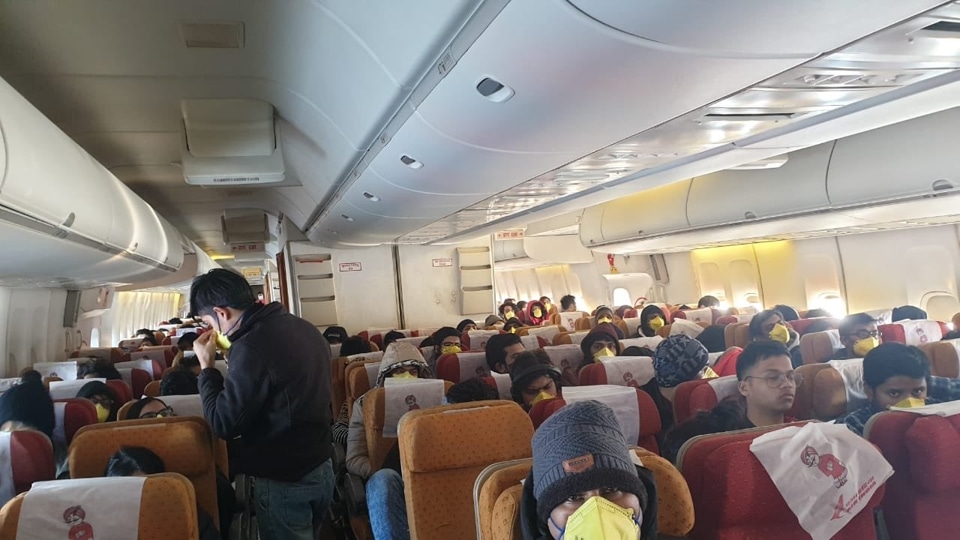
Meanwhile, another Air India flight with 323 Indians from China, particularly Wuhan city landed in Delhi Sunday morning.
“The flight has 323 Indians and 7 Maldives nationals also. Like it was done with the first batch, these will also be screened thoroughly and sent to the two quarantine facilities that have been created by the Army and ITBP. Samples from the first batch that arrived on Saturday have been taken and are under process,” said Sudan.
Dr R Gangakhedkar, epidemiology and communicable diseases head, ICMR, said research was on to check which vaccine and medicines could work against this new virus that has not been found in humans before.
“Globally scientists have been working since the time outbreak started. We have just got a case and the first thing that we are trying to do is isolate the virus, which means take out live virus from the sample and keep it alive outside in the laboratory,” he said.
“There’s something called repurposing of a molecule using artificial intelligence to study which drug(s), among the currently available ones, can be effectively used against the new virus. It is too early to say conclusively which one would actually work.”
He warned that although scientists are working frenetically to develop a vaccine for coronavirus, it could take at least two years.
“Since the mortality rate is low of this disease, there’s no urgent need to develop a medicine. As for vaccine, scientists globally are trying to develop one in next 3-4 months, but even if they act fast like in case of Ebola, it will still be at least 2 years before the vaccine is ready for human use,” Dr Gangakhedkar added.