E-Paper



14 years after Gadgil report, Western Ghats eco-sensitive zones yet to be notified
The report by a panel led by ecologist Madhav Gadgil was found to be controversial, with many states deeming it too restrictive

 Prefer HTon Google


The Western Ghats ecologically sensitive areas are yet to be notified by the Union environment ministry, 14 years after the first such demarcation was recommended by ecologist Madhav Gadgil’s committee in 2011.
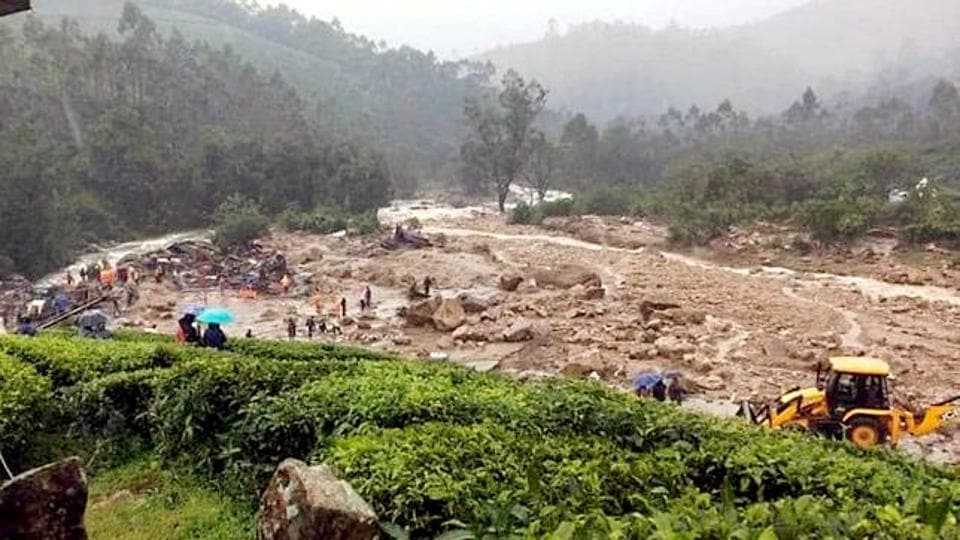
The Gadgil panel had recommended that 75% of the 129,037 sq km area of the Western Ghats be declared environmentally sensitive because of its dense forests and the presence of a large number of endemic species. This was found to be controversial, with many states deeming it too restrictive. Three years later, a second panel, headed by rocket scientist K Kasturirangan, scaled down the area to 50%. The Kasturirangan report’s recommendations were further diluted, and four draft notifications have since been issued.
On July 22, the Union environment ministry informed the Lok Sabha, “In order to protect the rich biodiversity of Western Ghats, this Ministry has issued draft Notification on Western Ghats Eco-Sensitive Area vide S.O. 3072 (E) on 06.07.2022 with an area of 56,825 square kilometre spreading over six States, namely, Goa, Gujarat, Karnataka, Kerala, Maharashtra and Tamil Nadu, based on the report submitted by the High Level Working Group (HLWG) Chaired by Dr Kasturirangan. The States have persistently asked for modification in the Eco-Sensitive Area (ESA) included in the aforesaid draft notification.”
Kerala and Karnataka were particularly opposed to declaring certain areas as ecologically sensitive zones, thereby delaying protection and continuing of activities like rock quarrying, mining and establishment of new industries.
“In order to address the issues raised by the State Governments, the Ministry constituted a committee to re-examine the suggestions of the six state governments in a holistic manner, keeping in view the conservation aspects of the disaster-prone pristine ecosystem, and the rights, privileges, needs and developmental aspirations of the region. The concerns of the state governments, including Kerala and Karnataka, are deliberated by the committee and based on the recommendations of the said committee; the draft notification is finalised,” said Kirti Vardhan Singh, minister of state for environment.
He was responding to questions raised by members of Parliament (MPs) Kodikunnil Suresh, Dean Kuriakose and Anto Antony. They sought to know 1. whether the government is intending to release the final notification identifying and demarcating Ecologically Sensitive Areas (ESAs) as per the recommendations contained in Dr Kasturirangan Panel Report, if so, the details thereof along with the present status of the same; 2. whether the final status of ESAs with respect to the States of Kerala and Karnataka has been finalised; 3. if not, whether the government has fixed a timeline for finalising the ESAs and releasing a final notification regarding the same, if so, the details thereof, if not, the reasons thereof; 4. whether the Government has been formally communicated by the said State Governments regarding the concerns pertaining to the livelihood of people in the region; and 5. if so, whether the Government proposes to revise the recommendations in order to allay the concerns raised by various States including Kerala where a significant population resides in and around the proposed buffer zones and if so, the details thereof?
In the latest iteration of the notification (before a new draft was finalised), the area to be notified as an ESA has been shrunk to approximately 37% of the Western Ghats. This draft was issued on October 3, 2018, but the ministry, in view of the Covid pandemic, on June 16 last year, extended its validity till December 31, 2021.
The 2018 document recommended a complete ban on mining, quarrying and sand mining; a phase out of all existing mines within five years from the date of the final notification being issued or the expiry of the existing mining lease, whichever is earlier; a ban on new thermal power projects or expansion of existing plants; and a ban on new or expansion of polluting industries as specified by the Central Pollution Control Board or State Pollution Control Board.