
 E-Paper



15 years of RTI: One-third of information commissions headless; misuse an obstacle
With the passage of time, the burden of replying to RTI applications increased, which increased response time, leading to a higher pendency of cases


Around one-third of information commissions in India are headless, one-fourth of information commission posts are vacant and the Jharkhand and Tripura information commissions are defunct, two reports on 15 years of the Right To Information (RTI) law stated Monday.
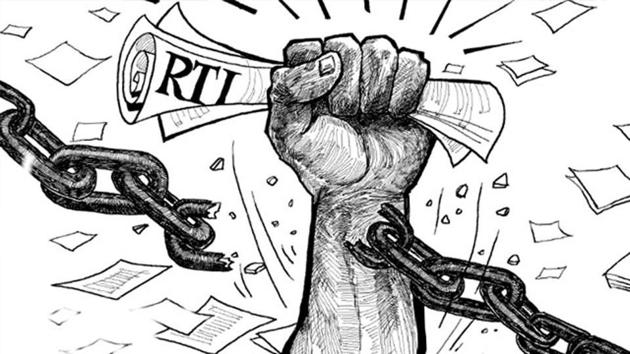
The transparency law came into force on October 10, 2005, giving the citizens a statutory right to seek a response from the government, which in a way became the biggest tool for grievance redressal. However, with the passage of time, the burden of replying to RTI applications increased, which increased response time, leading to a higher pendency of cases. And its misuse became more rampant.
In 15 years, around 33 million RTI applications were filed with various government departments across the country, said Transparency International India (TII), based on annual reports of information commissions across India.
Also Read: NMSEZ damaged Uran mangroves, wetlands, reveals RTI
Only about 9% of these RTI applications resulted in a second appeal, meaning that over 90% of the applicants were satisfied with the government response, which transparency law activists said is RTI’s biggest achievement.
The first appeal against a dissatisfactory RTI reply is filed with the department from where the reply is sought. And the second appeal is filed with the information commission, an independent body that can direct departments to provide information and impose penalty for a delay in providing information.
However, one of the reports also stated that Jharkhand information commission is without any commissioner since May 8, 2020, when the incumbent acting chief information commissioner Himanshu Chaudhary retired.
“We invited applications in January but the appointment is pending in the absence of clear directives from the assembly secretariat,” said Sudhir Kumar Ranjan, joint secretary in Jharkhand’s personnel department. The appointment is stuck as the Jharkhand assembly is yet to appoint leader of opposition, who is a member of the appointment committee headed by the chief minister.
Tripura information commission also does not have a single commissioner April, 2020, after G Kameswara Rao, former chief secretary, retired. State government officials said on condition of anonymity that they were in the process of making the appointment.
Also Read: Consider starting e-hearings for RTI in all departments: Bombay HC to Maharashtra govt
A report by Satark Nagarik Sangathan (SNS) released Monday, said nine states including Uttar Pradesh, Telangana and Rajasthan did not have a chief information commissioner, whose appointment under the RTI law is a statutory requirement.
“The absence of a chief information commissioner has serious ramifications for the effective functioning of the information commissions since the RTI Act envisages a critical role for the chief, including, superintendence, management and direction of the affairs of the information commission,” the SNS report said.
The central information commission (CICI), which hears second appeals against all Central government departments and union territories, has also been without a chief since August 17, 2020. “This is the fifth time in six years that the CIC has been rendered headless due to the delay in appointing a new chief upon the incumbent demitting office,” the SNS report stated. The Department of Personnel and Training has said the process for chief’s appointment has started.
Anjali Bhardwaj of SNS said showing complete lack of political will, governments are not making appointments of commissioners in a timely manner leading to backlog of 2.2 lakh cases till July 31, 2020. “Today, one of the most significant challenges the transparency regime faces is the attack on the transparency watchdogs,” she said.
The TII report said 24% of the information commissioner posts in 29 states were lying vacant despite Supreme Court order on February 15, 2019, directing all states and the Centre to fill all the vacant posts within six months, saying seeking information was a “fundamental right”. The court had also lamented that most of the information commissioners appointed under the public service category were retired bureaucrats while asking states to include people from diverse background in the commissions.
During the Covid-19 pandemic, only 10 of the 29 information commissions worked, and in these commissions also very less appeals were heard citing technological glitches. “Instead of providing respite during the pandemic, the transparency watchdogs in most states stopped functioning. The pandemic has further undermined one of the most important governance legislations,” said SR Wadwa, chairman, TII.
The SNS report said that despite 15 years of the law, many information commissions are not very transparent about their functioning. “Many information commissions still provide very less information about their orders and appeals, making analysis of their work difficult,” said Anjali Bhardwaj of SNS, adding that the Bihar information commission does not even have a website.
Several studies on RTI done in the past decade shows that the transparency law has improved governance and checked petty corruption but its misuse has also increased manifold. Now, most public information officers are reluctant to give information to serial RTI applicants and publicists.
On this aspect, Padma awardee RTI activist Subhash Aggarwal said that in 15 years, RTI proved to be “curative” and “preventive” for corruption and improved governance but its misuse emerged as a major obstacle in its efficacy. “There is a need to increase RTI fees and seek identity documents, as some states such as Punjab and Odisha have done, to prevent the misuse. The government is willing to provide information to genuine RTI applicants,” he said.
The importance of RTI law for India could be gauged from the Supreme Court 2019 judgement, which stated that the RTI has the potential to bring about good governance, which is an integral part of a vibrant democracy. “Attaining good governance is also one of the visions of the Constitution. It also has vital connection with the development,” the court said.


