E-Paper



18 families get aid amid confusion over Indore contamination deaths
State officials have confirmed that at least six people have died after consuming contaminated water in Bhagirathpura.


My father could have been saved if the administration had acted in time, said 17-year-old Mehak Likhar, whose father, Arvind, died after allegedly consuming contaminated water in Indore’s Bhagirathpura area. The Likhar family is among 18 households in the area to receive ₹2 lakh each in compensation from the government.
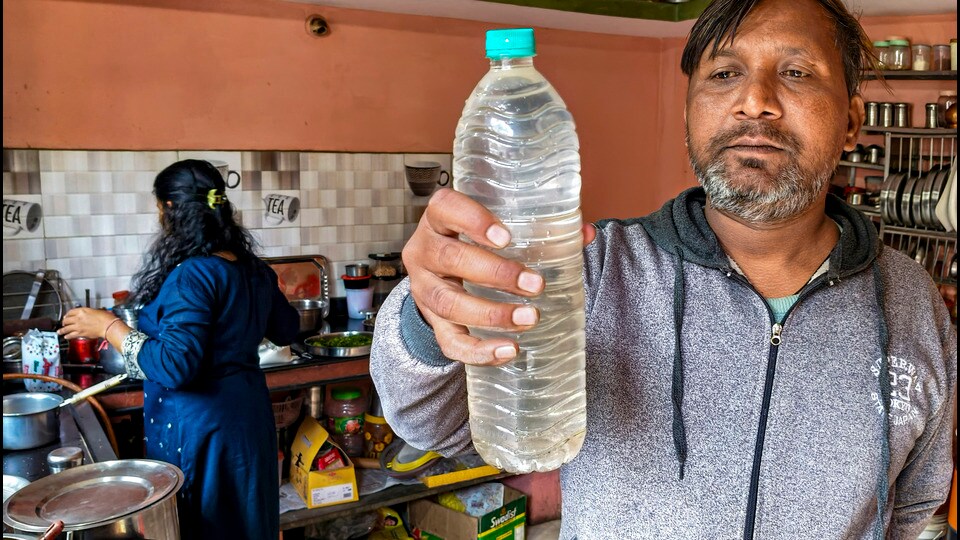
Arvind Likhar, a daily-wage labourer, died shortly after consuming the contaminated water. “That evening he returned home, began vomiting, and his condition worsened until his death three days later,” said Mehak, a resident of Kulkarni Bhatta.
“My father could have been saved if the administration had acted timely. We lost everything due to contaminated water. My father was infected after the outbreak but the administration kept denying his death. Now they gave a ₹2 lakh cheque. I am transferring ₹2 lakh in their account, will my father come back? They (officials responsible for contamination) should be sent to jail” said Mehak.
Her uncle, Anil Likhar, added, “Arvind was the only earning member of the family. Now how will they live with this ₹2 lakh aid?”
State officials have confirmed that at least six people have died after consuming contaminated water in Bhagirathpura, while investigations continue to ascertain the cause of death for several others. The crisis became public on December 29, a day after a 60-year-old resident of Bhagirathpura died after complaining of vomiting and diarrhoea. On January 3, test reports of water samples confirmed the tap water was a cocktail of deadly pathogens — including E coli, Salmonella and Vibrio cholerae bacteria, along with viruses, fungi and protozoa — that caused polymicrobial infections leading to multi-organ failure and sepsis among patients, officials aware of the matter said.
Despite ongoing confusion over the actual death toll, the district administration on Tuesday distributed compensation cheques to the kin of 18 deceased, including families still awaiting post-mortem reports.
“The loss of even a single life is painful for us. Therefore, we are not getting into the statistics. It’s a different matter that the administration has its own way of counting. The government stands with everyone, regardless of those figures, so I instructed them to give compensation to all as per death recorded in the data of the municipal corporation,” the CM told reporters on Tuesday.
Among the victims was Uma Kori, who fell ill on December 28 and died within 24 hours. Her husband, 31-year-old Bihari Kori, was left devastated. “Uma was fine. We had dinner together on December 28 but soon after she started vomiting. We waited till morning, not knowing about the outbreak. By afternoon she was unconscious. We rushed her to the hospital on a bike, but the doctor declared her dead. Our life had just started. We had so many dreams together but now I lost everything.”
Five-month-old Avyan Sahu, the youngest victim, died soon after his milk was diluted with tap water. “I lost my five-month-old son. My wife is blaming herself and has been admitted to the hospital. We never knew water would prove fatal. I never wanted money. My wife turned the minister and officers away because ₹2 lakh is not justice for my son’s life. They are showing mercy or trying to make up for their mistake, but this incident gave me lifelong pain,” said his father, Sunil Sahu.
Other families share similar anguish. Ramesh of Bhagirathpura mourned his mother, Sumitra Das, 50, who died on December 21 after visiting from Bihar. Her relative Santosh Kumar said, “Sumitra’s son is cursing himself for her death. He didn’t know contaminated water was an old issue here. He couldn’t afford to take her body back to Bihar, so her cremation was done in Indore.”
Another resident Jitendra Pajapat, grieving his sister Seema, 38, said, “My sister died within hours of falling ill after consuming contaminated water. Before we could understand anything, her condition worsened. We rushed her to the hospital where she died. Now her daughter is also ill and it is very difficult to handle her.”