
 E-Paper



1990 custodial death case: Supreme Court raps Sanjiv Bhat over request for recusal of judge
Moving an application for the recusal of justice MR Shah before whom the petition came up, Bhat claimed that he apprehends a bias as certain issues that are a subject matter of the appeal before the court were decided by the same judge when he served in the Gujarat high court


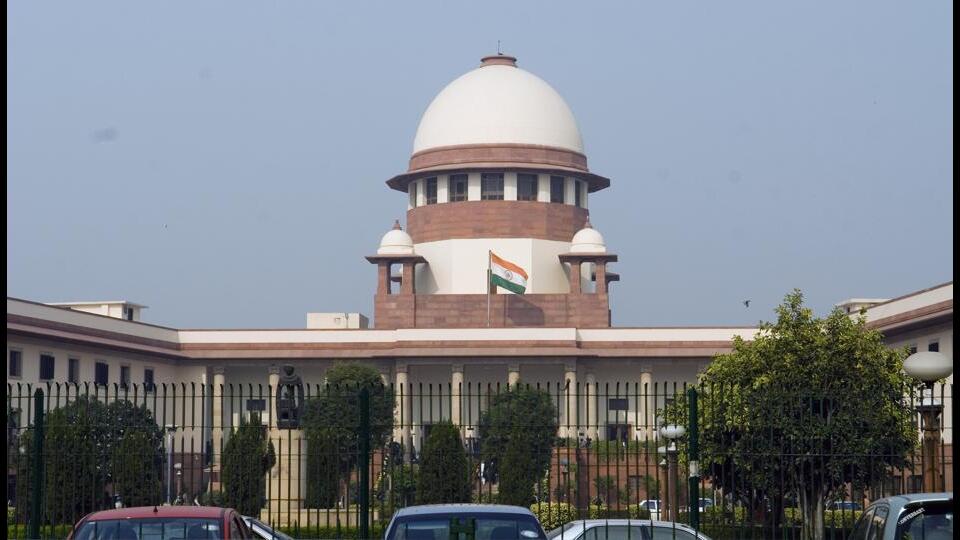
New Delhi The Supreme Court on Tuesday took exception to sacked IPS officer Sanjiv Bhat’s request for recusal of a judge hearing his petition to produce additional evidence in a custodial death case of 1990, in which he has been sentenced to a life term.
Moving an application for the recusal of justice MR Shah before whom the petition came up, Bhat through his lawyers, senior advocate Devadut Kamat and Aljo Joseph, claimed that he apprehends a bias as certain issues that are a subject matter of the appeal before the court were decided by the same judge when he served in the Gujarat high court.
“Tell your client we don’t like this gesture,” said a bench of justices MR Shah and CT Ravikumar referring to Bhat’s letter of November 11 filed through his counsel Joseph. The bench said, “If you are serious about this letter, we shall dismiss it. As a high court judge, we would have passed many such orders. After that a number of orders (passed by the high court relating to Bhat) came up before us in this court against the same petitioner (Bhat).”
Kamat, who argued the petition, told the court that sometimes as law officers they have to do an “unpleasant” duty and in the present case, he had instructions to press the application. The court posted the matter for January 10 as a request for adjournment was made by the Gujarat government. When the matter was heard last month, the state had opposed Bhat’s letter.
In the letter, Bhat referred to two orders passed by justice Shah as a judge of the Gujarat high court. One such order passed in December 2011 pertained to the custody death case where Bhat has been convicted while another order passed in March 2012 was in connection with another case involving Bhat.
Kamat told the court that the observations in the HC orders were dealt with by the top court. He said that the top court construed the HC order as strictures passed against Bhat. The bench told Kamat, “Your apprehension of bias should have some reasonable nexus.” The court agreed to consider the issue on the next hearing.
In the petition, Bhat challenged the decision of the Gujarat high court refusing him permission to call an additional witness, a doctor from Hyderabad, in support of his innocence.
The custody death case pertained to the year 1990 when Bhat was appointed as the additional superintendent of police at Jamnagar. The police had detained many Bharatiya Janata Party (BJP) workers protesting against the arrest of LK Advani after his Rath Yatra was stopped in Bihar due to communal violence. One of those detained, Prabhudas Vaishnani, died in a hospital after his release. His brother alleged that Vaishnani was tortured by policemen in jail, which led to his death.
On June 20, 2019, a sessions court in Jamnagar convicted Bhat and sentenced him to life imprisonment. Bhat then approached the Gujarat high court for suspension of the sentence but it was rejected in September 2019. The high court said Bhat had scant regard for courts and accused him of misusing the process of law.
A 1988-batch IPS officer of the Gujarat cadre, Bhat was sacked in 2015 for “unauthorised absence” from service. He was earlier suspended after he accused then Gujarat chief minister Narendra Modi of being complacent in controlling the 2002 Gujarat riots but failed to provide any evidence to support his charge. His statement was also found to be false by the special investigation team (SIT) that probed the Gujarat riots cases.
The Supreme Court in June last year dismissed any larger conspiracy behind the riots, following which the Gujarat government registered a criminal case against Bhat, social activist Teesta Setalvad and former director general of police RB Sreekumar for allegedly fabricating documents to frame innocent people in the 2002 riots cases.


