E-Paper



2 die in Odisha allegedly due to transfusion of wrong blood group; probe ordered
One attendant of the hospital and two technicians of the blood bank have been suspended for alleged negligence, said Keonjhar district chief medical officer.


BHUBANESWAR: A probe has been ordered in Odisha’s Keonjhar district over complaints that linked the death of two patients to the district hospital staffers allegedly using the wrong blood group for the transfusion, local officials said.
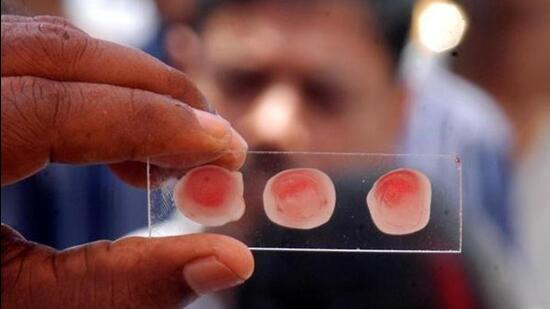
Keonjhar district chief medical officer Dr Sujata Rani Mishra said she has ordered a probe into the complaints and one attendant of the hospital and two technicians of the blood bank have been suspended for the alleged negligence.
Family members of two patients, Dama Munda, a 70-year-old tribal man and Suni Sahu, a 40-year-old housewife, alleged that their kin were given the wrong blood group by hospital doctors and paramedics leading to their death.
Dama Munda of Kandaraposhi village under Keonjhar Sadar block was admitted to the district headquarters hospital on March 29 after he fell sick. His family said Munda’s blood group was A positive but was administered B positive blood.
“The blood transfusion was stopped midway after my brother-in-law Bhagaban Munda told a nurse that he was being given the wrong blood group. The next day, A-positive blood was given to him. Though his condition deteriorated further, the doctors there discharged him on April 3 saying he was fit and fine. However, he died on May 11 most likely due to the complications of transfusion of wrong blood group,” said Ajit Munda, his son in his complaint to the district collector, demanding ₹20 lakh compensation and action against the doctors and paramedical staff responsible for the alleged negligence.
Similarly, Suni Sahu, a 40-year-old housewife from Raisuan gram panchayat of Keonjhar district was admitted to the district headquarters hospital on May 13 after she fell sick. Sahu was transfused with 2 units of B-positive blood. However, Sahu’s condition deteriorated further following which she was taken to the SCB Medical College and Hospital in Cuttack where her blood group was found to be AB-positive.
Sahu’s elder brother Babaji Sahu said that his sister was transfused with 2 units of AB-positive blood on May 21. Though her condition improved for a few days, it deteriorated further and she died on May 29 in the Cuttack-based hospital.
“My sister died solely due to the lackadaisical manner in which she was treated in the Keonjhar hospital,” alleged Babaji Sahu demanding action against the erring doctors.
Meanwhile, human rights activist Himansu Nayak lodged a petition before the National Human Rights Commission (NHRC) seeking ₹30 lakh compensation for the families of the victims.
The allegations of deaths due to wrong blood transfusion came a little more than a week after the Orissa high court issued a slew of directions to the state government for improvement of conditions in the government hospitals. Hearing a public interest litigation (PIL), a division bench of chief justice Dr. S. Muralidhar and justice Radha Krishna Pattanaik said urgent corrective action required to be taken in government healthcare as in many districts headquarter hospitals, community health centres and primary health centres, not all the doctors shown on the rolls of the facility were present.
“In many hospitals, no nurses were found and staff were absent. Lack of cleanliness is a major issue as is lack of functional, clean toilets. Even the availability of clean drinking water is a big problem. In many places the registers for stocks of drugs were either not available or not properly maintained. It is a matter of concern that in many of the DHHs, CHCs and PHCs, ambulances were not available,” the high court said.