E-Paper



2 years after violent stir, will CAA issue sway Assam polls?
Violent protests had rocked the state for several days in December 2019 against CAA, claiming the lives of five in police firing.

 Prefer HTon Google


With elections to the Assam assembly due next month, the Citizenship (Amendment) Act, or CAA -- a controversial legislation that seeks to grant citizenship to religious minorities from Muslim-majority Bangladesh, Pakistan and Afghanistan who entered India on or before December 31, 2014 -- is in focus again.
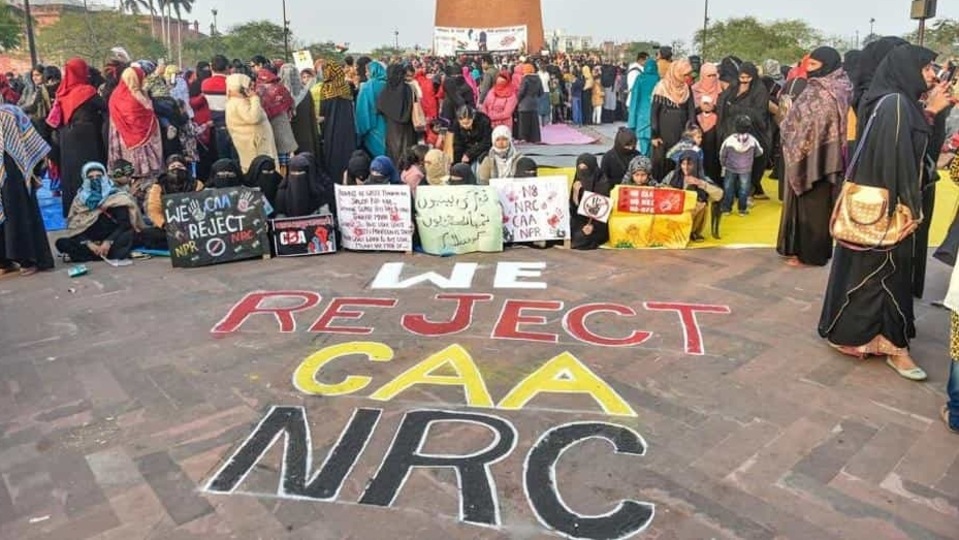
Violent protests had rocked the state for several days in December 2019 against CAA, claiming the lives of five in police firing, and the clamour against the legislation led to the birth of two regional parties. While the ruling Bharatiya Janata Party-led coalition is downplaying CAA and its impact (the legislation is yet to be implemented), the opposition alliance led by the Congress is raking it up again.
Fear of outsiders
The genesis to the opposition to the legislation lies in indigenous communities in Assam being apprehensive of outsiders, especially those from Bangladesh (erstwhile East Pakistan) for over a century. This sentiment led to an agitation between 1979 and 1985, which claimed over 800 lives in police action and ended with signing of an accord that promised sealing of borders with Bangladesh and the detection and deportation of illegal immigrants who entered after March 24, 1971.
Successive governments failed to implement the accord and the illegal Bangladeshi immigrants issue continued to simmer. Five years ago, when the BJP promised to deport all illegal Bangladeshis, it galvanised voters, and the party was able to come to power for the first time along with alliance partners Asom Gana Parishad (AGP) and Bodoland Peoples Front (BPF).
So when the BJP-led National Democratic Alliance (NDA) introduced and passed CAA in Parliament in December 2019, protests flared up across most parts of Assam, fearing that it would lead to the influx of more “outsiders”. There were protests in other parts of India as well, but while those protests were against the exclusion of Muslims from its the law’s purview, in Assam opposition was against allowing non-Muslim illegal immigrants to become citizens.
Protesters said the CAA provisions was against the 1985 Assam Accord that assured an end to entry of illegal immigrants irrespective of their religious affiliations. Several groups and indigenous associations contended that if CAA is implemented, it could lead to an influx of illegal immigrants from Bangladesh and threaten language, culture and land holdings of local populations.
New regional parties opposed to CAA
Though the protests against CAA died down after few days, they resulted in formation of two regional parties opposed to the legislation. The All Assam Students Union (AASU) and Assam Jatiyatabadi Yuva Chatra Parishad (AJYCP), two prominent student bodies that spearheaded the protests, formed Assam Jatiya Parishad. And another outfit, Raijor Dal, was launched by Krishak Mukti Sangram Samiti (KMSS), a farmers’ rights body that also played a key role in the anti-CAA stir.
Claiming to be unadulterated representatives of indigenous aspirations, these two parties have joined hands to form the third alternative for voters while trying to remain equidistant from the BJP-led ruling alliance and the Congress-led Opposition.
“Once we come to power, our government will take a decision on non-implementation of CAA in Assam, pass a resolution in assembly on it and intensify protests to get the legislation scrapped in parliament,” Raijor Dal’s working president said on Tuesday after releasing the party’s “vision document”.
The AJP has released a list of candidates for 68 (out of 126) seats till now, Raijor Dal has announced candidates for 20 seats. President of AJP Lurinjyoti Gogoi will contest from Duliajan and Naharkatiya and Raijor Dal chief Akhil Gogoi, who is under arrest since December 2019 for his role in the anti-CAA protests, will be contesting from the Sivasagar and Mariani seats. The alliance has a tie-up with Autonomous State Demand Committee (ASDC) for the seats in two hills districts of Karbi Anglong and Dima Hasao.
Congress’s stand
The two new regional outfits are not alone in their opposition to CAA. The “grand alliance” of Congress and six other parties — All India United Democratic Front (AIUDF), BPF, CPI, CPI-M, CPI-ML and newly formed Anchalik Gana Morcha (AGM) are also raising the legislation as a key poll issue.
The Congress’s stance on CAA was displayed loud and clear during party leader Rahul Gandhi’s first poll rally in the state last month at Sivasagar, where all senior leaders wore “gamosas” (traditional towels) around their necks with a struck-through CAA written on it. Gandhi said that CAA was the BJP’s attempt at dividing the people of Assam, and the Congress will now allow its implementation in Assam if the party comes to power.
The anti-CAA stance is also part of Congress’s five guarantees for voters in this election. The party has also announced plans to build a memorial on the anti-CAA protests after coming to power. “After we win the election, we will pass a law in the assembly that won’t allow the CAA to be implemented in Assam. We have already asked lawyers to start drafting such a law,” Congress Lok Sabha MP from Nagaon Pradyut Bordoloi said.
BJP unperturbed
The BJP and its allies, however, are confident (at least publicly) that CAA is a non-issue in this election, and the ruling coalition’s development and welfare schemes in the past five years will be enough to ensure another term.
“Protests against CAA have lost relevance post the Covid-19 pandemic. Voters are not bothered about it now. They are more concerned about development. The Congress and other parties have failed to judge the sentiment of the public,” senior minister Himanta Biswa Sarma said recently.
Instead of mentioning CAA in their poll rallies, the party is playing the religion card. Sarma has stressed that there is a threat to Assamese people and their religion and culture from Muslims who came from Bangladesh. He and his party colleagues also highlight how Congress has acted against the interest of people of Assam by joining hands with Badruddin Ajmal’s AIUDF, a party they describe as communal.
“Our stand on CAA has been very clear and implementing it is part of BJP’s ideology. Despite that, people of Assam have supported us in 2016 assembly polls and the 2019 general election. It won’t affect us this time as well. In fact, people are more worried about the unholy nexus between Congress and AIUDF and will show them the door again,” BJP spokesperson Rupam Goswami said.
Limited impact
Experts say that the CAA issue have a limited impact on the polls.
“CAA should and could have been an important poll issue in Assam. But the spontaneous protests against the legislation erupted like a volcano in December 2019 and petered out. Even the two political parties, Assam Jatiya Parishad and Raijor Dal, which were formed as an outcome of the protests, failed to carry forward or sustain the issue,” said Alaka Sarmah, professor of political science at Gauhati University.
“The legislation may play on mind of a section of voters in urban areas who are more aware of the issue, but it won’t affect how people vote in the rural areas, which is substantial, as they are aloof or not aware enough about CAA. On the other hand, the welfare schemes of the present government targeting almost all sections could play a bigger role. At least that’s the mood at the moment,” she added.