E-Paper



2016 was a bad year for Indo-Pak ties. What lies ahead?
Though 2016 started on a high note for bilateral ties between India and Pakistan, the Pathankot, Uri and Nagrota attacks and the ‘surgical strikes’ quickly soured relations.

 Prefer HTon Google


When Prime Minister Narendra Modi made a surprise visit to Lahore on December 25 last year to wish his Pakistani counterpart Nawaz Sharif on his birthday, the overwhelming feeling was that the only way bilateral ties could go was up despite simmering tensions on the LoC.
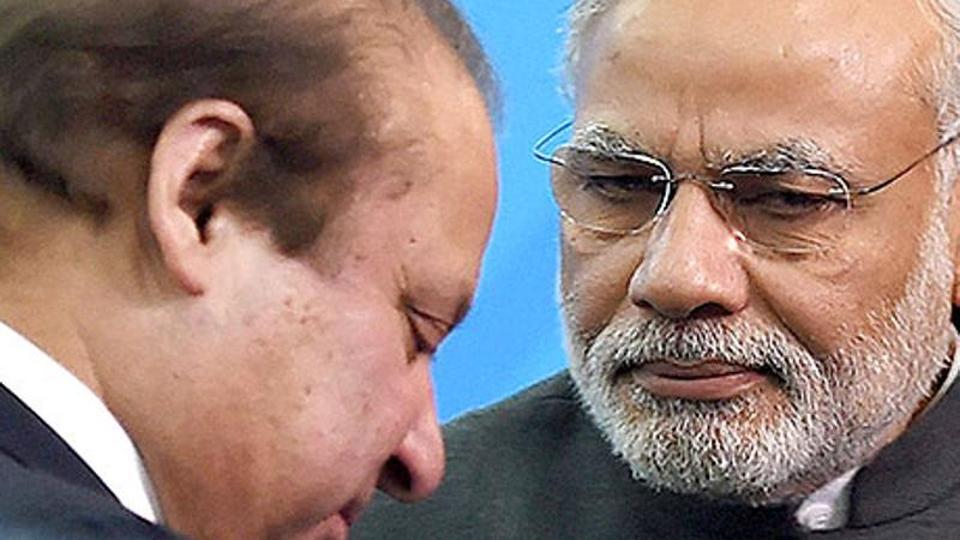
Within days, the brazen terror attack on Pathankot airbase put paid to the optimism. The attack also marked the beginning of a cycle of terrorism that continued till the assault on an army camp at Nagrota in November, capping one of the worst years for bilateral ties in recent memory.
And things could get worse in the coming year, according to experts in both countries, with little expectation that the two sides can find common ground on dealing with issues ranging from terrorism to Kashmir.
The optimism, which began when Modi invited Sharif to his swearing-in ceremony in May 2014, peaked after external affairs minister Sushma Swaraj’s visit to Islamabad a year ago, when the two sides agreed on a new comprehensive dialogue.
But the process never got off the ground because of the string of attacks on military facilities at Pathankot, Uri and Nagrota. A planned meeting of the foreign secretaries in Islamabad fell through after Pakistan rejected India’s contention that talks should focus on terrorism.
The attack on the Uri army camp was followed by India pulling out of the Saarc Summit in Pakistan and surgical strikes across the Line of Control, which sparked intense exchanges of fire between troops of the two sides. Pakistan was also angered by Modi’s reference to rights violations in Balochistan and Pakistan-occupied Kashmir, especially during his Independence Day speech.
Read | PM Narendra Modi greets Nawaz Sharif on his birthday
“Modi has been very tactical and made some smart moves, such as inviting Sharif to his swearing-in and going to Lahore. He’s done the right things to show you can’t trust Pakistan,” Ajay Behera of the Academy of International Studies at Jimia Millia Islamia told Hindustan Times.
“Unlike Mumbai, where civilians were targeted, Pakistan has shifted to hitting military installations,” he added.
In Pakistan, experts said, there were some who always expected bilateral ties to deteriorate sooner or later under Modi. The unrest in Kashmir after the killing of militant commander Burhan Wani also added to the deterioration in relations.
“Much of this has to do with civil-military relations in Pakistan,” said analyst Hasan Askari Rizvi. While the situation in Kashmir was a “good reason” for Pakistan to react, the real issue was “friction between Sharif and the military high command”, he said.
The Pakistan Army insists its moves are aimed at getting the civilian government to perform according to the constitution, but politicians say the military’s intentions aren’t always noble.
Read | New Pakistan Army chief thinks Gen Bikram Singh is ‘very professional’
“They claim to be fighting corruption and poor governance but what they are doing is playing on popular sentiments to put pressure on the government to extract major concessions,” said a senior politician who did not to be named.
Besides pushing for concessions such as tax breaks for army-run businesses and hikes in defence spending, the army has also pressured the government to downgrade relations with India, keeping in mind Sharif’s desire for regional peace and better ties with India.
“The army thrives when relations are bad. One can tell with the statements issued by the (military’s media arm) as cross-border firing took place,” said Abid Hussain, a local journalist, who added the media was “managed” by the military “and told what to write when such incidents occurred”.
The powerful security establishment continues to push militant groups for operations across the border while the ruling PML-N has links with organisations that cause havoc along sectarian lines within Pakistan.
“When the Sharif government puts pressure on the JuD and other ISI-sponsored organisations, the army goes after militants that are political allies of the government,” said a senior military official. “It’s a mess,” he added.
The outlook for the coming year, the experts agreed, wasn’t very promising. Elections in key Indian states such as Uttar Pradesh and the PML-N going into election mode ahead of Pakistan’s 2018 polls would “reduce the space available” for talks, said Commodore (retired) C Uday Bhaskar, director of the Society for Policy Studies.
Pakistani analysts believe relations with India can improve only if Islamabad sorts out its own state of affairs. Two close aides of Sharif – interior minister Chaudhry Nisar Ali Khan and de-facto foreign minister Sartaj Aziz – are perceived to have helped further the security establishment’s agenda as they are close to the military.
This only makes it harder for Sharif to act. “In many ways Sharif continues to be a cornered prime minister,” said Rizvi.
India too needs to firm up its Pakistan policy, which has been inconsistent for far too long, experts said.
“Some steps have been taken, such as not allowing concessions taken for granted by Pakistan – like talks with the Hurriyat…But we need a clearly articulated Pakistan policy,” said Behera.
Bhaskar said it was unclear whether the rearrangement of the Pakistan policy – from Modi’s surprise visit to Lahore to the raising of Balochistan – would pay off. “It’s not clear how effective it’ll be, or what kind of results it’ll lead to. The picture has become more complex and murkier,” he said.