
 E-Paper



2021 Army ambush: Murder, criminal conspiracy in Nagaland SIT charge sheet
The army personnel did not follow standard operating procedures (SOP)s and rules of engagement while resorting to indiscriminate and disproportionate firing, which led to the killing of civilians in a counter-insurgency ambush that went wrong in Nagaland, investigators found.

 Prefer HTon Google


As many as 30 army personnel have been named for killing 13 civilians in a botched ambush at Titu-Oting in December last year by a special investigation team of the Nagaland government, the state police chief said on Saturday.
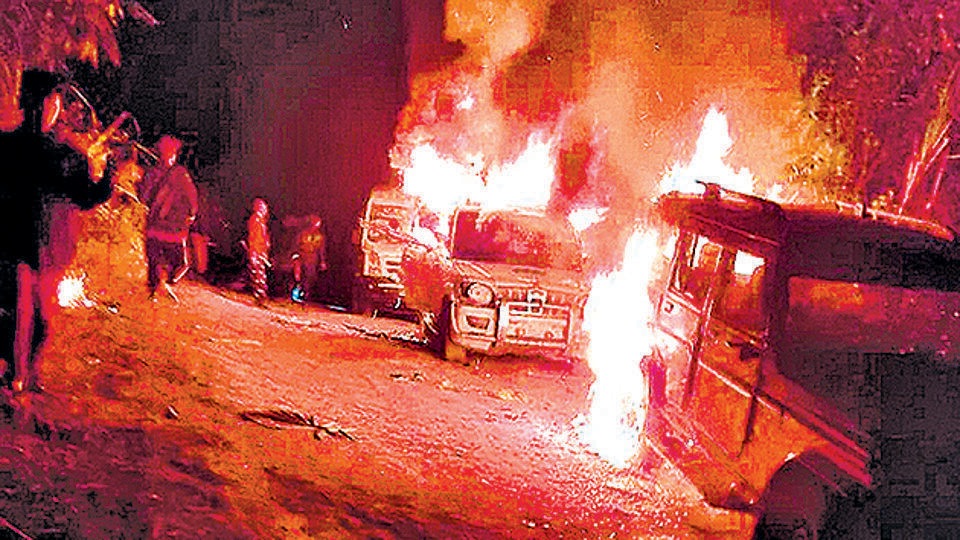
The investigators pressed charges on May 30 against the 30 officers and soldiers of the operations team of 21 Para SF. One major, two subedars, eight havildars, four naiks, six lance naiks and nine paratroopers have been booked under sections 120B (punishment for criminal conspiracy), 302 (punishment for murder), 307 (attempt to murder), 326 (voluntarily causing grievous hurt by dangerous weapons or means), 201 (causing disappearance of evidence of offence, or giving false information to screen offender) and 34 (acts done by several persons in furtherance of common intention) of the Indian Penal Code.
The probe team submitted its charge sheet to court, director-general of police TJ Longkumer said. The central government is yet to approve the prosecution of the army personnel by civilian authorities.
The security personnel did not follow standard operating procedures (SOP)s and rules of engagement while resorting to indiscriminate and disproportionate firing, which led to the killing of civilians in a counter-insurgency ambush that went wrong, investigators found.
A total of 13 civilians were gunned down at Tiru-Oting in Nagaland’s Mon district on December 4, 2021, which further resulted in the death of security personnel when irate and grief-stricken villagers retaliated. Another civilian was killed by Assam Rifles personnel in Mon town the subsequent day when an angry mob stormed its camp.
The army constituted a court of inquiry headed by a Major General, who visited ground zero and inspected the site to understand the circumstances in which the incident took place.
When asked whether the soldiers named in the charge sheet were on suspension during the period of investigation, additional director general of police Sandeep M Tamgadge, who led the special investigation team, said he was not in a position to comment on the internal disciplinary conduct in the army.
However, as the army had constituted a parallel court of inquiry, the soldiers in question were attached to that court during the investigation, Tamgadge added.
An army spokesperson in Delhi did not comment on the SIT naming 30 soldiers in its chargesheet, and said that the army had completed its separate inquiry into the incident.
The details of the army court of inquiry have not been made public. The army inquiry was conducted under a major general posted in the North-east.
Before the inquiry report was submitted, then army chief General MM Naravane said in January 2022 that appropriate action would be taken and corrective measures instituted to further refine the army’s standard operating procedures (SOPs) based on the outcome of the investigation.
“We have SOPs that encapsulate our operational experience, which have stood the test of time. Corrective measures will be instituted to further refine our SOPs,” he had then said.
The Nagaland incident came weeks after militants ambushed an Assam Rifles convoy near the porous India-Myanmar border in Manipur’s Churachandpur district, killing five soldiers, including a colonel, and the latter’s wife and their eight-year-old son.
The killing of the civilians had revived public demand for a repeal of the Armed Forces (Special Powers) Act, 1958 (AFSPA), which grants security forces impunity to carry out anti-insurgency operations in the northeast, including Nagaland.
In March, the central government announced a partial lifting of the contentious law in several pockets of the northeast, including the areas of 15 police stations in Nagaland.
A security grid has been set up with additional forces deployed to those areas and state police are keeping vigil on security threats to ensure peace and tranquillity, Longkumer said.


