
 E-Paper



Deforestation drive in Chhattisgarh’s Hasdeo starts again for PEKB phase 2 mining
On Friday, the Chhattisgarh forest department issued a statement, saying tree felling is being carried out on 32 hectares out of the proposed 74.130 hectares of forest land

 Prefer HTon Google


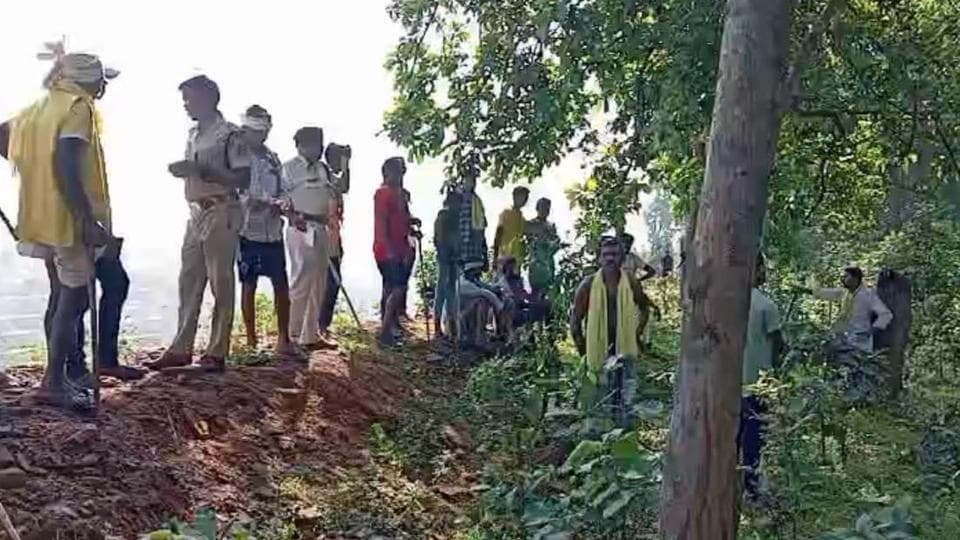
Raipur: The deforestation drive in Chhattisgarh’s Pendramar forest started on Friday for the second phase of the Parsa East Kente Basan (PEKB) mining project, even as locals and tribals protested, activists said, adding that around 250,000 trees are likely to be felled over 1,136 hectares of the Hasdeo Aranya forest region.
The central government had allocated the PEKB coal blocks to Rajasthan Rajya Vidyut Utpadan Nigam Limited (RVUNL) for second-phase mining after the first phase was completed in March 2022.
The first phase of mining was on 762 hectares of land allotted to RVUNL in 2007.
In 2023, the then Congress-led Chhattisgarh government had reversed its approval of the decision in the face of protests from locals and tribals.
The state had also submitted an affidavit to the Supreme Court, stating that there is no need to allocate or use any new mining reserve areas for mining in Hasdeo Aranya. It added that that the ongoing Parsa East and Kente Basan (PEKB) mine contains a coal deposit of 350 million tonnes, adequate to meet the entire coal demand for the linked power plants of 4,340 MW for nearly 20 years.
“The ongoing PEKB mine still contains a coal deposit of 350 million tonnes that is yet to be mined. This deposit is sufficient to meet the entire coal demand for the linked power plants of 4340 MW for nearly 20 years. Therefore, there is no necessity to allocate and use any new mining reserve areas for mining,” the affidavit from the Chhattisgarh government had then claimed.
Alok Shukla, the convenor of Chhattisgarh Bachao Andolan, who has been leading the protest in Hasdeo for the past decade, said on Friday that a few days ago, the chief minister gave a clarification on a statement from the Rajasthan chief minister who thanked the previous government for allowing deforestation through fresh orders, keeping in mind the power needs of Rajasthan.
Stating that the deforestation is illegal and violates the rights of tribal communities enshrined in the fifth schedule of our Constitution, he said, “We all have seen how Gramsabha’s land acquisition of Ghatbarra village was conducted in the presence of a heavy police force, which was not in accordance with the due procedure under PESA (The Provisions of the Panchayats (Extension to Scheduled Areas) and RFCTLARR (Right to Fair Compensation and Transparency in Land Acquisition, Rehabilitation and Resettlement) Act 2013. It violated the principles of free, informed, prior consent.”
Shukla said that despite huge resistance from residents, the second phase of the mining got both environmental and forest clearance. The former Congress-led state government granted the final forest clearance under Action 2 of the Forest Conservation Act, 1980, in March 2022. “In phase two, around 250,000 trees are going to be felled over 1,136 hectares of forest land. Out of which around 134 hectares of forest land had already been cleared in the last two major deforestation drives under the heavy police force deployment in the area,” Shukla added.
Also Read: Over 200k trees to be felled in Chhattisgarh’s Hasdeo, 960k in Great Nicobar: Govt
On Friday, the Chhattisgarh forest department issued a statement, saying tree felling is being carried out on 32 hectares out of the proposed 74.130 hectares of forest land.
“The felling of approximately 3,694 trees out of 10,944 present in the said area has been completed, and the remaining felling work is in progress,” the statement said.
“Due to the sensitivity of the area, the tree felling work is being carried out peacefully by forming a joint team comprising the district police force, district administration, and forest personnel. Some villagers from the villages adjacent to the mining area are interfering with the tree felling work, but they are being persuaded not to disrupt the felling process,” the department’s statement further claimed.
The statement claimed that the Rajasthan government has been granted permission for the felling of 10,944 trees standing in an area of 74.130 hectares of forest land in the 10th year of the project by the Additional Principal Chief Conservator of Forests (Production) Chhattisgarh and by the Chief Conservator of Forests, Sarguja Forest Division, on August 22, 2024.
In this regard, permission for the felling and transportation of a total of 10,944 trees in an area of 74.130 hectares of forest land has been granted to the Forest Range Officer, Udaipur (Production), it added.
While the Union government allocates the blocks, the clearance of forest land for mining requires the final go-ahead from the state.
In October 2021, the Indian Council of Forestry Research and Education and Wildlife Institute of India submitted a study report to the Chhattisgarh government according to which the Hasdeo Arand forest is one of the largest contiguous stretches of dense forest in central India, spanning 170,000 hectares.
The forest is also the catchment of the river Hasdeo, the Mahanadi’s largest tributary, and is therefore critical for perennial river flow. It is also the watershed for the Hasdeo Bango reservoir, which is critical for the irrigation of 300,000 hectares of double-cropped land in Chhattisgarh.
Chhattisgarh possesses approximately 70,000 million metric tonnes of coal, whereas Hasdeo Aranya accounts for around 8% of that reserve. Hasdeo Arand is one of the largest contiguous stretches of very dense forest in central India, spanning 170,000 hectares and having 23 coal blocks.
-kW0H-U20214218012MgB-250x250%40HT-Web.jpg)


