Kochi was gripped by fear of Nipah virus on Tuesday after a 23-year-old engineering graduate tested positive for the deadly virus and two of his friends and two nurses who treated him were shifted to isolation wards. The Kerala health department has, however, asked people not to panic.
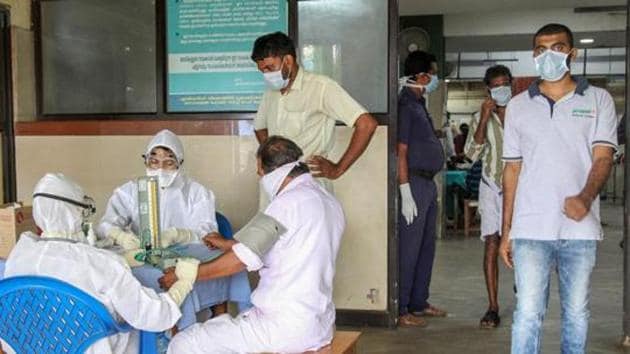
According to the state government health department, a total of 311 people who came in contact with the patient over the past two weeks are under observation for symptoms of Nipah, which include fever, headache, myalgia (muscle pain), vomiting and sore throat. These symptoms can be followed by dizziness, drowsiness, delirium, neurological deficits and breathing difficulty as the disease progresses.
There are no drugs or vaccines that can combat the Nipah virus, which kills 40-70% of the people infected. Fruit bats are known carriers of the virus.
Many people in Kochi were seen sporting face masks and using gloves, although the Kerala government has not specifically asked people to do so. Many medical stores reported a surge in sales of face masks and gloves.
Doctors say that this time the state has evolved a protocol to deal with the situation. “Even before the first case was confirmed, the list of people who were in contact with the index case were tracked. No other case has been reported from areas where the youth lived and moved around in,” said A S Anoop Kumar, head of the critical care unit of Baby Memorial Hospital in Kozhikode, where the first case was diagnosed in 2018.
{{/usCountry}}Doctors say that this time the state has evolved a protocol to deal with the situation. “Even before the first case was confirmed, the list of people who were in contact with the index case were tracked. No other case has been reported from areas where the youth lived and moved around in,” said A S Anoop Kumar, head of the critical care unit of Baby Memorial Hospital in Kozhikode, where the first case was diagnosed in 2018.
{{/usCountry}}Health officials said it was difficult to confirm the source of the virus as the patient had travelled to three districts in Kerala over the last 20 days. The officials have scanned the three areas where he stayed but they could not locate fruit bats or pigs, which are the main carriers of the virus. A health department advisory has asked people not to eat bird-bitten fruits, especially mango, guava and sapodilla (chikoo). Fruit exporters have been badly hit and fear that several countries could ban fruit from Kerala. Several West Asian countries had banned fruit imports from Kerala after the May 2018 outbreak, but while the United Arab Emirates and others lifted the ban two months after the outbreak was contained, Saudi Arabia lifted the ban just a week ago.
Kerala exports at least 150 tonnes of fruits and vegetables to West Asia daily, most of it for expats from the state. Of this, the daily consignment to Saudi was between 30 and 40 tonnes.
“We have resumed exports to Saudi after much prodding, but now there is a possibility of a tourist advisory and restrictions on export. Last year, I suffered a loss of at least ~3 crore. I don’t know what will happen now,” said A Sharf Ali, a fruit and vegetable exporter from Kozhikode in north Kerala, which was the epicentre of last year’s outbreak.
Excluding Kannur, the monthly fruit export from the state’s three airports — Kozhikode, Kochi and Thiruvananthpuram — is worth over ~50 crore, with pineapple exports alone touching ~5 crore.