
 E-Paper



49 dead in a week, Maoists ‘plotting’ reprisal attacks: Officials
Police officials familiar with the matter said that Maoists are re-grouping in the Bastar region after the Gadchiroli encounter for an “assault on security forces”.

 Prefer HTon Google


Two more Maoists were killed by security forces in Sukma in south Bastar on Saturday, taking the numbers of rebels gunned down in the past week to 49. Chhattisgarh police has killed 10 Maoists in the last two days in south and west Bastar, while Maharashtra police had gunned down 39 in Gadchiroli on Sunday and Monday.
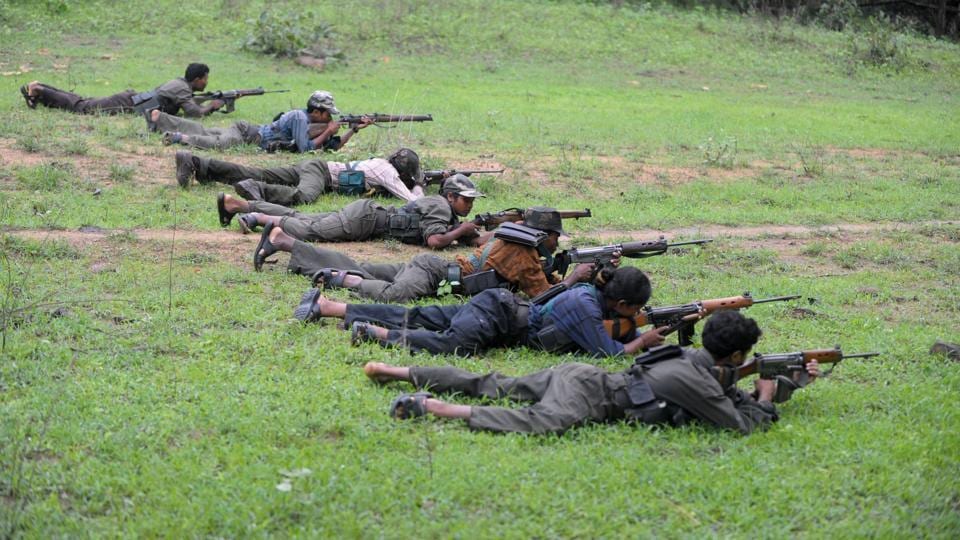
Police officials familiar with the matter said that Maoists are re-grouping in the Bastar region after the Gadchiroli encounter for an “assault on security forces”. A red alert has been issued in the districts of Chhattisgarh adjoining Maharashtra and Telangana. Forces are conducting operations in Bijapur and Sukma, from where they got inputs of the Maoists regrouping and planning an attack.
“We have information that three Maoists escaped after the Gadhchiroli encounter and the Maoists of the nearby areas are heading towards Bijapur and Kanker districts of Chhattisgarh,” said a Bastar-based Indian Police Service officer, who was not willing to be identified.
The IPS officer said the security forces are not giving any space for Maoists to counter-attack and special operations are underway in several districts of Bastar region, known to be a hotbed of the Maoists.
“Currently we are fighting a straight battle in both Bijapur and Sukma because we have information that Maoists are trying to congregate at several places after Gandhchiroli attack. Hence, engaging them is the best tactic and we have so far been successful,” said special director general (anti-Naxal operations), DM Awasthi.
As part of operations, the security forces killed two Maoists in Duled area of south Sukma in a two-hour operation on Saturday morning. “So far, the bodies of two Maoists, including a woman, have been recovered along with 11 weapons,” said Sundarraj P, deputy inspector general of police (south Bastar range).
Separate teams of the District Reserve Guard (DRG), the Special Task Force (STF) and the Commando Battalion for Resolute Action (CoBRA), an elite unit of the Central Reserve Police Force (CRPF), were carrying out combing operations in Sukma, located around 400 km from the state capital Raipur, for the past couple of days, he said.
Police officers familiar with the matter said intelligence-based operations have been launched at many places in Bijapur and south Sukma districts and that Saturday’s operation was a result of that.
In Sukma, the Maoist battalion is headed by Mandvi Hidma, who in March was said to be behind the deadly attack in which nine CRPF personnel were killed. The regional command committee of the Maoists in Bijapur is headed by Harishankar and Damodar.
“Both these armed battalion comprises more than 400 heavily armed Maoist cadre. During any major attack on security forces, they work together,” a police officer said.
-kW0H-U20214218012MgB-250x250%40HT-Web.jpg)


