The Supreme Court on Friday modified its August 11 direction that barred the release of stray dogs once picked up by civic bodies. The Supreme Court clarified that the dogs must be released back after sterilisation and immunisation, except those infected with rabies or exhibiting aggressive behaviour.
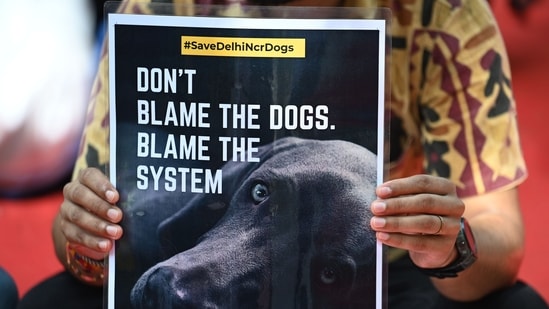
A special three-judge bench of Justices Vikram Nath, Sandeep Mehta, and NV Anjaria, which had reserved its order on August 14, also broadened the scope of the matter to a pan-India level, issuing notices to all states and union territories as well as the Animal Husbandry department.
Also Follow | Stray dogs SC order live updates
The August 11 order by a two-judge bench had asked authorities in Delhi-NCR to immediately pick up stray dogs from localities and relocate them to shelters. The fresh order modifies those directions, allowing release after sterilisation and vaccination.
The court said animal lovers can apply to civic bodies to adopt stray dogs, giving them a legal route to take responsibility for the animals.Also Follow | ‘Those found feeding strays…’: SC makes changes to dog order, with a warning
5 big takeaways from Supreme Court's order on stray dogs:
- No feeding on streets: The Supreme Court said municipal authorities will create feeding areas and that no feeding on streets will be allowed.
- Notice boards should be placed: The court said notice boards should be placed near designated feeding areas, stating that stray dogs may only be fed in such areas.
- Action if found feeding dogs on streets: Persons found feeding stray dogs on streets shall be liable to be proceeded with under relevant legal framework, the Supreme Court said.
- Expansion of ambit of court's proceedings: The Supreme Court expanded the ambit of its proceedings on the menace of stray dogs and issued notice to secretaries of the department of animal husbandry all states and union territories, and sought their response on framing of the national policy to deal with the problem.
- Can't obstruct public servants: Anyone obstructing public servants in handling strays will face consequences. NGOs and animal lovers found obstructing work could be fined ₹25,000.
The court said animal lovers can apply to civic bodies to adopt stray dogs, giving them a legal route to take responsibility for the animals.Also Follow | ‘Those found feeding strays…’: SC makes changes to dog order, with a warning
5 big takeaways from Supreme Court's order on stray dogs:
- No feeding on streets: The Supreme Court said municipal authorities will create feeding areas and that no feeding on streets will be allowed.
- Notice boards should be placed: The court said notice boards should be placed near designated feeding areas, stating that stray dogs may only be fed in such areas.
- Action if found feeding dogs on streets: Persons found feeding stray dogs on streets shall be liable to be proceeded with under relevant legal framework, the Supreme Court said.
- Expansion of ambit of court's proceedings: The Supreme Court expanded the ambit of its proceedings on the menace of stray dogs and issued notice to secretaries of the department of animal husbandry all states and union territories, and sought their response on framing of the national policy to deal with the problem.
- Can't obstruct public servants: Anyone obstructing public servants in handling strays will face consequences. NGOs and animal lovers found obstructing work could be fined ₹25,000.
The court posted the matter for hearing after eight weeks. The bench passed the order on the interim prayer seeking a stay on the August 11 direction.
The Supreme Court delivered its order in a suo motu case initiated on July 28 over a media report on stray dog bites leading to rabies, particularly among children, in the national capital.
A two-judge bench of the apex court had on August 11 passed a slew of directions, including ordering the authorities in Delhi, Noida, Ghaziabad, Gurugram and Faridabad, to start picking up stray dogs from all localities "at the earliest" and relocate the canines to dog shelters.