
 E-Paper



5 facts on Justice BR Gavai, the next Chief Justice of India
Justice BR Gavai will take over as CJI on May 14, becoming the 52nd Chief Justice of India. He will succeed Justice Sanjiv Khanna.
Updated on: Apr 16, 2025, 22:12:00 IST

 Prefer HTon Google
Share via


Copy link

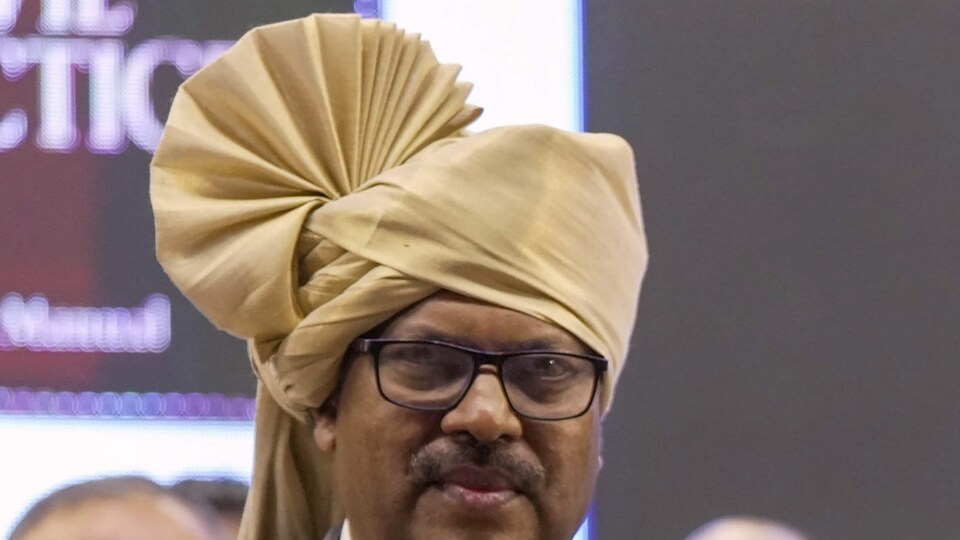
Justice Bhushan Ramkrishna Gavai is set to take oath as the next Chief Justice of India on May 14. His name was recommended to the law ministry by the CJI Sanjiv Khanna. Justice Gavai is currently the senior-most judge of the Supreme Court after CJI Khanna.
According to the memorandum of procedure, a set of documents guiding appointment, elevation and transfer of high court and Supreme Court judges, the law minister writes to the CJI to name his or her successor.
Justice Gavai will take over as CJI on May 14, becoming the 52nd Chief Justice of India. He is scheduled to serve until his retirement on November 23, 2025. The retirement age of Supreme Court judges is 65 years.
Here are 5 facts on the incoming Chief Justice BR Gavai
- Born on November 24, 1960, in Amravati, Maharashtra, Justice Gavai began his legal career in 1985. He initially worked with the late Raja S Bhonsale, former Advocate General and High Court Judge, before starting independent practice at the Bombay High Court in 1987.
- Justice Gavai focused on Constitutional and Administrative Law. He represented several civic and educational bodies, including the Municipal Corporations of Nagpur and Amravati, Amravati University, and state-run corporations such as SICOM and DCVL. In August 1992, he was appointed Assistant Government Pleader and Additional Public Prosecutor at the Nagpur Bench of the Bombay High Court. He later became the Government Pleader and Public Prosecutor in 2000 for the same bench.
- Justice Gavai was appointed as an Additional Judge of the Bombay High Court on November 14, 2003, and became a permanent Judge in 2005. He served at the High Court’s principal seat in Mumbai and benches in Nagpur, Aurangabad, and Panaji. He was elevated to the Supreme Court on May 24, 2019.
- Justice BR Gavai has been a part of several Constitution benches in the apex court which delivered path-breaking verdicts. He was part of a five-judge Constitution bench which in December 2023 unanimously upheld the Centre's decision to abrogate provisions of Article 370 bestowing special status to the erstwhile state of Jammu and Kashmir.
- Another five-judge Constitution bench, of which Justice Gavai was a part, annulled the electoral bonds scheme for political funding. He was a part of a five-judge Constitution bench which, by a 4:1 majority verdict, gave its stamp of approval to the Centre's 2016 decision to demonetise ₹1,000 and ₹500 denomination currency notes.


Get the latest India News, breaking headlines, and real-time updates from across the nation. Stay informed on politics, government policies, crime, weather, and CEC Gyanesh Kumar row Live.


