E-Paper



5 killed in conflict with tigers aroundCorbett since Dec
Five people have been killed near Uttarakhand's Corbett Tiger Reserve in the past two months, highlighting the increasing fatal encounters with the big cats due to their high density in the region. The tiger population in the reserve is the highest in the country, posing a challenge for habitat management. India's tiger population increased by 6.74% to 3,167 in 2022, with the Corbett Tiger Reserve having the largest population of 319 tigers. The loss of wildlife corridors around the reserve has been flagged as a concern.

 Prefer HTon Google


Five people have been killed around Uttarakhand’s Corbett Tiger Reserve in the past two months, foresters said, highlighting once again that fatal encounters with the big cats are increasing due to their high density in the region.
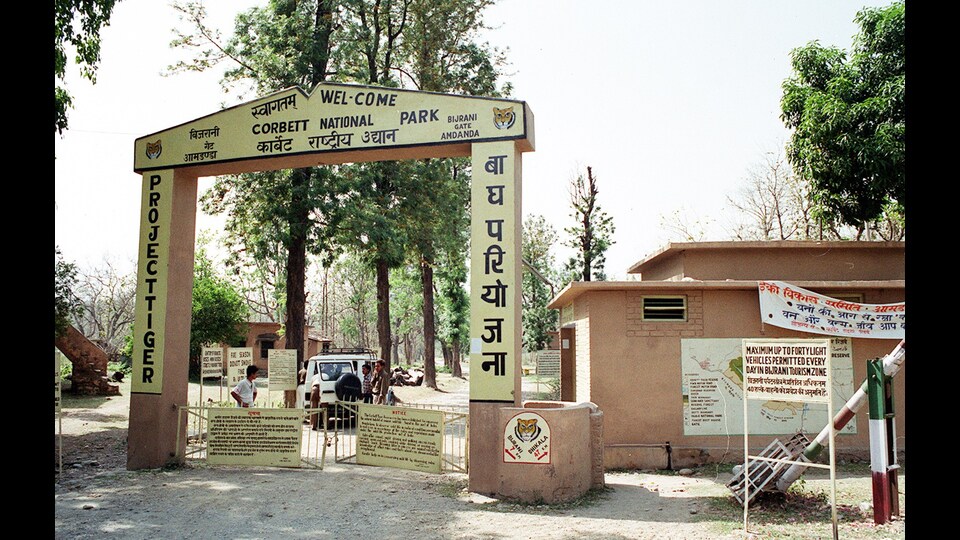
Three women were killed in early December near Bhimtal following attacks by a tigress. A woman and a man were killed by a tiger on Sunday and Monday near the reserve, officials said.
“That was not normal behaviour for the tigress. It was very clearly aberrant behaviour. DNA profile has shown that she was a two-year-old tigress who attacked them. The tigress was captured and moved to a rescue centre,” said Samir Sinha, Uttarakhand’s principal chief conservator of forests, referring to the deaths in December.
The woman killed near Chukam village on Sunday had gone outside a solar fenced area to relieve herself when she was attacked, while the same tiger is suspected to have attacked another man on Monday. His body was found 4 km inside the forest, foresters said.
The tiger population in the 512 sq km reserve is the highest in the country. It poses a challenge for habitat management, HT reported in 2020.
“Human-wildlife conflict is a constant challenge for us. This is not only because of growing tiger numbers, but also because some tigers are recolonising older habitats,” Sinha said. “For example, yesterday’s case was possibly a chance encounter with the tiger.”
India’s tiger population increased by 6.74% to 3,167 in 2022 from 2,967 in 2018, according to the latest census. Among the assessed tiger reserves, Corbett Tiger Reserve emerged with the largest population of 319 tigers. Reserves such as Bandipur, Nagarahole, Mudumalai, Bandhavgarh and Dudhwa harbour 150 or more tigers.
The All India Tiger Estimation report released last year had flagged the loss of wildlife corridors around the Corbett Tiger Reserve. The Dehradun-Rajaji-Corbett-Ramnagar-Pilibhit- Dudhwa corridor, the western most population of tigers in the Dehradun Forest Division and Rajaji Tiger Reserve along with the Lansdowne Forest Division, Corbett Tiger Reserve, Amangarh, Terai West Forest Division, Ramnagar Forest Division, Haldwani Forest Division, Terai Central and East Forest Divisions, Pilibhit Tiger Reserve and Dudhwa Tiger Reserve is home to as many as 757 tigers in about 8,103 sq km of forested habitat.
This contiguous population harbours one of the major source of tigers in the Western Terai Arc landscape that includes Corbett, and along with tigers of Bardia National Park (125) and Shuklaphanta National Park (36) in Nepal, constitutes one of the largest tiger population in the world. The population has shown significant increase in the past four years in comparison to 604 tigers in 2018, the report said.