
 E-Paper



‘Godman’ Rampal is out of jail: His followers died when police went to arrest him; 12 years on, he returns to the stage
Rampal's release came after Punjab-Haryana HC granted him bail in a 2014 sedition case, citing his advanced age, prolonged incarceration, and slow pace of trial

 Prefer HTon Google


Rampal, a self-styled preacher and the head of Satlok Ashram in Haryana's Hisar district, walked out of jail this week after nearly 12 years in custody. Videos of his walk into his ashram have gone viral on Instagram since the Friday release, with followers, who call him Sant Rampal, seeing it as a “triumphant return”. By Saturday, April 11, he’d held his first discourse after return too.
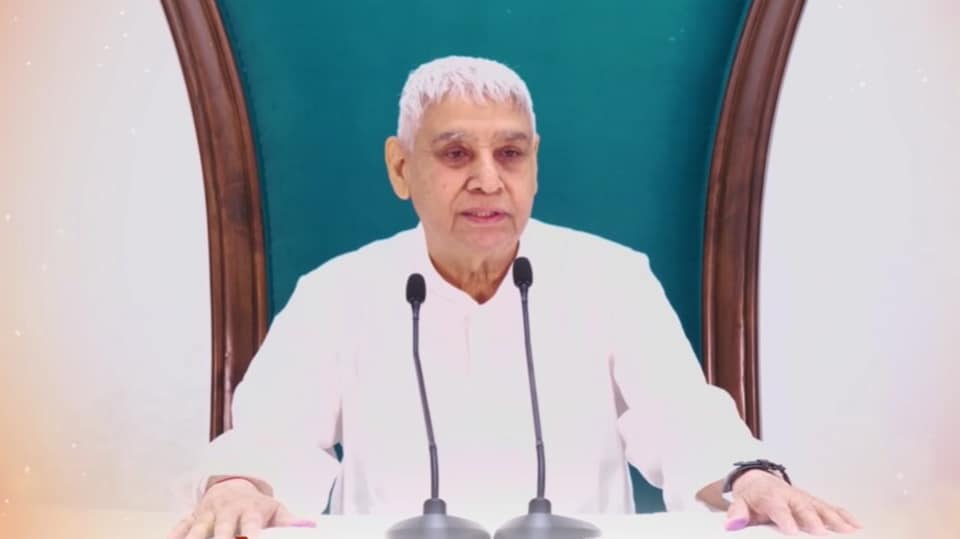
The 75-year-old’s release came after the Punjab and Haryana High Court granted him bail in a 2014 sedition and violence case, citing his advanced age, prolonged incarceration, and the slow pace of trial.
Upon returning from jail, in his first ‘satsang’ or discourse, he spoke of his “fight against ignorance”, which he claimed he had won. After returning from what he called a “long struggle”, he said there was not greater enthusiasm among his followers.
But his story as a ‘godman’-figure stretches back over three decades, with key milestones spread out neatly almost every 10 years.
The one that landed him in jail is from 2014, when six of his followers were killed in a standoff with police who’d come to arrest him in a murder case.
The 2014 standoff that led to his arrest
The case in which Rampal has not got bail did not begin with a new crime, but over his repeated defiance of court orders. Between 2010 and 2014, Rampal avoided appearing before courts at least 42 times in connection with a 2006 murder case.
When the Punjab and Haryana High Court issued a non-bailable warrant against him in November 2014, authorities moved to arrest him at his Satlok Ashram in Barwala in Hisar district.
A 10-day standoff followed.
Hundreds of Rampal's followers surrounded the ashram, forming human chains to block police entry. The supporters attacked police with petrol bombs and acid pouches in a bid to prevent his arrest, HT reported at the time. Women and children were allegedly used as shields. The Haryana government cut off electricity and essential supplies to the ashram to force him out.
On November 18-19, 2014, police and paramilitary forces stormed the ashram. Five women and an 18-month-old infant were found dead inside the premises during the siege. Several police personnel were also injured.
Around 900 of Rampal's followers were arrested alongside him that night. FIRs were registered at the Barwala police station, and the charges charges against him and his followers ranged from wrongful confinement to sedition, to murder and criminal conspiracy.
Life sentence suspended, bail granted
He was convicted of murder, of the six persons found dead in the ashram, in one of these cases in 2018, and was awarded life imprisonment. In August 2025, the Punjab and Haryana High Court suspended his life sentence. It cited his age, the length of time already served, and debatable medical evidence around the causes of the deaths.
The court noted that close relatives of the deceased had not supported the prosecution's case, with some testifying that the deaths were caused by suffocation from police teargas shells during the siege rather than by Rampal or his followers.
Even in the original 2006 murder case from Karontha — for which the police went to arrest him in 2014, leading to the siege — he was acquitted four years ago.
Sedition and some other charges remained, related to the 2014 siege. In this, the high Court granted him bail on April 8, 2026, ending his incarceration for now.
"Considering the long incarceration of the appellant/accused, which is more than 11 years, and his age being about 75 years and that majority of the witnesses are yet to be examined, on account of which the trial is not likely to be concluded in the near future, it is a fit case to release the appellant/accused on regular bail," the HC bench ruled, as per news agency PTI.
The court, however, directed Rampal not to promote any kind of "mob mentality".
Who is Rampal, actually?
He was born Rampal Singh Jatain on September 8, 1951, in Dhanana village of Gohana in Sonipat district, into a Jat family of farmers.
He trained as a civil engineer at the Industrial Training Institute (ITI) in Nilokheri, Karnal district, and worked as a junior engineer in the state government's irrigation department. He served for around 15 years before quitting in May 1995, HT has reported.
He left apparently because he’d had a turning point in 1994, when he came into contact with a Kabir Panthi saint. Shortly after, he re-christened himself ‘Sant Rampal ji Maharaj’ and began promising salvation to followers. He set up his Satlok Ashram of the Kabir Panthi sect by the end of the 1990s in Karontha in Rohtak district at first. His following soon spread across Jhajjar and Rohtak. In later years he shifted to the Barwala ashram.
Rampal and the core ideas of Kabir Panth attract a significant following among socially and economically marginalised communities, including Dalits and other backward classes. Jats and other communities are drawn to the sect too, as the teachings, in theory, offer a path to salvation regardless of caste.
He is reportedly married to a woman named Anaro Devi and has two sons and two daughters.
According to Satlok Ashram's website, Rampal's core teaching is that the Supreme God is Kabir, and that all major scriptures across religions point to this. Followers must take formal initiation, called "naam”, from Rampal, after which they follow a strict code of conduct as the “path to salvation”, to an eternal ‘abode or truth’, or Satlok.
He prohibits idol worship, pilgrimages, untouchability, alcohol, tobacco, other intoxicants, and meat, says the website. The ashram says it’s strictly against the dowry system.
His first brush with the law came in 2006, when he allegedly used foul language against the Arya Samaj sect, triggering violent clashes in which one man was killed. He was arrested on murder charges and released on bail in 2008.
He subsequently shifted his base to the Barwala ashram in Hisar, where the 2014 standoff took place.


