E-Paper



65 days together, 40 cases filed: SC grants couple divorce
The SC dissolved a 65-day marriage after 13 years apart, citing irretrievable breakdown and urging early dispute resolution to prevent prolonged litigation.

 Prefer HTon Google


The Supreme Court on Tuesday dissolved a marriage that lasted just 65 days, granting divorce to a couple that has lived apart for over 13 years and has been locked in more than 40 legal cases against each other, holding that the relationship had irretrievably broken down and that the parties “may not have been made for each other”.
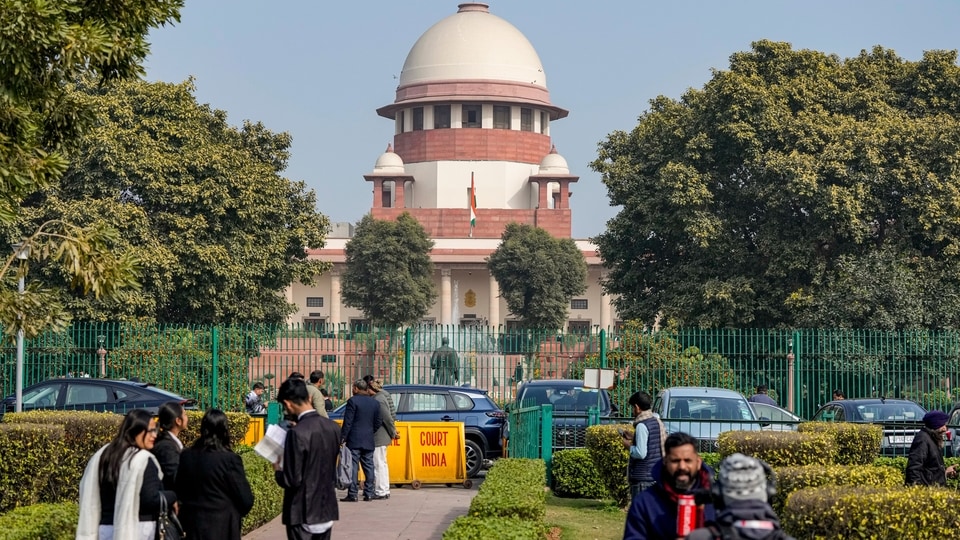
A bench of justices Rajesh Bindal and Manmohan invoked its extraordinary powers under Article 142 of the Constitution to bring a quietus to the long-running matrimonial dispute, observing that the level of bitterness between the parties had reached a point where reconciliation was no longer possible.
“We find this to be a clear case of irretrievable breakdown of marriage where the parties do not intend to live together and cohabitate. Rather they may not be able to reconcile seeing the level of bitterness generated with the passage of time,” the bench said.
The court noted that the couple married on January 28, 2012, but the wife left the matrimonial home within 65 days, alleging cruelty by the husband and his family members. Since then, the parties have lived separately for more than a decade, engaging in relentless litigation across multiple courts in Delhi, Allahabad, Ghaziabad and Lucknow.
The wife approached the Supreme Court seeking dissolution of marriage under Article 142 without claiming any alimony, and prayed for the quashing of the multiple criminal and civil proceedings pending between the parties. The court verified the status of these cases directly from the concerned courts before passing its order.
The husband, who appeared in person, strongly opposed the plea for divorce, contending that the wife had “spoiled his life” and had misrepresented facts before courts. He submitted that he did not consent to the grant of divorce and had filed applications alleging perjury against the wife.
Rejecting his objections, the bench held that consent was not determinative in a case where the marriage had clearly collapsed beyond repair.
“They may not have been made for each other. Some time is taken by young couples to understand each other and adjust accordingly… It may be impossible now to put the clock back and live together after forgetting the bitterness, which has been created in last more than a decade,” the court observed.
Expressing concern over the misuse of the judicial system in matrimonial disputes, the bench said courts cannot be allowed to become a battlefield for “warring couples” seeking to settle personal scores. It cautioned that prolonged criminal litigation often extinguishes any remaining possibility of reunion.
“Warring couples cannot be allowed to settle their scores by treating courts as their battlefield and choke the system,” said the bench, underlining that incompatibility should ideally be addressed through early dispute resolution mechanisms.
The judgment also contained wide-ranging observations on the rise in matrimonial litigation and the role of lawyers, courts and families in escalating disputes. The bench flagged the increasing tendency to collect, and in some cases even create, evidence, warning that false allegations have become rampant, particularly in the age of artificial intelligence.
Highlighting mediation as a crucial tool, the court said earnest efforts must be made at the pre-litigation stage itself to resolve matrimonial disputes, even when parties approach courts or police authorities for issues such as maintenance or domestic violence.
“Even when a complaint is sought to be registered with the police of simple matrimonial dispute, first and the foremost effort has to be for reconciliation…This sometimes becomes a point of no return specially when any of the parties is arrested, may it be even for a day,” the bench noted.
Allowing the wife’s plea, the court dissolved the marriage and directed that all pending cases arising out of the matrimonial dispute between the parties shall stand disposed of, barring certain applications alleging perjury, which it said must be decided on merits to prevent “pollution of the stream of justice”.
The court also restrained both parties from initiating any further litigation relating to their matrimonial dispute and imposed costs of ₹10,000 each on them, to be deposited with the Supreme Court Advocates-on-Record Association, observing that both had contributed to the prolonged litigation.
Ends