E-Paper



73 species critically endangered in India, says Centre in Rajya Sabha
The 73 species include nine species of mammals, 18 birds, 26 reptiles and 20 amphibians, according to IUCN criteria.

 Prefer HTon Google


Seventy-three species in India are critically endangered, the Union environment ministry informed the Rajya Sabha citing a report of the International Union for Conservation of Nature (IUCN), up from 47 in 2011.
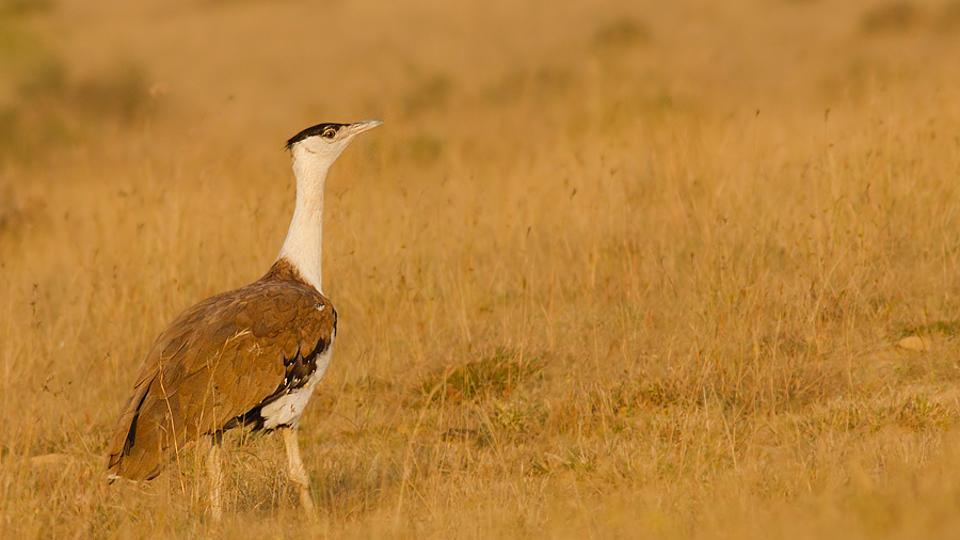
The 73 species include nine species of mammals, 18 birds, 26 reptiles and 20 amphibians, according to IUCN criteria.
IUCN, which monitors health and status of biodiversity globally, declares a species as critically endangered when it is considered to be facing an extremely high risk of extinction in the wild.
In September 2011, 47 species in India were identified as “critically endangered” in the class of mammals, birds, reptiles, fish and amphibians, according to information provided by the ministry in Lok Sabha.
The government is now considering the inclusion of most critically endangered species in the Schedule-I of Wild Life (Protection) Act, 1972, to provide the highest level of protection, minister of state, environment, Ashwini Kumar Choubey told the Rajya Sabha on Thursday in response to a question by Congress MP Mukul Wasnik.
Also read: Karnataka mining baron Gali Janardhan Reddy floats his own party: 'New episode'
Wasnik asked if the government has any plans for the protection and conservation of the critically endangered species.
To this, Choubey said that out of the nine species of mammals considered critically endangered, eight are endemic, which means that their habitat is limited to a small geographic area within India.
These include the Kashmir Stag/Hangul, Malabar Large-spotted Civet, Andaman Shrew, Jenkin’s Shrew, Nicobar Shrew, Namdhapa Flying Squirrel, Large Rock Rat and Leafletted Leafnosed Bat.
The 18 critically endangered bird species include Baer’s Pochard, Great Indian Bustard, Sociable Lapwing, Red headed Vulture, the White Rumped Vulture, Indian Vulture and Slender billed Vulture.
Of the 26 reptile species, five are endemic to India including Island Pit Viper whose habitat is limited to a single location in the Car Nicobar Island.
Among amphibians, several species are limited to habitats in the Western Ghats, the northeast, and Andaman and Nicobar Islands.
The Charles Darwin’s Frog for example in Andaman has an extent of occurrence less than 100 square km, its distribution is severely fragmented, and there is a continuing decline in the area.
The Dattatreya Night Frog has an extent of occurrence of less than 30 square km with all individuals in a single threat-defined location according to the MoEFCC.
The Centre has been monitoring these species through various projects.
For instance, the department of science and technology supported a project on the White-bellied Heron in Namdapha Tiger Reserve, Arunachal Pradesh, to study their foraging behavior. The species is only found in Arunachal Pradesh and Assam.
At present, the global population of this species is less than 60 individuals, with just 15 in protected area in India, the ministry informed Rajya Sabha.
MoEFCC has also proposed that endangered species be included in various appendices of the Convention on International Trade in Endangered Species of Wild Fauna and Flora (CITES) to curb trafficking.
The details provided by Choubey are critical in view of the Kunming-Montreal Global Biodiversity Framework which was adopted at the UN Biodiversity Summit (COP15) last week.
Also read: India-China border row: Rule 267 of the Rajya Sabha is in focus. What is it?
Under the deal, 196 members countries agreed to protect 30% of the world for nature by 2030, reduce environmentally harmful subsidies by at least $500 billion a year, and restore at least 30% (by area) of degraded ecosystems.
Experts said that most of India’s biodiversity is outside India’s protected areas. “Even though the 30% coverage under conservation applies globally and not to individual countries, in India for certain biomes where the absolute area is limited, we have to possibly conserve almost 100% of what remains. Similarly, for conserving our highly endangered fresh-water aquatic fauna and the ecosystem services of riverine ecosystems, we may have to restore ecological flows and sediment regimes through alternative land-use and management of dams and barrages over more than 30% of our rivers,” explained Jagdish Krishnaswamy, dean, school of environment and sustainability, Indian Institute for Human Settlements, Bengaluru, and senior adjunct fellow at Ashoka Trust for Research in Ecology and Environment.
“Only a fraction (~15%) of high priority biodiversity and conservation potential areas are encompassed under India’s extant protected area network which effectively covers 5% of India. However, to achieve a coverage of 30% of our land and water under biodiversity friendly management that also generates a diversity of ecosystem services including water and carbon services and enhances our resilience under climate change besides providing adaptation capacity, we have to reimagine conservation far beyond the conventional protected area approaches. Our conservation goals must be linked to making our soils healthier, protecting our water and achieving biodiversity targets in all types of ecosystems from the so-called semi-wild areas to agro-ecosystems as well as green and blue spaces in urbanising areas and mega-cities,” he added.