E-Paper



8% growth rate key to meet 2047 developed India target: NK Singh
Singh stressed on the need for continued belief in the synchronisation of stable macroeconomic policy with monetary and fiscal policies acting in tandem

 Prefer HTon Google


India must not only sustain its high growth rate but also need to “bump it up” closer to 8% to achieve its quest to become a developed India by 2047, NK Singh, president, board of trustees, Institute of Economic Growth (IEG) and chairman, 15th Finance Commission, said on Friday, suggesting focus on four crucial factors.
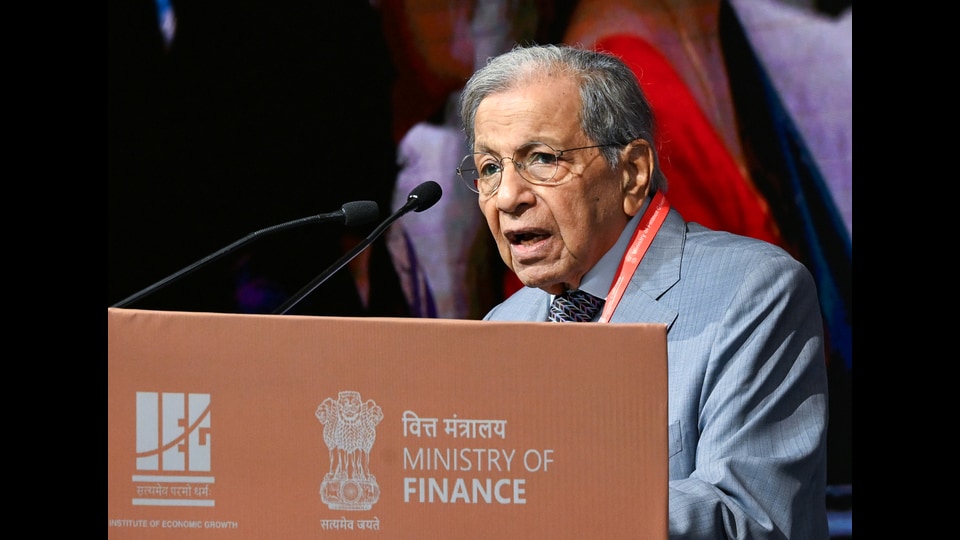
Delivering his opening remarks at the 4th edition of Kautilya Economic Conclave (KEC) in New Delhi, and addressing Union finance minister Nirmala Sitharaman, he proposed a combination of four factors that are “not easy” but doable. The theme of this year’s conclave is ‘Seeking Prosperity in Turbulent Times’ and the three-day event will conclude on Sunday.
“First and foremost, you know it very well that for long decades, incremental capital output ratio (ICOR), for instance, has hung around 5 or so. This has improved to 4.5 or so, but it has stopped at 4.5 for an enormously long time,” he said, suggesting measures to improve the ratio.
ICOR indicates the amount of additional capital investment required to generate one additional unit of output, such as GDP. A lower ICOR signifies more efficient use of capital.
Proposing the second point, he stressed on the need for continued belief in the synchronisation of stable macroeconomic policy with monetary and fiscal policies acting in tandem. “We need to continue this over the next decades,” he said, adding that India has been “doing much better than the rest of the world” on this.
“Third, I would say, notwithstanding the fact that tariffs are disruptive, we need to recognise trade as an engine of growth,” he said. And, therefore, search for new destinations, new products, and new processes are inevitable in this process, he said. “I think, we only also can set an example of embracing disruptive technology in a manner which can be meaningful for job creation,” he added.
Singh praised the government’s recent move of rationalising Goods and Services Tax (GST) rates, making hundreds of products cheaper, and thereby boosting consumption. “We recognise that the next steps of economic reforms would entail continuing these shiny examples that you have set on the GST, which is a classic case of states and the Union acting in perfect tandem,” he said, asking for more such collaborative reforms.
His fourth point was related to the quest for job opportunities abroad. According to Singh, India must recognise that “the good old world in which people sought job opportunities in other parts of the world, and the kind of visa regime” that existed, is now a matter of history.
There are thousands of very talented people, likely to return because of changing visa regimes, he said. “We could think of a manner in which their creativity, their talent and the repository, could be put toward great advantage. And can we create institutional arrangements which would enable harnessing the talent who return on account of this new visa regime? Not as burden, but as a great contributor to rekindling the innate culture of innovation and change which is inherent in this process,” he said.