
 E-Paper



81% of samples tested in Punjab positive for UK’s B.1.1.7 variant
These samples were taken randomly from containment zones in all districts of the state between March 1 and 10.


Eighty one per cent of the 401 positive Covid-19 samples the Punjab health department had sent for genome sequencing to the National Institute of Virology, Pune, showed the presence of the new UK (B.1.1.7) strain, a more infectious variant of the virus.
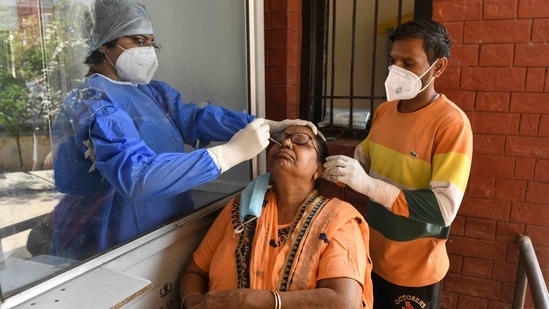
These samples were taken randomly from containment zones in all districts of the state between March 1 and 10.
The UK strain has been found in 12 Punjab districts, including Mohali, Jalandhar, Patiala, Kapurthala, SBS Nagar, Hoshiarpur, Gurdaspur, Amritsar, Ludhiana, Rupnagar, Bathinda and Tarn Taran.
In January, the state health department had sent 478 positive samples to the National Institute of Biologicals (NIB), Institute of Genomics and Integrative Biology (IGIB), Delhi, and the National Centre for Disease Control (NCDC) for genome sequencing, of which the results of 90 samples were received. Only two of these 90 samples had the N440K variant, also known as ‘Kerala’ strain, which according to health experts was the mutated version of the coronavirus in India.
A Union ministry of health team had visited Punjab to review the increase in positivity rate. Thereafter, 401 more samples, collected between January 1 and March 10, were sent to the NCDC for genome sequencing, and worryingly, 326 showed the presence of the B.1.1.7 variant.
Former PGIMER, Chandigarh, director and head of the state government’s Covid-19 management group Dr KK Talwar said, “This is worrying as the samples were taken from all districts. The new strain is 70% more infectious that the older one and that is why the rate of the spread is more during the second wave.”
“Since the new strain spreads faster, more youngsters and those going out for work are getting infected now. Only ramping up of vaccination and less movement of people can help control the spread,” he added.
Nearly two-thirds of Covid-19 patients in Punjab, which is witnessing a second virus wave, are aged between 20 and 60 (working-age population). The trend suggests that people in the age bracket have a high rate of mobility as they have to venture out of their homes for work or other purposes. The figures also show that those aged between 31 and 40 are the most vulnerable to contracting the virus, with 17.2% of the total cases falling in the category.
Punjab chief minister Capt Amarinder Singh on Tuesday thanked Prime Minister Narendra Modi for widening the ambit of Covid-19 vaccination.
All aged above 45 will now be vaccinated. Earlier in the day, he appealed to the Centre to do the needful, expressing concern over the emerging situation.


