
 E-Paper



83 million rural houses getting piped water under Centre scheme: Data
A marquee programme of the Modi government, the Jal Jeevan Mission, launched in 2019, aims to connect every rural household with a tapped water facility by 2024.


A little over 83 million rural households, or 43% of the country’s 192 million rural households, now have access to piped drinking water connections under the flagship Jal Jeevan Mission but some large states with poor health outcomes have been slow to expand coverage, official data shows.
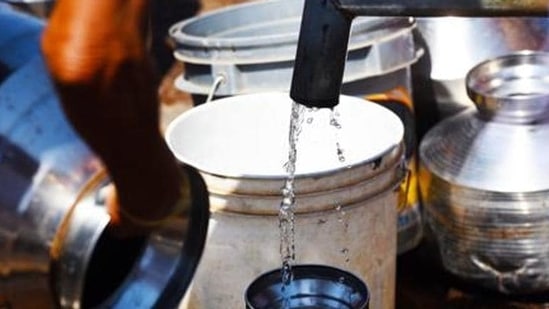
A marquee programme of the Modi government, the Jal Jeevan Mission, launched in 2019, aims to connect every rural household with a tapped water facility by 2024.
Access to clean water is one of the UN’s 17 Sustainable Development Goals or SDGs.
Six states and Union territories have come out on top with 100% coverage so far, the data show. These are Andaman and Nicobar Islands, Dadra And Nagar Haveli, Goa, Telangana, Puducherry and Haryana. Haryana is the latest state to achieve the target ahead of schedule.
Although the mission’s deadline is over two years away, some large states have been able to cover less than a quarter of total rural households, the data show.
Among them is Uttar Pradesh, which has covered only 12.74% of its 26.4 million rural households so far.
The state has drawn up a largescale engineering project to extend tap water connections in Bundelkhand, one of the driest parts of the country.
In terms of overall households covered, Uttar Pradesh has been the slowest in implementing the programme.
The state is key to improving India’s overall health parameters, especially among children, because it is the country’s most populous state.
The Bundelkhand leg of the Jal Jeevan Mission comprises 467 piped drinking water schemes under 32 projects. Of these, 43 are surface water-based schemes and 424 are ground water-based.


