E-Paper



A bipolar UP contest after three decades makes some in BJP wary
The state, which saw the emergence of caste-based parties in the 90s, has typically witnessed a multi-party fight in assembly elections ever since.

 Prefer HTon Google


Even before the last votes were cast in Uttar Pradesh and exit poll results came in, the leadership of the Bharatiya Janata Party were worried about a rare challenge in the UP election — a bipolar contest for the first time in more than three decades.
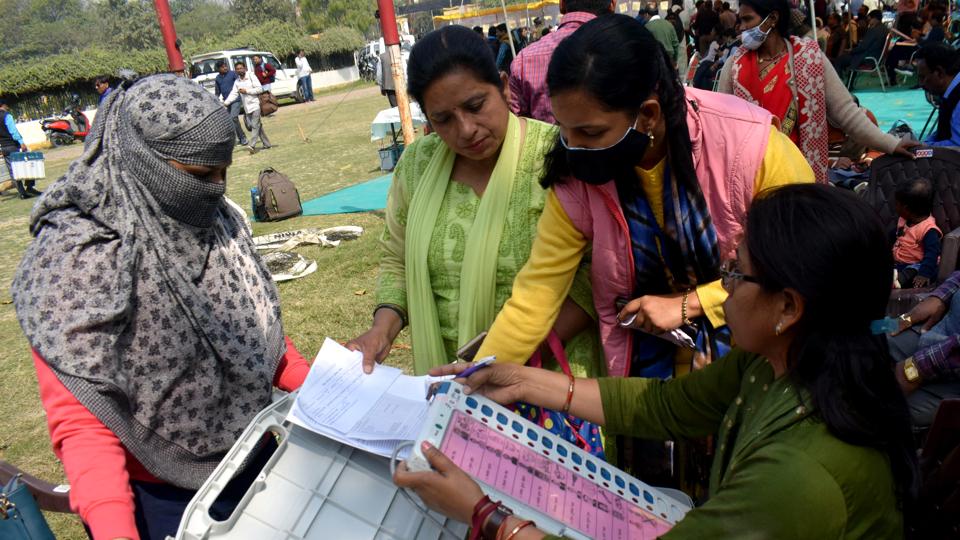
The state, which saw the emergence of caste-based parties in the 90s, has typically witnessed a multi-party fight in assembly elections ever since. The 2022 election campaign too started out that way, but soon came down to a straight BJP versus Samajwadi Party (SP) fight.
Click here for full coverage of UP assembly polls
“Everybody else became marginal and traditionally, a bipolar fight has not always served us well,” said a central party office bearer who didn’t want to be named. ”When this happens, the anti-BJP vote gets consolidated.”
To be sure, no one in the BJP says this rare electoral situation in UP will lead to the party doing poorly. However, what worries top leaders is that this may change the pattern of voting that they have so carefully managed since the run up to the 2014 election campaign, when the party, led by Narendra Modi and Amit Shah managed to win 71 out of the 80 parliamentary seats in the state.
They replicated that performance in the 2017 assembly election, when the BJP won 312 of the 403 seats on offer. And then again in 2019, winning almost 50% of the votes. But now, for the first time since the 1989 assembly polls, when ND Tiwari’s Congress was brought down by Mulayam Singh Yadav of the Lok Dal, voters have seen the BJP targeting only the SP, and vice versa.
“The problem for us is that to win a bipolar contest, you have to get 45% of the votes,’’ said the leader quoted above. The BJP got 40% of the votes in the last assembly elections, when the Congress allied with the SP, but the Bahujan Samaj Party (BSP) was also a challenger, eyeing a comeback to power (it got marginally more vote share than the SP, 22.23% to 21.82%, but 28 fewer seats). This time around, the BSP has been happy to play from the sidelines, with no attempt to attack the ruling BJP.
Also Read| UP assembly polls: 57.5% turnout recorded in Phase 7
It’s not just election watchers who say the BSP isn’t in the fight this time. Take the case of Pritesh Rajbhar, a young party worker who has worked with the BSP all his career. In September, he switched over to the SP and said that many in the Rajbhar community have done the same.
“When a six-time BSP MLA Sukhdev Rajbhar died at that time, everyone from Yogi Adityanath to other leaders came to pay their respect. Only Behenji didn’t come,” said Rajbhar, referring to BSP chief Mayawati.
Like him, other backward class (OBC) voters, who were with the BSP, have switched their loyalty to the SP, he said.
BJP leaders, however, insist they have garnered a significant chunk of this vote, especially the non-Jatav, Dalit vote bank. BJP’s Amit Malviya argues, “No CM, since independence, has finished a full term and got re-elected for another. If exit polls are anything to go by, Yogi Adityanath may be the first CM to do so. It will also be for the first time in 37 years, since 1985, that a party will get re-elected for a second consecutive term. It is pro-incumbency vote, an endorsement for BJP’s pro development, pro poor governance model powered by PM Modi at the Centre and CM Yogi in the state. This isn’t the first bipolar election. In 2019, the two major regional parties formed a formidable alliance against the BJP but lost.” However, that was a parliamentary election and this is an assembly one.
“It has become a bipolar fight not because the SP has become very strong, but because of the collapse of the BSP,” said Sudha Pai, former professor at JNU, who has done extensive research in Uttar Pradesh.
In fact, her theory is that the bipolar nature of the campaign is not just about two parties, but a fight also between two ideologies.
“The BJP had managed to get them (OBCs) last time around, to buy into the larger Hindutva narrative, but this time, backwards may have moved out of the BJP,” Pai said. The exit of prominent OBC faces like Swami Prasad Maurya from the ruling party is reflective of that trend.
Also Read| UP assembly election: Opposition parties dismiss exit polls
”The more the election becomes about caste, the less it is about Hindutva,” said the BJP leader quoted above. “And that damages our prospects.”
Speaking on record, the BJP points out that while it has been a bipolar contest, the turnout shows there is no sign of a change in government. “If you look at the voter turnout in all the phases so far, you see that it is much lower than 2017. That shows clearly that nobody is voting for change,” said national secretary Vinod Sonkar. “We will get a majority in Uttar Pradesh.”
His reference is to a widely held (albeit not data-based) belief that high voter turnouts are associated with regime changes.
Others point out that while bipolar contests have been a disadvantage, there are new factors that more than compensate for it.
“Take the silent voter. Just like they voted for the incumbent in Bengal, they will vote for us in Uttar Pradesh,” said another BJP leader, declining to be named. The BJP has overcome the bipolar fight challenge by polarising the election, he explained.
”It may not have started that way but in the end, it was Hindutva that dominated as a poll issue,” he said.