
 E-Paper



A budget bouquet peppered with verse
The finance minister used a poetic framework to structure the budget around three themes: aspiration, economic development, and care (or antyodaya, the Gandhian idea of maximum benefit to the weakest sections of society).


Nirmala Sitharaman turned to the Tamil classic Tirukkural, believed to be written by poet-saint Thiruvalluvar, besides quoting from a host of other poets, as she presented the first full budget of the re-elected National Democratic Alliance (NDA) government.
The finance minister used a poetic framework to structure the budget around three themes: aspiration, economic development, and care (or antyodaya, the Gandhian idea of maximum benefit to the weakest sections of society). She compared the three themes to flowers in a bouquet, with good governance and robust finance being the hands holding the bouquet.
“One such hand is governance — clean, corruption-free, policy-driven and good in intent and most importantly trusting in faith,” Sitharaman said. “If governance was described as one of the hands holding the bouquet, the other is the financial sector,” she said.
Tirukkural, dated between 300 BC and 5 AD, is considered one of the finest works of Tamil literature. It is composed of 1,300 couplets grouped into three chapters on love, wealth and virtue. “Freedom from illness, wealth, produce, happiness and protection [to subjects]; these five, are the ornaments of a kingdom,” Sitharaman read out, before proceeding to talk about governance.
Though not much is known of the poet, Thiruvalluvar, he was also a favourite of former finance minister P Chidamabaram, who quoted the Tamil poet in the last budget he presented, in 2013, for UPA-2.
Earlier in her speech, Sitharaman quoted from another Tamil book of aphorisms, Aathichoodi, attributed to Aauvaiyar — a name used for at least three women poet-saints of the Tamil Sangam era — before talking about agriculture. The verse that Sitharaman quoted was: “First tend to one’s land and then eat.” The Aathichoodi is a collection of simple one-liners, intended as a primer on morality and virtuous living.
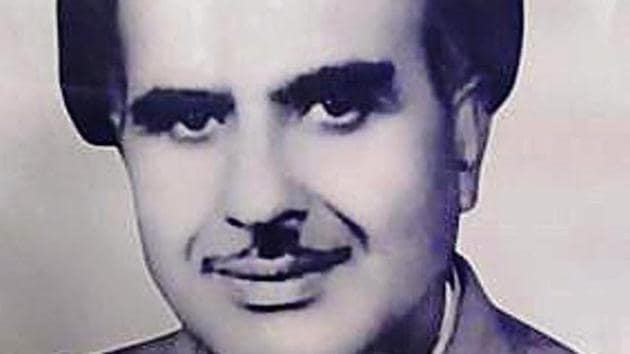
Sitharaman began the budget quoting Sahitya Akademi awardee Dinanath Kaul ‘Nadim’, a 20th century Kashmiri poet who also wrote poetry in Urdu, Hindi and English. Born in 1916, Kaul, a Kashmiri Pandit, was among the founders of the Left movement in Kashmir, and a part of its progressive movement.
Quoting from his poem, Myon Watan, Sitharaman said: “Humara watan, khilta hua Shalimar Bagh jaisa/ Humara watan, Dal lake mein khilta hua kamal jaisa/ navjawanon ke garam khoon jaisa/ mera watan, tera watan, humara watan/ duniya ka sabse pyara watan.” [Our land is the blooms of Shalimar Bagh/ Our land is the lotus in Dal Lake/ it’s the hot blooded youth/ my land, your land, our land/ the loveliest land in the world]
What made the choice of verse more significant is that the Centre nullified Article 370 last August, following which the state of Jammu & Kashmir was converted into two Union Territories. Several restrictions are still in place in Kashmir.
She also prefaced the section on taxes with a poem from 5th century poet Kalidas’s work, Raghuvamsa. “Surya, the Sun, collects vapour from little drops of water. So does the King. They give back copiously. They collect only for people’s well being,” she recited, before announcing the change in slabs for private income tax.


