
 E-Paper



A crucial Sena vs Sena battle unfolds in prestigious Mumbai South seat
The constituency's demographic changes and voter dissatisfaction over the Shiv Sena split are expected to play critical roles in this highly contested election

 Prefer HTon Google


Mumbai South Lok Sabha constituency is the crown jewel eyed by all political parties in this general election. The constituency, which houses the state Assembly, the headquarters of Brihanmumbai Municipal Corporation, the country’s richest municipal corporation, and the head offices of the State Bank of India, the Bombay Stock Exchange and several corporates, is considered a key seat.
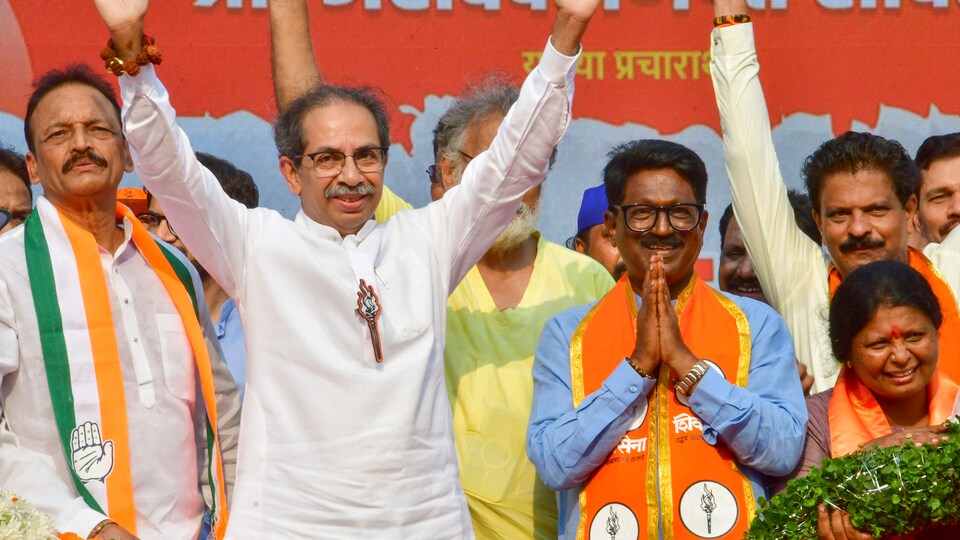
The spotlight is on the Sena vs Sena battle in the seat as two-time MP and Shiv Sena (Uddhav Balasaheb Thackeray) faction leader Arvind Sawant seeks a third consecutive term. He is facing stiff competition from Shiv Sena (Shinde) MLA from Byculla, Yamini Yashwant Jadhav.
Voters in Mumbai this time, however, are witnessing the aftermath of a vertical split in Shiv Sena led by Uddhav Thackeray. In South Mumbai, the issues of the Marathi-speaking class and the allocation of industrial projects to Gujarat from Mumbai and Maharashtra seem to dominate the political discourse.
Arvind Sawant, the incumbent Shiv Sena (UBT) MP, highlighted, “There is friction between Maharashtrians and Gujaratis due to the relocation of industries to Gujarat. Builders in Mumbai often prevent Marathis from buying flats, causing unrest among Marathis, especially after a recent discriminatory advertisement.”
In a constituency with 15.36 lakh voters, political parties are devising strategies based on the linguistic and communal composition of the electorate. According to rough estimates, the constituency comprises 6.17 lakh Marathi speakers, 3.41 lakh Muslims, 2.64 lakh Gujaratis and Rajasthanis, 1.78 lakh North Indians, and 67,600 South Indians.
The Marathi-speaking population has reportedly declined due to the redevelopment of old buildings, mill lands, chawls, and slums, forcing many to move to extended suburbs. This demographic shift is a crucial factor in the current election, particularly for the Shiv Sena, which was founded in 1966 with a pro-nativist agenda. The party, historically supported by Marathi-speaking residents of Parel, Lalbaug, Sewri, and Worli, is now focusing on the emotional issue of preserving Marathi identity.
“We need to safeguard the interests of Marathi-speaking people, who fear for their existence due to the rising dominance of other communities. The Bharatiya Janata Party (BJP) is seen as safeguarding the interests of other communities, evident from their approach and the issues they take up. The split in the Shiv Sena has irked many Shiv Sainiks, and this will reflect in the election,” said Parag Chavan, a former Shiv Sena corporator from Lalbaug.
The dissatisfaction among Marathi-speaking voters over the Shiv Sena split is influencing electoral dynamics. The ruling Mahayuti alliance, comprised of the BJP and the Shinde-led Shiv Sena, struggled to finalise their seat-sharing arrangement until 20 days before the polls, while the Opposition had already undertaken two rounds of campaigning. The BJP eventually conceded the seat to the Shinde faction, realising that a united Sena front would lead to discord within the Mahayuti.
The BJP considered fielding state minister Mangal Prabhat Lodha or Assembly speaker Rahul Narwekar, but ultimately, the Shinde faction nominated Yamini Jadhav, a Marathi-speaking candidate, over Milind Deora. Narwekar's candidacy was affected by his controversial rulings in the splits of the Sena and NCP.
“Though the Thackerays are making it an issue, there is no rift between Marathis and Gujaratis. We all consider ourselves true Maharashtrians. Many Gujaratis and Rajasthanis have lived in Mumbai for decades and contributed to the city's development. With numerous development projects by our government in South Mumbai, Mahayuti is confident of winning the seat,” said Atul Shah, senior BJP leader and former Mumbadevi MLA Atul Shah.
A Shiv Sena-UBT leader said, “Shiv Sena has always leveraged Marathi pride in elections. This time, there's a sympathy wave for us due to the split and loss of the party name and symbol. Uddhav Thackeray is popular among Muslim voters because of his stand against Prime Minister Narendra Modi and the BJP. Muslim support is crucial for our victory margin.”
Countering claims of divisive politics, Jadhav said, “We do not indulge in Hindu-Muslim politics. Muslims are with us. I will focus on redevelopment issues, tenant rights, and easing living conditions for the elderly, as my constituency has a significant elderly population.”
A leader from the Shinde-led Shiv Sena emphasised that most organisational leaders, former corporators, and MLAs have sided with Shinde post-split, believing Marathi voters will support them over the Thackeray faction.
Political analyst Hemant Desai said, “Marathi-speaking and Muslim voters are crucial this time. Thackeray’s Shiv Sena has an advantage. The BJP's inability to field Rahul Narwekar, despite his year-long preparation, reflects the intense anger against the ruling alliance. The Shinde faction candidate faces corruption allegations, unlike her opponent, who has a clean record despite serving two terms.”
The upcoming election promises to be closely contested, with Marathi and Muslim voters playing pivotal roles.


