
 E-Paper



A surgical or air strike won’t change Pak attitude: DS Hooda
He said the plans will be expanded and revised with the help of institutional structures such as the National Security Advisory Board, National Security Council and the Cabinet Committee on Security.

 Prefer HTon Google


The Congress said on Sunday it accepted the five pillars of Let Gen (retd) DS Hooda’s national security vision paper, which proposes plans to secure India’s neighbourhood and improve internal security, even as the architect of the 2016 surgical strikes said a single assault on Pakistan was not enough to change its behaviour.
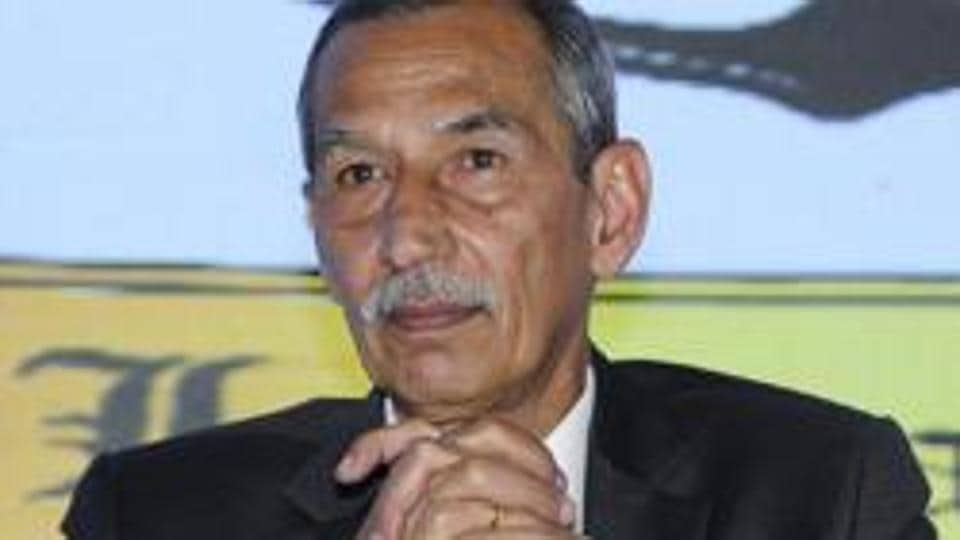
The report submitted by Hooda, who was picked by the Congress to head its task force on national security, emphasises on five key issues – assuming India’s rightful place in global affairs, achieving a secure neighbourhood, peaceful resolution of internal conflicts, protecting the citizens, and strengthening the country’s capabilities. While addressing a joint news briefing with Hooda and former Union minister Jairam Ramesh, senior Congress leader P Chidambaram said that if the party is voted to power in this summer’s Lok Sabha elections, it will try to implement the five proposals.
He said the plans will be expanded and revised with the help of institutional structures such as the National Security Advisory Board, National Security Council and the Cabinet Committee on Security. “The final decision will be taken by the government when the plan goes through these institutional structures,” he added.
Chidambaram said that while national security was an important aspect of the narrative in the general elections, to say that it was the dominant narrative was wrong. “This is a serious issue. It cannot be treated as part of muscular politics. We are not talking anything about the size of our chest here,” he said. Hooda, a former Northern Army Commander, oversaw the surgical strikes carried out by the Indian Army on terror launch pads across the Line of Control in Pakistan. He recently submitted the report titled India’s National Security Strategy after meeting Congress president Rahul Gandhi and agreeing to head the party’s panel on the issue.
He said that protecting the Indian people was the main goal of national security. “We need to solve the climate change crisis, as well as the job crisis that harms people.” Presenting salient features of his report at a separate event organsied by think tank Observer Research Foundation, Hooda said: “One surgical strike or air strike is not going to change Pakistan’s behaviour.” Chidambaram, who was also present at the event, said India must also change its attitude towards Pakistan to bring about a change in its neighbour’s behaviour. Hooda’s report says that “Pakistan blocks India’s land movement towards the West” and that India must find an alternative to bypass Pakistan, with Iran as a key player.
Speaking to Hindustan Times after the news briefing, he said: “Our movement towards the West via land is locked by Pakistan, and so westward movement will have to be by sea. So, Iran is a strategic country, and it will grant us access to Afghanistan and then on to Middle East. Iran a country has geostrategic importance.” Hooda’s report says Iran is “a strategically located country that provides warm water ports for the Central Asian states, westward access to the Indian trade, and entry into Afghanistan via the Chabahar Port.” The report says intrastate dialogues involving the civil society, apart from military measures of dealing with terrorists will be important to solve the Jammu and Kashmir issue. The document also touches upon India’s nuclear capabilities and states that while India should maintain a ‘No First Use’ policy, it should strengthen its nuclear triad. “To ensure deterrence against nuclear threats, India should continue to build up its triad of land, air, and sea-based missiles, while modernising its older land missile systems.” Hooda has also recommended upgrading the existing Defence Cyber Agency into a Cyber Command, as the current intelligence agencies cannot completely thwart cyber attacks. “India is one of the few countries that still do not have a dedicated cyber component in its military,” the report reads.


