
 E-Paper



Abujhmadh and North Bastar: 2 Chhattisgarh hotbeds now Naxal-free, says Amit Shah
Those surrendered include senior and mid-level key functionaries of the proscribed Communist Party of India (Maoist),

 Prefer HTon Google


New Delhi/Abujhmadh/Raipur : Union home minister Amit Shah on Thursday said that Abujhmadh and North Bastar in Chhattisgarh — two areas that have been hotbeds of Maoist activities — have been declared free from Naxal terror, adding that at least 258 Maoists have surrendered in Chhattisgarh and Maharashtra over the last two days.
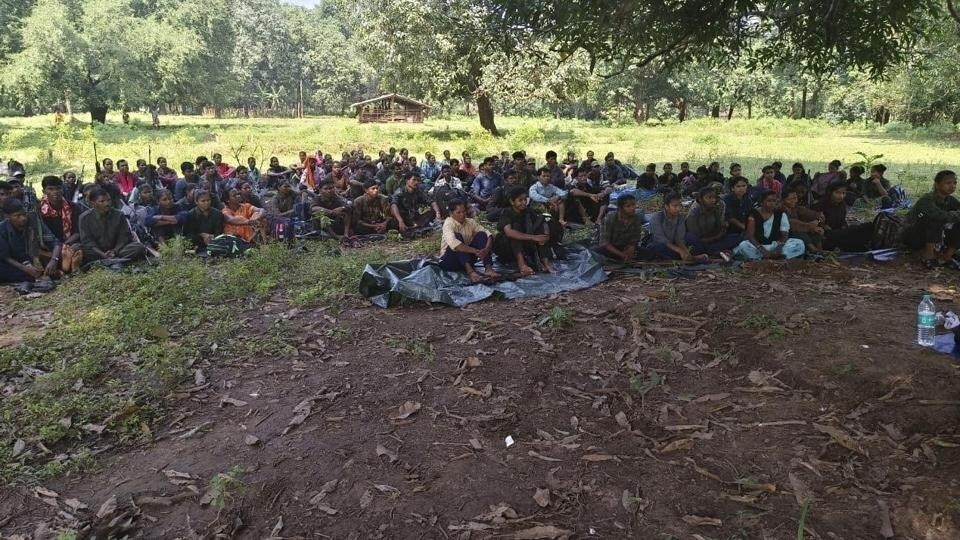
Those surrendered include senior and mid-level key functionaries of the proscribed Communist Party of India (Maoist), including one central committee member, who carried a reward of ₹1 crore.
“It is a matter of immense pleasure that Abujhmarh and North Bastar in Chhattisgarh that were once terror bases, have today been declared as free from Naxal terror. Now a trace of Naxalism exists only in South Bastar, which will be wiped out soon by our security forces,” Shah said in a post on X.
“Since January 2024, after our government was formed in Chhattisgarh, 2,100 Naxalites have surrendered, 1,785 have been arrested, and 477 have been eliminated. These numbers mirror the fierce resolve of our government to decimate Naxalism before the 31st of March 2026,” he added.
Meanwhile, in a major breakthrough in the anti-Maoist campaign in Chhattisgarh, around 200 ultras, including Rupesh, a member of the Special Zonal Committee of the CPI (Maoist), and Ranita, who heads the Maad division under the Dandakaranya Special Zonal Committee (DKZC), are set to lay down arms and surrender before chief minister Vishnu Deo Sai and state home minister Vijay Sharma in Jagdalpur on Friday, a senior official from CMO said.
The surrender is being seen as one of the most significant in recent years, signalling the collapse of the Maoist network in the Abujhmadh region, once regarded as the ideological and operational heartland of the CPI (Maoist).
Rupesh, who hails from Telangana and is known as a strong strategist, coordinated between various divisions of the DKZC and managed logistics, communication and training in the Maad area. Officials said his surrender will severely weaken the outfit’s operational capability in Bastar.
Ranita, the Maad division in-charge, is among the senior women commanders of the group and has been active across several Bastar districts. Security officials said both leaders had been hiding in deep forest zones but were persuaded to surrender due to sustained operations and outreach efforts. In a statement to journalists, Rupesh said: “While the government is calling it a surrender, we don’t. We are laying down arms and returning, but our struggle for the people will continue.”
Abujhmadh, which in Gondi means unknown hills, is a dense forest spanning around 5,000 square km across Chhattisgarh, Telangana and Maharashtra and was the den of Maoist leaders. It was never surveyed before, making it ideal for top Maoist leaders to operate, recruit cadres and train them. In the last two years, after forces took control of the area by establishing camps, most gunfights with top Maoists like former CPI(Maoist) general secretary and politburo member, Basavaraju, took place in these hills.
Officials said improved road access and continued operations have now eroded that inviolability.
Sharing details of the surrendered ultras, urged those still in hiding to surrender. “Today, 170 Naxalites have surrendered in Chhattisgarh. Yesterday 27 had laid down their arms in the state. In Maharashtra, 61 returned to the mainstream, yesterday. In total, 258 battle-hardened left-wing extremists have abjured violence in the last two days. I applaud their decision to renounce violence, reposing their trust in the Constitution of India. It attests to the fact that Naxalism is breathing its last due to the relentless efforts of the Prime Minister Narendra Modi led government to end the menace. The policy of the Modi government is clear: those who want to surrender are welcome, and those who continue to wield the gun will meet the wrath of our forces. I appeal again to those who are still on the path of Naxalism to lay down their weapons and join the mainstream. We are committed to uprooting Naxalism before 31st March 2026,” he added.
In a statement on X, Chhattisgarh CM Sai: “ Naxalities who choose the path of peace and development are welcome. However those who take up arms and attempt to spread terror in society will face strict action...”

-kW0H-U20214218012MgB-250x250%40HT-Web.jpg)


