
 E-Paper



Action required, not meetings to curb stubble burning: SC pulls up CAQM, Punjab, Haryana
The data presented by CAQM showed that between September 15 and 30, there were 129 stubble burning incidents in Punjab and Haryana.

 Prefer HTon Google


The Supreme Court on Thursday came down heavily on the Commission for Air Quality Management (CAQM) for failing to curb instances of stubble burning in the National Capital Region, as yet another year of Delhi’s worrisome winter pollution looms over citizens.
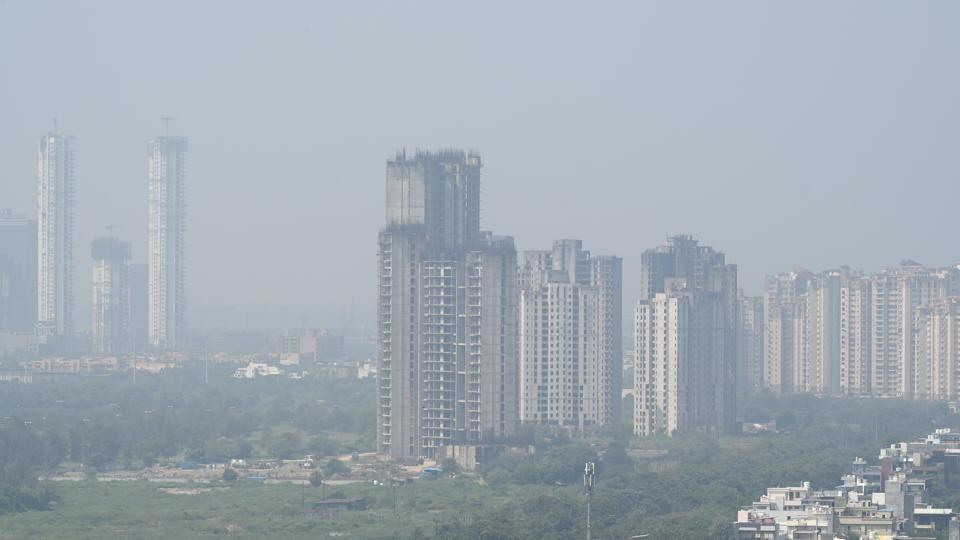
The data presented by CAQM showed that between September 15 and 30, there were 129 stubble burning incidents in Punjab and Haryana, and the court said collecting fines from the offenders will not serve any purpose as the need of the hour is to make them accountable under the law.
Stating that the CAQM has made no efforts to implement the SC’s direction to prevent such incidents, the top court said that stubble burning cannot stop unless people know they will be booked under the stringent CAQM Act for NCR and adjoining areas as it found that neither the Commission, tasked to implement this law, nor the state governments of Punjab and Haryana, where crop burning incidents are still being reported, is serious to put an end to this problem.
A bench, headed by justice Abhay S Oka, made the observations after analysing the CAQM’s status report following the SC’s last week order asking for steps being taken by the commission and its various sub-committees over the years to curb the problem of crop residue burning in the winter months which adds to the pollution load in Delhi.
Going through the report, the bench, also comprising justices Ahsanuddin Amanullah and Augustine George Masih, said, “Unless people know there will be prosecution, they will not stop, and they will not use the machinery provided to them to remove the stubble.”
The court noted that the commission had only been busy holding meetings with states without making efforts to enforce its order.
The bench noted that the commission had stringent powers under Sections 14 and 15 of the Act to lodge criminal cases against those violating its orders and impose penalty, and order closure of polluting units.
“For different reasons, they do not want to prosecute anybody. You must show the implementation of your orders in letter and spirit. Calling meetings will not yield anything. Actions must follow.”
Appearing for the CAQM and Centre, additional solicitor general (ASG) Aishwarya Bhati informed the court that stringent orders on stubble burning were passed on June 10, 2010, and subsequently several orders were passed, the last being in April 2024 directing state governments to take action against illegal stubble burning and to implement other measures proposed by the commission and Centre, which includes making available stubble removal machines and disincentivising farmers indulging in crop burning.
She also shared details of 11 meetings held by the three subcommittees of the commission this year so far.
The court said, “The commission itself prima facie does not seem to be making any effort to seek implementation of its own orders,” as the court called for a report from Punjab and Haryana governments on steps taken to implement the June 2010 and April 2024 orders.
The court further observed that the sub-committee tasked with enforcement of commission orders last met on August 29 where the implementation of the June 2010 order was nowhere in the agenda. “If farmers cannot be prosecuted, then the officials should be held guilty. You must show that the machinery you created under the 2021 Act still exists.”
The ASG informed the court that FIRs were registered under Section 223 of the Bharatiya Nyaya Sanhita (BNS), which deals with disobedience of orders passed by officials.
“You have found out the softest provision to penalise persons when you have drastic provisions under the CAQM Act,” the bench said.
Punjab informed the court that penal action should follow only after alternate incentives are provided to farmers in the form of machines to remove stubble. State advocate general Gurminder Singh said that though more than 1.4 lakh machines are available in the state, small farmers with less than 10-acre farms want drivers and fuel to run them. In this regard, the state wrote to the Centre for financial help. The court asked the state to provide details of this communication.
The amicus curiae, senior advocate Aparajita Singh, and senior advocate Gopal Sankaranarayanan appearing for an intervenor pointed out that the CAQM also has a dearth of independent experts on air pollution.
He pointed out that two posts of NGOs are vacant, while two air pollution experts do not have requisite qualification. The court has called for a report from the Centre and CAQM in this regard within a week, indicating that it will exercise its extraordinary powers under Article 142 to bring air pollution experts on the panel. The matter will be heard next on October 16.


