
 E-Paper



Reports reignite Adani row, put focus on regulator’s role
The reports triggered a political backlash, with opposition parties saying they will could seek a joint parliamentary committee (JPC) investigation

 Prefer HTon Google


The Adani Group has “rejected” in a statement what it termed “recycled allegations”, following reports in both The Guardian and The Financial Times, based on documentary evidence that establish a trail between the individuals and the entities that bought shares of Adani companies, and Vinod Adani, Gautam Adani’s founder. The FT report also claims that the stock market regulator was alerted in 2014 about the group routing money into its own stocks.
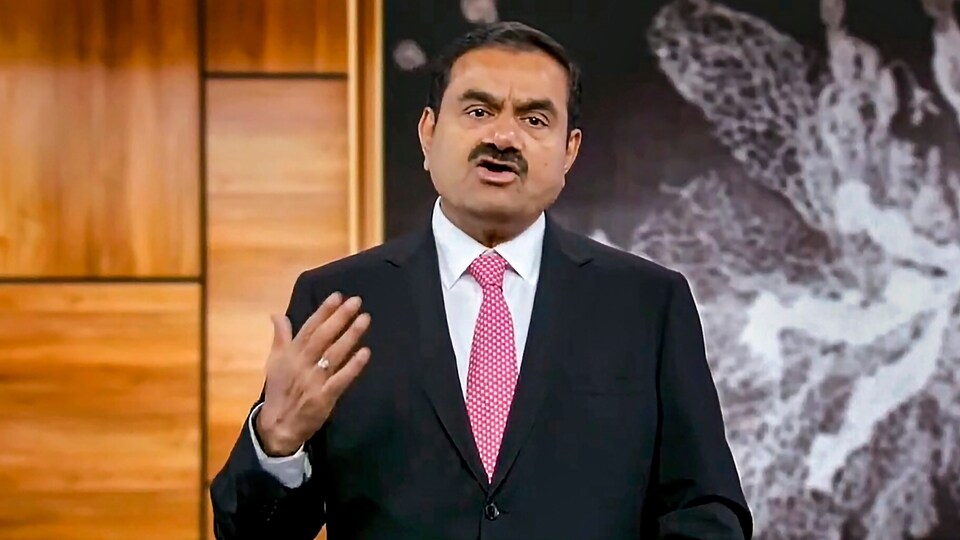
While the group’s statement has described the reports as “yet another concerted bid by Soros-funded interests supported by the foreign media to revive the meritless Hindenburg report”, and sought to explain the issues raised by pointing to a closed investigation by the Directorate of Revenue Intelligence (DRI) that looked at “allegations of over-invoicing, transfer of funds abroad, related party transactions and investments through FPIs (foreign portfolio investors” and an ongoing one by the Securities and Exchange Board of India (Sebi), questions will be asked of Indian agencies and regulators, including Sebi, following some of the disclosures in the two news reports.
The reports triggered a political backlash, with opposition parties saying they will could seek a joint parliamentary committee (JPC) investigation.
Two associates of Adani Group founder Gautam Adani’s brother, Vinod Adani, used Bermuda’s Global Opportunities Fund to amass and trade large positions in shares of the conglomerate, the Financial Times (FT) has reported citing documents a network of investigative journalists shared with the British business daily. The daily said a Vinod Adani employee oversaw the investments the two, Nasser Ali Shaban Ahli from the United Arab Emirates and Taiwan’s Chang Chung-Ling, made, raising questions over whether they were frontmen used to bypass rules for Indian companies that prevent share price manipulation.
If the documents hold up to scrutiny, and if the trail detailed in the reports exists, Indian agencies and regulators may want to look at whether the Adani Group flouted, at the least, Sebi’s minimum public shareholding rules. This is significant because, as mentioned in the conglomerate’s statement “as per the expert committee appointed by the Hon’ble Supreme Court, there is no evidence of any breach of the Minimum Public Shareholding (MPS) requirements or manipulation of stock prices”. It is not clear whether either the expert committee or Sebi were aware of and had access to the documents that served as the basis for the two news reports.
Organized Crime and Corruption Reporting Project (OCCRP), the network of investigative journalists supported by a host of donors including the US state department, the UK foreign, commonwealth and development office, and the Open Society Foundations (of George Soros) , shared with FT the intricate paper trail that shielded the duo’s identity from regulators and the public. FT said it is the first time that potentially controversial owners of Adani stock have been identified since the American firm Hindenburg Research in January accused the Adani Group of running the “largest con in corporate history”.
Hindenburg alleged the entities Vinod Adani controlled manipulated the share prices of some of the group’s 10 listed entities. The conglomerate denied the allegations even as they knocked over $90 billion off the Adani Group’s valuation.
FT quoted an Adani spokesperson insisting its listed entities were in compliance with all laws. It added lawyers for the company that set up the investment structure denied any wrongdoing.
FT noted the new documents identify Ahli and Chang as two of the most significant investors in the broader scheme Hindenburg, outlining a series of bespoke investment structures within the Global Opportunities Fund they used exclusively to trade Adani stocks. It said people familiar with the structures claim parallel sets of books at the fund provider and a Russian doll of companies and funds masked their stakebuilding. “Two sets of accounts were done. One was for regulators. The second set was for each investor mapping their holdings,” FT quoted one of the persons as saying.
The documents showed Ahli and Chang secretly controlled at least 13% of the free float (the shares available to be traded by the public) in three of the four Adani companies listed at the time, including the group’s flagship Adani Enterprises, in January 2017.
FT noted their relationship with Vinod Adani matters because he is part of the so-called promoter group, an Indian legal term for corporate insiders whose shareholdings are not supposed to exceed 75% under stock market rules. It added breaches of the rule can lead to delisting.
The documents show that Ahli and Chang began their investments in Adani stocks in 2013 when the group sold equity to private investors to increase the public shareholding at its then-three listed companies as Sebi sharpened enforcement of the 75% rule. FT noted that were Sebi to treat the two men as proxies for Vinod Adani and as part of the promoter group, it would mean Adani companies repeatedly breached the rules designed to prevent artificial inflation of share prices.
FT quoted Mumbai-based advisory firm Katalyst Advisors founder Ketan Dalal saying that “if the free float of a stock was much smaller than visible to the public eye, it allows the price to be manipulated”. It added that commenting on the rules, without reference to Adani or any other specific company, Dalal said this would be “indirect market manipulation: others see the price go up and could get enticed”.
FT said the new documents include information from police investigations, corporate registries, bank records, stock market data, and correspondence, which the OCCRP has also shared with the Guardian. It added they mostly focus on 2012 to 2018, a key period for the Adani Group when it established itself as one of the champions of Indian business. “Its interests now range from energy and transport to edible oils, television and sports teams.”
FT said the new documents could broaden the political impact because they show that Indian regulators have long suspected a conspiracy to manipulate Adani shares. It added this was contrary to the impression given in an affidavit to the Supreme Court this year. In the affidavit, the regulator said that “the allegation that Sebi is investigating Adani since 2016 is factually baseless”.
FT cited previously unreported Indian government correspondence between Sebi and the DRI, which polices smuggling and economic crime, and said two separate investigations into Adani were underway in January 2014. “The head of the DRI wrote to his counterpart at the regulator because Sebi was investigating ‘the dealings of the Adani Group of companies in the stock market.’”
It added his letter was accompanied by a CD of evidence from a DRI probe into alleged inflated invoices at Adani power projects, and said that “there are indications that a part of the siphoned off money may have found its way to stock markets in India as investment and disinvestment in [the] Adani Group.”
FT said DRI sent demands for information about Adani just before Modi took office in May 2014. “Three years later the directorate’s adjudicating authority cleared Adani and closed the case.”
FT said the documents also raise a broader question about whether international regimes to identify the beneficial owners of assets are fit for purpose. “The investment structures were provided by an Indian financial group now called 360 One. The same firm has previously attracted scrutiny for structuring a Mauritian fund that was used for several years to hide the names of participants in a highly controversial Indian transaction in 2015 involving the fraudulent German company Wirecard.”
An Adani spokesperson rejected the new disclosure as nothing but a rehash of unsubstantiated allegations levied in the Hindenburg report. The spokesperson said there is neither any truth to nor any basis for making any of the said allegations against the Adani Group and its promoters. “...we expressly reject all of them in toto.” Adani Group said it was not aware of the 2014 DRI documents but added that the Supreme Court had “concluded in our favour” over the matter.
FT said lawyers for 360 One said the company disagreed with its version of events. The company said that no 360 One “entity and/or its employees in their official capacity has been involved in any wrongdoing generally and particularly in connection with the Adani Group”. It also denied any wrongdoing in relation to the Wirecard transactions.
Chang told FT that he knows “nothing about this” when asked if he was an Adani associate who secretly purchased shares for them. He declined to say if he knew Vinod Adani, suggested the reporter “might be AI”, and eventually hung up. Vinod Adani and Ahli did not respond to FT’s requests for comment. Sebi also did not respond to the paper’s requests for comment.


