E-Paper



After 24 years, Patnaik set for a new stint in Opposition benches
Patnaik took over the reins of a faction of the BJD in 1997, eight months after the death of his father and two-time chief minister Biju Patnaik.

 Prefer HTon Google


For 24 years and 92 days, Naveen Patnaik served as Odisha’s chief minister. When he first took oath on March 5, 2000, he was 53 years old, still visibly uncomfortable with the rigours of regional politics, and forced to take the reins of both the state and a party – the Biju Janata Dal (BJD) – that were part of his father’s political legacy. By the time he handed in his resignation on Thursday, Patnaik had spent close to two-and-a-half decades at the helm, the second longest tenure as chief minister in Indian history. In this period, he became synonymous with Odisha, but saw his political empire crumble before his eyes on June 4, losing both the assembly and the general elections to a point where he was left without a single member of Parliament.
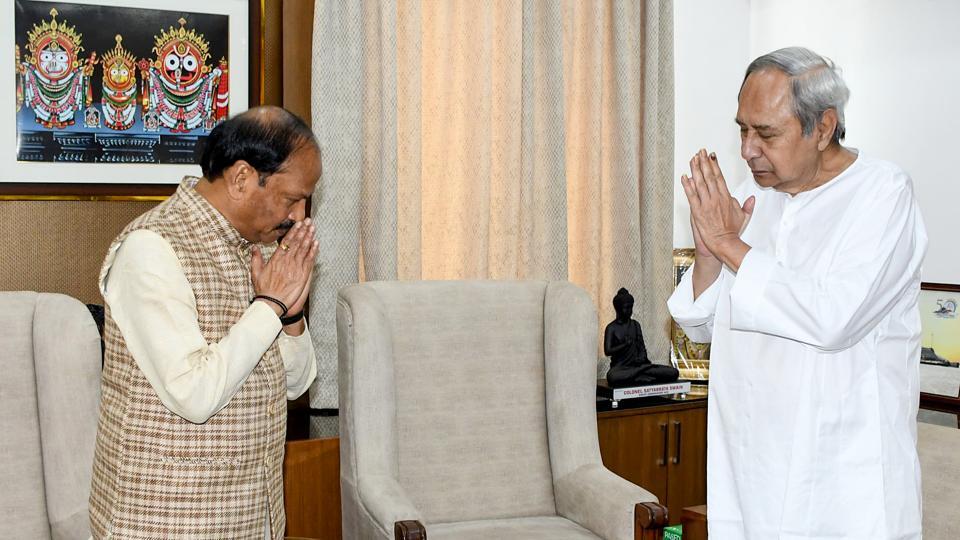
Patnaik, who had spent most of his time until then outside Odisha, and indeed India, took over the reins of a faction of the BJD in 1997, eight months after the death of his father and two-time chief minister Biju Patnaik. The Bharatiya Janata Party (BJP) allied with the regional satrap, and in 1998, Patnaik fought the Lok Sabha elections for the first time from the Aska constituency and won. Such was the heft of both the party and the family that he was immediately made Union steel minister in the Atal Bihari Vajpayee cabinet.
By 2000, he had become Odisha’s chief minister, and despite visible discomfiture with the regional language and relative inexperience, found ways to navigate a state that was plagued by deprivation, and prone to natural disasters such as cyclones. “For Odias, Naveen’s image was at odds with a typical politician who was always in-your-face. With no family (he never married) and no political baggage, Patnaik soon endeared himself to the state. He was reticent, but shrewd and caught his opponents off guard,” said SP Dash, a former political science professor at Sambalpur University.
He was soft-spoken in public, but had a keen political mind. In 2000, he engineered the exit of Bijoy Mohapatra, his strongest rival, from the BJD and in 2004, when the Atal Bihari Vajpayee government was unseated, he sensed a wave of support for the alliance in his state, and advanced the assembly elections to coincide with the general elections, winning handsomely. In 2009 though, Patnaik left the National Democratic Alliance, accusing the BJP of instigating communal violence in Kandhamal.
In 2014, even in the middle of a Modi wave, he bucked the nationwide trend to win a record 117 of the 147 seats in the assembly polls, and 20 of the 21 seats in the Lok Sabha. In 2019, he led BJD to another victory – winning 112 seats in the assembly, and 12 of the 21 seats in the Lok Sabha.
Political analyst Rabi Das said Patnaik earned his support over 24 years through a web of social welfare programmes he unveiled across his terms. Women were at the core of this, with more than six million women now involved in 700,000 self-help groups (SHG). “Women voters were the biggest assets of Naveen Patnaik in any election. Over the last decade-and-a-half, he managed to create a vote bank for him and his party through women SHG groups,” said Das.
But in his last term, it became clear that Patnaik’s age was catching up with him, and senior BJD leaders admitted that he failed to counter the political challenges in front of him. Over the past decade, the BJP positioned itself as the principal opposition in the state, and with a Congress that was virtually non-existent, Prime Minister Narendra Modi’s popularity rose within the state.
“Modi was seen as a strong leader, while Patnaik was visibly weakening, even physically. The people of Odisha respect him, and with him ageing, Patnaik made a mis-step in handing over control to VK Pandian, a bureaucrat-turned-politician originally from Tamil Nadu. Unhappy at this, people turned to Modi,” one BJP leader said.
The BJP caught on to the lack of a succession plan within the BJD, and created a campaign around Pandian’s Tamil roots, calling it a slur on Odia pride. Patnaik attempted damage control, giving interviews in the final days of the campaign that he was in the pink of health and that Pandian was not necessarily his successor.
But the campaign against the BJP was also encumbered by mixed signals, a BJD leader said, pointing to weeks of conjecture that the two principal parties in the state were close to an alliance in the run-up to the polls. “The cadre was angry even at the suggestion, and among people, there was little effort by the BJD to position the BJP as the Opposition. In any case, it seemed that the two parties worked together, such as in Parliament, or backing rail minister Ashwini Vaishnaw’s Rajya Sabha candidature. Over the last few days, we tried to paint the BJP as a threat to Odisha, but it clearly wasn’t enough,” the leader said.
On Tuesday, Patnaik faced complete defeat – his BJD losing power in the assembly, winning only 51 of the state’s 147 assembly seats. He fought in two separate constituencies, and while he won in Hinjili, he lost to BJP’s Laxman Bag in Kantabanji, the first electoral loss in his career. Even worse, the BJD didn’t win a single Lok Sabha seat, the first time in 27 years it will not have a member in the Lower House, with the BJP winning 20 of the 21 seats, and the Congress one.
A senior BJD legislator, who won on Tuesday, said it was a clear mistake to let Pandian take centre stage in the party and be its most visible face, not only because it lent itself to the attack on Odia “asmita” or pride, but because it made it seem that Patnaik was not in control, angering other leaders and the cadre, and raising questions around the chief minister’s health. “If Naveen babu had taken charge and announced early in the campaign that Pandian would not be his successor, we would have won the assembly elections,” he said.
Other senior leaders, however, said that despite the setback, the BJD would still be synonymous with Patnaik, and with no other immediate replacements for the party leadership, he still remains firmly in charge. “He will be elected as leader of the legislature party. He will remain in Odisha and continue to head the party,” said Manas Mangaraj, senior BJD leader and Rajya Sabha MP.
After meeting with newly-elected party MLAs, Patnaik said: “We have worked hard to reduce poverty from 70% to 10%. Our efforts in agriculture, irrigation and women empowerment have led to this achievement.”
Incidentally, Pandian was not there with Patnaik when the meeting took place.
The future though, both for Patnaik and the BJD, for the first time in 24 years, is in the Opposition.