E-Paper



AICC meet in Guj to focus on party’s revival in BJP bastion
The AICC session in Gujarat aims to strengthen Congress against BJP, address key issues, and revive grassroots organization, focusing on Patel's legacy.

 Prefer HTon Google


The All India Congress Committee (AICC) session on Wednesday—preceded by a Congress Working Committee (CWC) meeting on Tuesday—will discuss ways in which the Congress can take the battle to the Bhartiya Janta Party in the latter’s stronghold Gujarat, empower its party organization at the grassroot level, and make a fresh bid to reclaim the legacy of Sardar Vallabhbhai Patel.
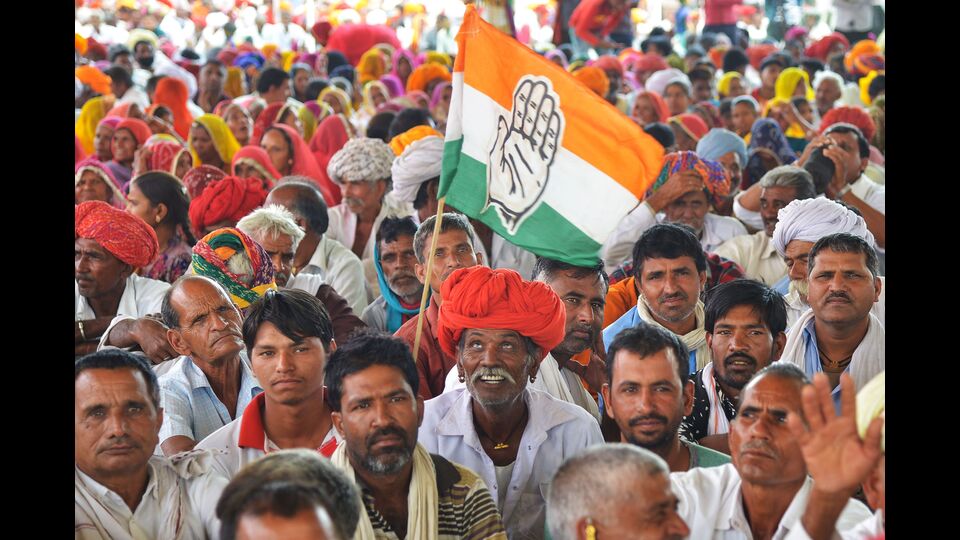
With the motto of “Nyaypath: Sankalp, Samarpan and Sangharsh” (road to justice, resolve, dedication, struggle), the AICC meeting in Ahmedabad is expected to create political committees in districts for better coordination and decentralization of the party organisation, according to three senior leaders. And it could target the BJP over the latest developments including US tariffs.
“Even during the pre-Independence era, the Congress used to hold conventions to address the toughest challenges facing the nation,” said Pawan Khera, chairperson of the Congress’ media and publicity department, at a press conference in Ahmedabad. “Today, every section of society is suffering and feels betrayed. With democracy under attack, people are looking to the Congress with hope. As a responsible political party, it is our duty to step forward and lead the nation from darkness into light.”
Amit Chavda, Congress Legislative Party leader in the Gujarat Assembly, said the AICC session will focus on several pressing issues affecting the people of Gujarat and the nation. “Issues such as malnutrition, rising education costs, contractual employment, displacement due to demolitions, inflation, and corruption will be taken up during the session, which begins at 9:30 am on Wednesday.”
A large dome has been erected at Sabarmati Riverfront for the AICC session on April 9 while another structure has been put up on the premises of the Patel Memorial for the CWC meeting on April 8. The AICC session is being held in Gujarat after 64 years, state unit chief Shaktisinh Gohil said. Nearly 3,000 delegates from across the country will be attending the AICC session.
The Congress is set to discuss at length its strong connection with Gujarat—a state where it has been out of power since 1998—and may bring out a resolution to showcase the party’s historical association with the state.
The choice of Ahmedabad for the CWC and AICC meeting may have been driven by the occasion of the 150th birth anniversary of Patel and the 100th year of Mahatma Gandhi’s presidency of the Congress, it is also an ambitious political move to take on the BJP in its stronghold. The party has specifically picked the Patel Memorial to showcase its historic ties with independent India’s first home minister. The CWC is expected to come up with a special resolution on Patel, whose legacy the BJP has sought to capture.
Jairam Ramesh, one of the members of the committee to draft resolutions,pointed out in a post on X on Sunday that the CWC and AICC meeting would be the party’s sixth in Gujarat: “The Indian National Congress was established on Dec 28th, 1885. It first met in Gujarat at Ahmedabad during Dec 23-26, 1902, under the presidentship of Surendra Nath Bannerjee. The second time the INC met in Gujarat was at Surat during Dec 26-27, 1907, under the presidentship of Rash Behary Ghose. The third time the INC met in Gujarat was again in Ahmedabad during Dec 27-28, 1921, under the presidentship of Hakim Ajmal Khan. The INC met in Gujarat for a fourth time at Haripura during Feb 19-21, 1938, under the presidentship of Netaji Subhas Chandra Bose. The INC met in Gujarat for the fifth time at Bhavnagar during Jan 6-7, 1961, under the presidentship of Neelam Sanjeeva Reddy.”
The CWC and AICC are also expected to discuss the waqf amendment bill, (which has got the Presidential ascent) and the challenge to federalism. It may come up with resolutions on both, as also one on the US tariffs.
The primary focus of the AICC, however, will be on revival of the Congress organisation after a string of electoral losses in assembly and Lok Sabha elections.One focus area could be the revival of the District Congress Committees (DCC) . The Congress has already declared 2025 as the year of the organization.
The party is likely to give the DCCs four key responsibilities: prevent voter list manipulation, conduct party programmes and agitations, raise funds, and strengthen booth committees. In return, more candidates will be picked from the DCC network for Lok Sabha and assembly elections.
The district committee presidents will be allowed to join the Central Election Committee to participate in the selection of candidates.
Soon after the AICC session, the Congress will announce the DCCs for Gujarat, which will be a pilot project for other states, said a senior Congress leader who asked not to be named.
In his address to AICC, Lok Sabha’s Leader of the Opposition Rahul Gandhi is also expected to push for more space in the party for SCs, STs, OBCs, sharpen his attack on the Election Commission and reiterate his demand for caste census.
Khera said despite slogans like “Congress-mukt Bharat” and attempts to eliminate it from the political map, the party remains standing as “it is the voice of the citizens, not just a political party”.