
 E-Paper



Air pollution, traffic woes, pothole-ridden roads: Problems Mumbaikars want solved as BMC polls approach
From redevelopment, water supply to air pollution and traffic chaos, voters are looking for practical solutions rather than promises.

 Prefer HTon Google


As Mumbai prepares to vote in the Brihanmumbai Municipal Corporation (BMC) elections scheduled for Thursday, January 15, the city’s electorate is focused on pressing civic concerns that shape everyday life. From redevelopment, water supply to air pollution and traffic chaos, voters are looking for practical solutions rather than promises.
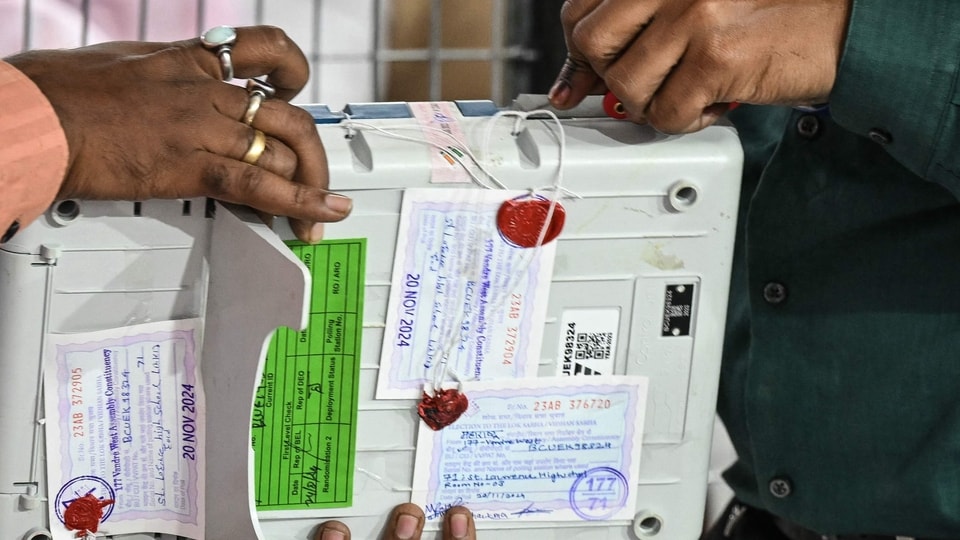
On polling day on Thursday, all eyes will be on Mumbai, which is seeing a three-cornered fight between the BJP-Shiv Sena, the Shiv Sena (UBT)-MNS and the Congress-VBA alliances.
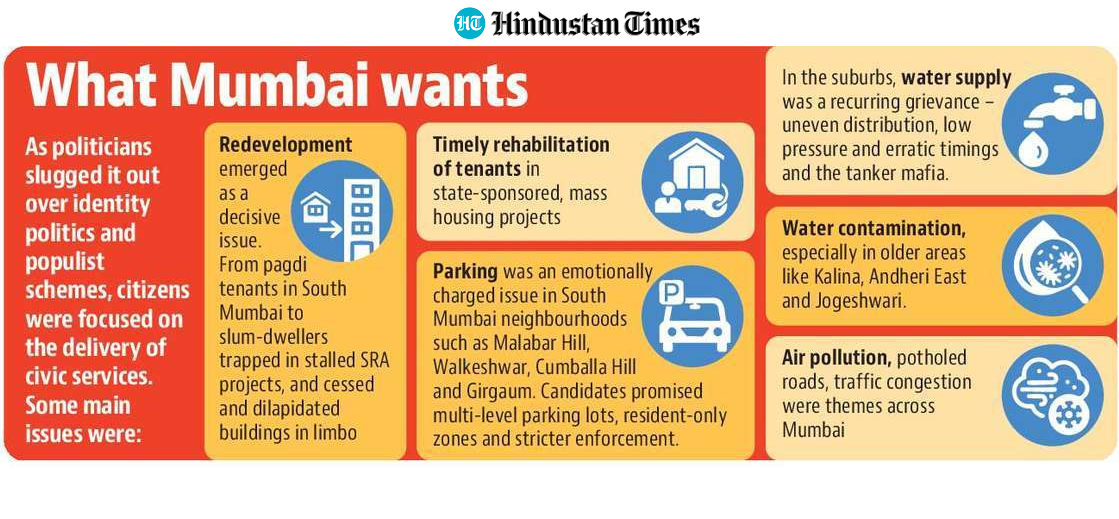
What Mumbai wants:
Redevelopment
Redevelopment surfaced as a decisive concern. From pagdi tenants in South Mumbai to slum residents stuck in stalled Slum Rehabilitation Authority (SRA) projects, and occupants of ageing, dilapidated buildings left in limbo, the issue dominated voter priorities.
Also read| All eyes on BMC as campaigning ends for Maharashtra civic polls
Rehabilitation of tenants
Timely rehabilitation of tenants living in state-sponsored mass housing projects was another major demand, with residents seeking faster and more accountable execution.
Parking
Parking became an emotionally charged issue in South Mumbai areas such as Malabar Hill, Walkeshwar, Cumballa Hill and Girgaum. Candidates promised multi-level parking facilities, resident-only parking zones and stricter enforcement.
Also read| BMC polls 2026: From schools to offices, what’s closed and what’s open in Mumbai on January 15
Water supply
In the suburbs, water supply remained a recurring grievance. Residents flagged uneven distribution, low pressure, erratic timings and the continued influence of the tanker mafia.
Water contamination
Water contamination was highlighted, particularly in older localities such as Kalina, Andheri East and Jogeshwari.
Civic conditions
Air pollution, pothole-ridden roads and traffic congestion featured as common concerns across Mumbai.
Polling for the 2,869 seats spread across 893 wards in Maharashtra’s municipal corporations will begin at 7.30 am and conclude at 5.30 pm on January 15. A total of 34.8 million eligible voters will decide the fate of 15,931 candidates across the state, including 1,700 in Mumbai and 1,166 in Pune. The votes will be counted on January 16.


