
 E-Paper



Amid OBC quota row, Maha clears bills to take over SEC power to redraw wards
The ruling Maharashtra Vikas Aghadi (MVA) hopes the process will delay the conduct of the elections, giving it some time to compile empirical data on OBCs


The Maharashtra legislature on Monday enacted two laws, allowing the government to take over the powers of the State Election Commission (SEC) for delimitation process for electoral wards in urban and rural local bodies.
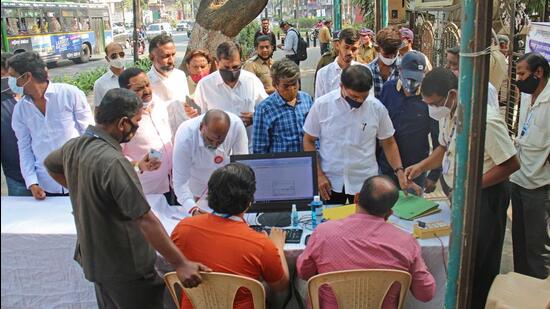
The ruling Maharashtra Vikas Aghadi (MVA) hopes the process will delay the conduct of the elections, giving it some time to compile empirical data on Other Backward Classes (OBCs), as mandated by the Supreme Court for providing political reservation to them in the local bodies.
Delimitation is the process of redrawing boundaries of electoral constituencies based on population growth.
On Thursday, the Supreme Court rejected the interim report submitted by the Maharashtra State Backward Classes Commission recommending upto 27% quota for OBCs in local body elections, came down hard on the commission for the quality of the report, and asked that elections be held at the earliest, and without this reservation.
Officials from the state’s law and judiciary department are not sure if the amendments will stand legal scrutiny. “The process of delimitation and formation of wards by SEC has almost been completed. The government attempt clearly appears to delay the process and buy time for compilation of empirical data mandated for the OBC quota. We are wary if this will stand in the SC where the hearing over the OBC quota is underway,” one official said on condition of anonymity.
The State Election Commission said it would wait for the official communication from the government and consult legal experts on the next course of action.
Kiran Kurundkar, secretary, SEC said, “Of the 15 municipal corporations due for the polls, the process of the delimitation and formation of the wards for 11 civic bodies has almost been completed. We have not received any communication from the state government as yet. We will consult our legal experts once we receive it before taking any further decision.”
The state government introduced two bills to amend the laws governing urban and rural local bodies, which were passed unanimously in both the houses of state legislature. It will now be sent to Governor for his approval.
The laws empower the state government to take over SEC’s powers to complete the process of the formation of the electoral wards and their delimitation (redrawing of the boundaries) on the basis of changes in the population. The bills have also annulled the process of the delimitation and the formation of the wards completed by SEC so far for 14 municipal corporations, 25 district councils and other local bodies in rural and urban areas .
The Maharashtra Vikas Aghadi government expects that the process will delay the actual holdings of elections which were due in April-May . It hopes that it will get the time to collate the empirical data mandated to restore the OBC quota in local bodies. The state government has also decided to form a dedicated committee of experts under former chief secretary Jayant Banthia, who shouldered the responsibility of the census as census commissioner in 1991 and 2002.
Food and civil supplies minister and Nationalist Congress Party leader Chhagan Bhujbal said that there was no question of taking over the powers of SEC as they were with the state until the formation of the SEC in 1994. “Now the state government will complete the process of the delimitation and the reservation of the wards and submit it to SEC. The election body will thereafter conduct the polls. The bill also has annulled the process completed by SEC as far as the delimitation and formation of the wards are concerned.”
The state government is expecting the governor to approve the bills. “We do not think the Governor will raise any objction as the opposition too has agreed to support the government in its last ditch attempt to restore the OBC quota,” said an official from the rural development department who asked not to be named.
Chandrakant Bavkar, president, OBC Sangharsh Samanvay Samiti said: “We welcome the step taken by the state government as it will give them leeway to compile the empirical data for the OBC quota.”
Even as the decision to clear the bills was unanimous the opposition benches sought government’s assurance that the bill would stand the legal test, if it were to be contested in the court. BJP legislators Chandrashekhar Bawankule and Vinayak Mete said that in previous instances state’s ordinances and bills have not stood the test in the courts and that it should ensure that there would not be any such setback. Responding to the queries, deputy chief minister Ajit Pawar said, “Everybody wants to give representation to the OBCs [through the Bill]. We will ensure that it stands in the court.”
“The bills are nothing but the political gimmick by the state government to delay the elections for the OBC quota. By taking away the power from the SEC and giving them to the executives you are destroying the fair election system of the country. Democracy is part and parcel of the basic structure of the constitution and anything against the basic structure is unconstitutional. Here there is ulterior motive behind enacting the law and it is not acceptable to constitution and democracy. State can take the powers for delimitation, but it cannot delay the polls as the article 243 (e) and (u) says that the elections should be held withing five years. The law is very much likely to be challenged in the court and likely to be thrown out by it,” said constitutional expert Ulhas Bapat.
Uday Warunjikar, senior counsel in Bombay High Court, said, “ The bill will definitely help the government in buying some more time to get empirical data collated, but the government will face another rap if it fails to defend the amendment in the SC. The validity of the bill can be questioned in the court, and even if it is not struck down at very first stage, the government may get some time it intends. The government has been citing the amendment done by other states but it does not give them ground to make it valid.”
Stay updated with all the Breaking News and Latest News from Mumbai. Click here for comprehensive coverage of top Cities including Bengaluru, Delhi, Hyderabad, and more across India along with Stay informed on the latest happenings in World News.


