
 E-Paper



Amit Shah declares war on drugs after eradicating Maoists
Over the years, India has moved from drug transiting point to drug consumption country as the economy of the country moved up to top five in the world.

 Prefer HTon Google


At the RN Kao Memorial lecture last Friday, home minister Amit Shah spelled out his next mission before a galaxy of foreign diplomats, law enforcement chiefs and intelligence heads and virtually declared the war on drugs and precursors after successfully eradicating Left wing extremism from India.
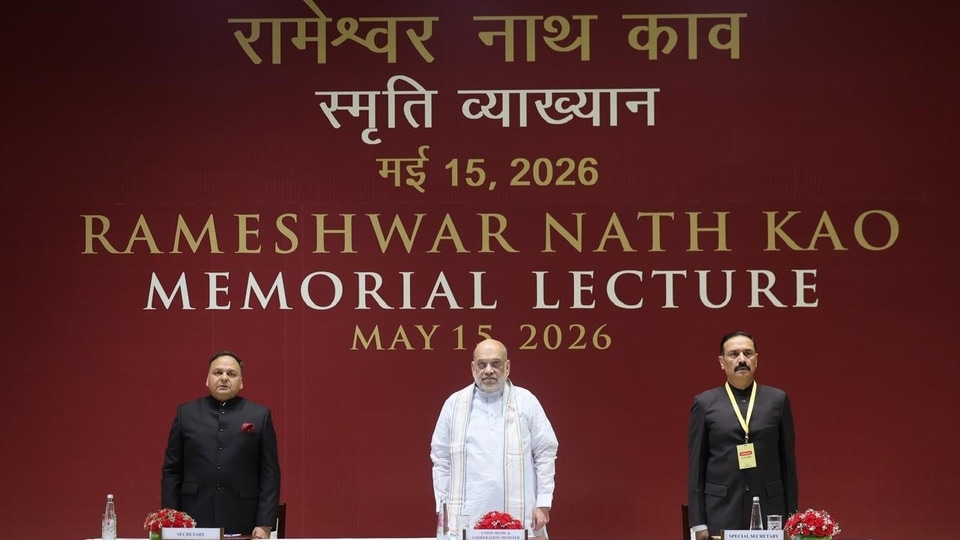
While Shah was speaking at Research and Analysis Wing (R&AW) headquarters, the Narcotics Control Bureau (NCB) was in the midst of an operation to seize 222.7 kilograms of Captagon, the so-called jihadi drug, worth Rs. 200 crore. Since he focused his entire speech on eradication of narco-trafficking and narco-terror, the home minister clearly defined his agenda for the coming years.
India faces serious drug threat from its 15000 km land and 7500 maritime boundary as it is wedged between what is now called “Dead Crescent”, Af-Pak heroin production area, and the “Dead Triangle”, the heroin-synthetic drug producing area of Myanmar-Laos and Thailand. On top of this, South American cocaine is landing on Indian sea shores via Sri Lanka route via high speed boats and even drones. Over the years, India has moved from drug transiting point to drug consumption country as the economy of the country moved up to top five in the world.
Also Read | NCB makes first-ever seizure of ‘Jihadi Drug’ Captagon under 'Operation Ragepill': Amit Shah
While Shah wants to make India drug free by 2047, the task is humongous and requires trans-national cooperation with a strong government taking action on their land through common hard anti-drug laws. Otherwise, the drug syndicates will grow as countries try to find common ground on war against drugs by linking it to human rights. There has to be a common schedule of prohibited drugs including marijuana and the concept of recreational drugs has to be taken down as a false narrative.
As a first step towards war on drugs, India needs to empower the NCB with more human resources and intelligence collected by Indian external and internal intelligence agencies. Although the NCB is empowered by a strong law, it is subject to interpretations by courts that often work in favor of the culprits and narco-traffickers. Fact is that the majority of Pakistan sponsored terror networks in India are funded by drug money as was revealed by Lashkar-e-Toiba operative and US national David Coleman Headley aka Daood Gilani during interrogation by the NIA in 2010.
Surrounded by weakly governed, economically impoverished and military ruled states in Myanmar, Afghanistan and Pakistan, India also faces drug threat from Nepal with whom it shares porous land borders and from Sri Lanka.
Given the economic conditions and unemployment in all these countries, drug trafficking has become a road to becoming rich overnight in the Indian sub-continent. Till such time that these countries take strong action against narco-networks and narco-syndicates, India will face an uphill task despite its best efforts. Besides law enforcement, the mission to eradicate drugs needs an alternative narrative in society and among youth, who find the habit fashionable after seeing their icons consuming it and thriving on it.
Shah has picked up a big task with a formidable global opponent, but this is a war that India cannot afford to lose.


