E-Paper



Another day of noxious air for Delhi as AQI nears ‘severe’, no relief in sight
The Capital’s air quality index (AQI) has stayed in the ‘very poor’ category for 18 near continuous days since November 6.

 Prefer HTon Google


New Delhi : With low winds speed and dipping temperatures, Delhi’s air quality index (AQI) stayed in the vicinity of the ‘severe’ threshold on Sunday, with forecasts showing no sign of improvement in the coming days.
On Sunday, at 4pm, the city’s 24-hour average AQI stood at 391 — firmly in the ‘very poor’ category. It was 370 at the same time on Saturday and 364 on Friday, data from the Central Pollution Control Board (CPCB) showed.
The Capital’s air quality index (AQI) has stayed in the ‘very poor’ category for 18 near continuous days since November 6. In that period, it has seen three ‘severe’ air days — between November 11 and 13. HT had earlier reported that it has not seen any ‘good’ air days in two years.
The CPCB classifies air as ‘good’ when AQI is 50 or lower; ‘satisfactory’ between 51 and 100; ‘moderate’ between 101 and 200; ‘poor’ between 201 and 300; ‘very poor’ between 301 and 400; and ‘severe’ when it exceeds 400.
The dense haze, still lingering over the city, is continuing to impact visibility and has prompted health concerns, with increased reporting of respiratory, ocular and pulmonary issues among residents.
At 4 pm, CPCB data showed that, of Delhi’s 39 ambient air quality monitoring stations, 19 were in ‘severe’ with the remaining 20 in ‘very poor’. The worst impacted was Wazirpur (464), followed by Vivek Vihar (458) and Rohini (457).
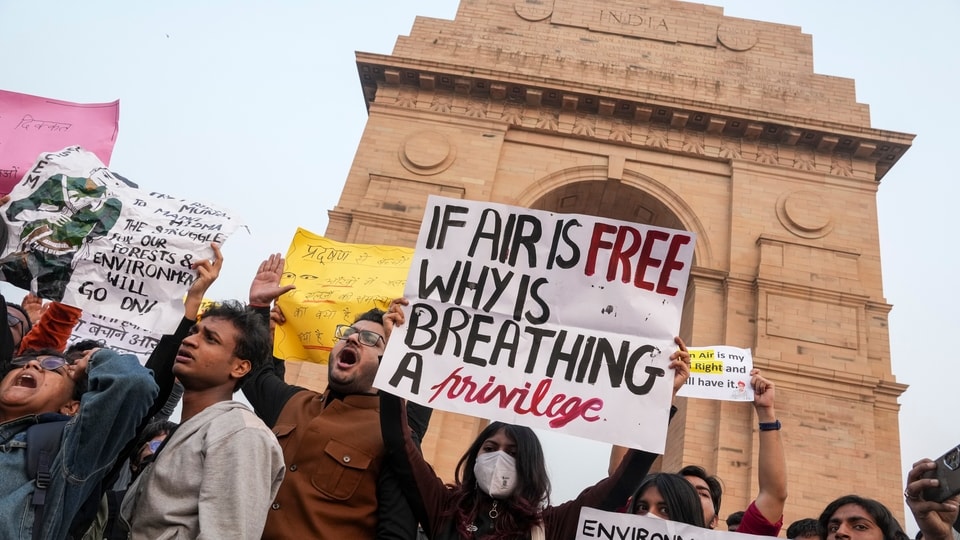
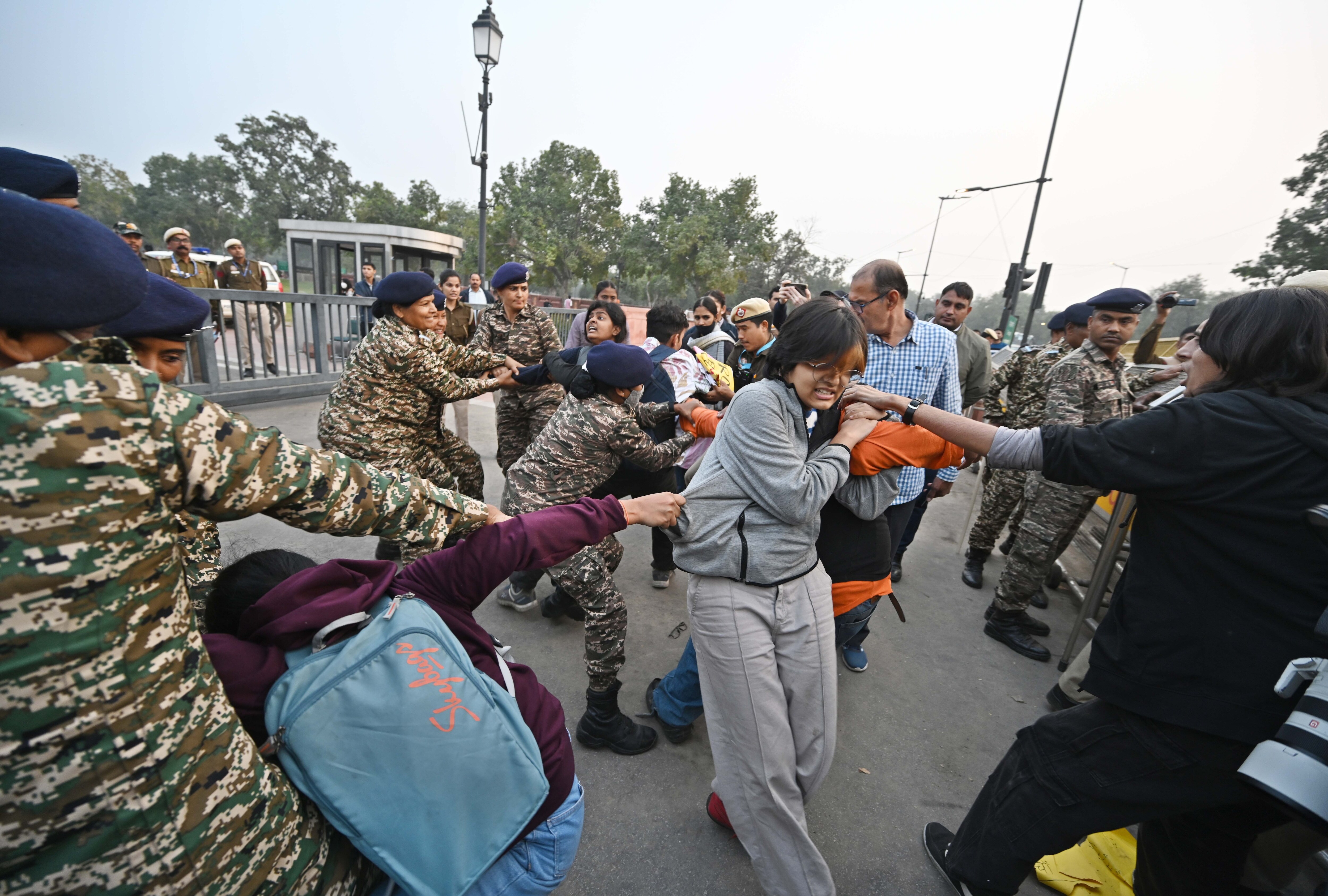
Also Read | Delhi air pollution protest at India Gate turns chaotic; agitators use chilli spray on police
The CPCB classifies air as ‘good’ when AQI is 50 or lower; ‘satisfactory’ between 51 and 100; ‘moderate’ between 101 and 200; ‘poor’ between 201 and 300; ‘very poor’ between 301 and 400; and ‘severe’ when it exceeds 400.
The dense haze, still lingering over the city, is continuing to impact visibility and has prompted health concerns, with increased reporting of respiratory, ocular and pulmonary issues among residents.
At 4 pm, CPCB data showed that, of Delhi’s 39 ambient air quality monitoring stations, 19 were in ‘severe’ with the remaining 20 in ‘very poor’. The worst impacted was Wazirpur (464), followed by Vivek Vihar (458) and Rohini (457).
Calm surface winds and long winter nights allow pollutants to accumulate, keeping the AQI from improving. Consistent winds over 15-20 km/hr can help disperse pollutants, however, an India Meteorological Department (IMD) official said no significant change in the weather conditions is likely in the coming days. Winds will remain low at night and in the early hours — possibly picking up to speeds of 5-10 km/hr during the day, the official added.
Delhi’s minimum temperature on Sunday was 10.4°C — a degree below normal and lower than Saturday’s 11.8°C. The maximum was 26.7°C, broadly normal for the season, after touching 27.3°C a day earlier.
According to the IMD, the minimum is expected to dip further to between 9°C and 11°C on Monday, and to between 8°C and 10°C on Tuesday and Wednesday.
The maximum temperature is likely to stay between 24°C and 26°C till Tuesday and possibly fall by another degree on Wednesday.
Shallow fog is expected during early morning hours over the next three days, the IMD said — conditions that may further limit pollutant dispersion and keep the haze across the city intact.