
 E-Paper



Apple sales fall due to dip in demand
Wholesale prices of horticulture produces have fallen this year with few takers in flood-hit upmarket markets of south and central India

 Prefer HTon Google


Last week, an apple orchardist in Himachal Pradesh got an SOS call from his fruit commission agent at Asia’s biggest fruit and vegetable market in Azadpur, Delhi, saying: “Don’t send the produce, there are no buyers.” That was for the first time in four decades that such a call was made.
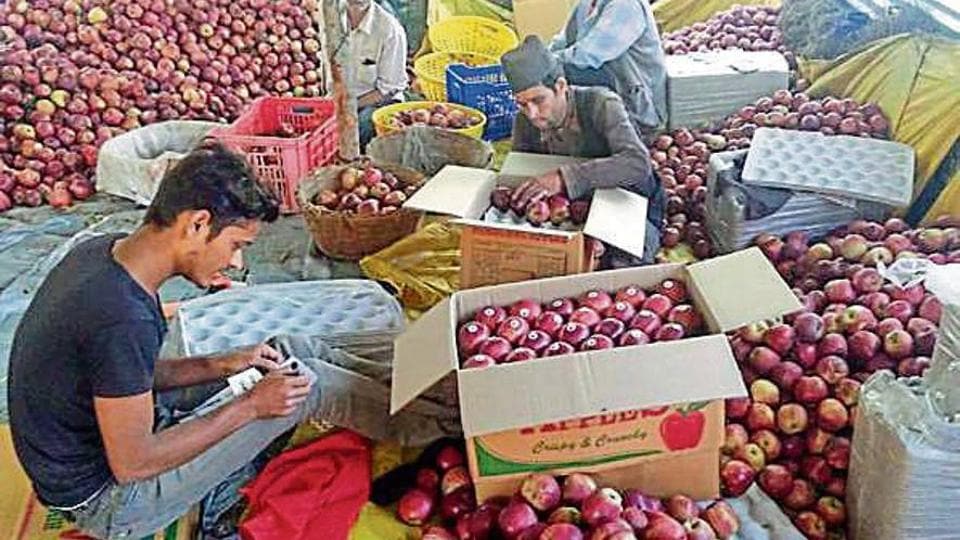
This time, the market for monsoon fruits, such as apple, watermelon, pomegranate, banana, pears, plums and litchi, bears a deserted look. “There are very few buyers this year. Most of them are local retailers. Big buyers from outside Delhi have not come,” said a commission agent, off-loading a truck full of watermelons. “I’m yet to sell the produce I got three days ago,” he said, pointing to the open storage with thousands of cartons.
In the nearby apple-selling zone, a trader told a commission agent that buyers in Gujarat, Maharashtra, Karnataka, the upmarket states, have asked him not to send an apple box costing more than Rs 1,000. A box of apple weighs 25-30 kg and the cost of transporting a box from Shimla to Delhi is about Rs 200.
The smaller grade apple, which forms 80% of the total produce, is getting a lower buying price.
Double whammy for traders
Traders who used to invest heavily by financing smaller traders have lost money since the November 2016 demonetisation. “We don’t have extra cash to invest in the risky business,” one such trader said.
The fruit and vegetable wholesale trade in India largely runs on credit from a week to a few months. There is risk involved in the business as the buyer can refuse to clear the debt, citing losses. Most traders are prepared that 5% of the credit will never come back but the last few years have been bad with creditors defaulting on up to 30%, the traders said.
Two mid-level traders said they are yet to recover Rs 10 crore each from buyers of the last apple trading season (July to November). They are not the only ones. Many in Azadpur and in other fruit and vegetables markets in the country are yet to get their money back, causing the cash crunch.
The double whammy this year is that the demand for fruits among retail buyers is not encouraging despite lower prices. “The wholesale price of watermelon is 30-40% less than what it was last year but demand is weak,” said a commission agent.
Slowdown takes toll
For all fruits, there are two distinctive markets. The better quality fruit fetches good price in more developed Gujarat, Maharashtra, Karnataka, Tamil Nadu, Punjab and Kerala, while the lower-grade fruit goes to markets in Uttar Pradesh, Bihar, West Bengal, Odisha, Madhya Pradesh and the North-East. Traders say that the slowing down of demand is more in the lucrative western and south Indian markets, which of late have been hit by floods, than in the poorer states, bringing down the overall prices.
The sentiment in Azadpur shows that the slowdown has hit the horticulture produce worse than what the agriculture ministry’s data shows. Agmarknet.gov.in shows the price range for a quintal of apple at Azadpur is Rs 3,000 to Rs 5,000 (about Rs 800 to Rs 1,500 per box) for large apples. This season, only 5% of the total produce so far is of large size because of the heat wave and less rainfall in summer. The lower grades are selling at half the price.


